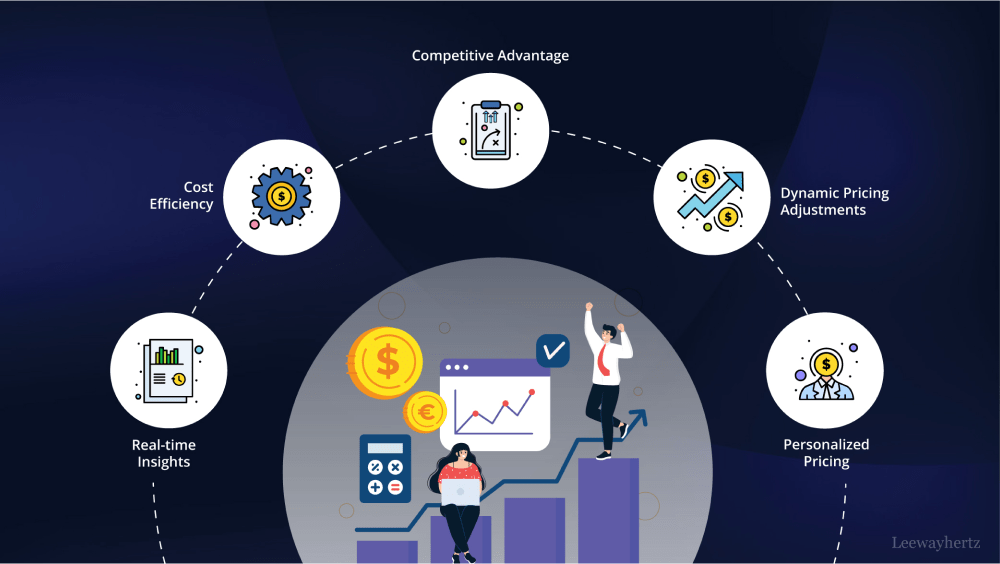
Dynamic pricing, a strategic approach embraced by businesses, continually adjusts product or service prices in response to factors such as demand, competition, and market conditions. This method enables businesses to set flexible prices that adapt to market fluctuations, thereby optimizing revenue and profit margins. In this exploration, we’ll delve into the core principles of dynamic pricing, its importance, various strategies, and the challenges posed by traditional pricing methods.
Dynamic pricing, also known as surge pricing, time-based pricing, or demand pricing, involves businesses adjusting prices in real-time based on changes in market conditions. Unlike fixed pricing, which maintains constant prices regardless of market shifts, dynamic pricing enables businesses to optimize revenue by setting prices that align with current market dynamics.
The significance of dynamic pricing lies in its capacity to maximize revenue and profit margins. By adapting prices to factors such as demand levels, seasonal variations, competitor pricing, and consumer behavior, businesses can enhance the perceived value of their products or services. Dynamic pricing empowers businesses to remain competitive, tailor offerings to consumer preferences, and capitalize on revenue opportunities.
There are several types of dynamic pricing strategies, each tailored to meet different business objectives and market conditions:
- Time-based pricing: Prices fluctuate based on factors such as time of day, day of the week, or season. For instance, movie theaters may offer discounted tickets for matinee showings and higher prices for evening screenings.
- Demand-based pricing: Prices adjust according to demand levels. During peak demand periods, prices rise to maximize revenue, while they may decrease during off-peak times to stimulate sales.
- Competitive-based pricing: Prices respond to competitor pricing actions. Businesses monitor competitors’ pricing strategies and adjust their own prices to maintain competitiveness.
- Segment-based pricing: Pricing is customized for various customer segments, taking into account factors such as purchasing habits, demographics, or geographic location. Airlines, for example, may offer different prices for economy, business, and first-class seats.
Challenges in traditional pricing approaches
Challenges in traditional pricing approaches include:
- Manual analysis: Traditional pricing methods often rely on manual examination of market data, a time-consuming process prone to inaccuracies.
- Lack of real-time insights: These methods may lack the capability to provide immediate insights into market trends, customer behavior, or competitor pricing strategies, hindering the prompt adjustment of pricing strategies.
- Limited flexibility: Traditional pricing models may lack flexibility in adapting prices quickly to changes in demand, supply, or market conditions.
- Inability to personalize: Traditional pricing methods may struggle to personalize pricing strategies according to individual customer preferences and behaviors, potentially resulting in missed revenue opportunities.
- Difficulty in competitor analysis: Traditional approaches may encounter challenges in effectively analyzing competitor pricing strategies and market dynamics, hampering competitiveness.
- Pricing inconsistencies: Traditional pricing approaches can lead to inconsistencies across different channels or regions, causing confusion or dissatisfaction among customers.
- Reactive approach: Traditional pricing methods often adopt a reactive approach, where pricing decisions are made in response to immediate needs or pressures rather than proactive, data-driven strategies.
AI-based dynamic pricing in action: Use cases across diverse industries
Dynamic pricing has widespread applications across various industries, enabling businesses to optimize revenue and stay competitive. Here are some use cases and examples of dynamic pricing implementation:
E-commerce sector: E-commerce platforms utilize dynamic pricing to adjust product prices in real-time based on factors such as demand, competitor pricing, and customer behavior. For instance, online retailers may offer personalized discounts or adjust prices during flash sales to stimulate purchases and maximize revenue.
Travel and hospitality industry: Hotels, airlines, and travel agencies leverage dynamic pricing to adjust room rates, ticket prices, and vacation packages dynamically. This allows them to capitalize on fluctuations in demand, seasonal trends, and booking patterns, optimizing revenue while ensuring maximum occupancy and resource utilization.
Retail and consumer goods: Retailers and consumer goods companies implement dynamic pricing to optimize pricing strategies across various products and categories. For example, supermarkets may adjust prices based on inventory levels, expiration dates, and promotional campaigns, while fashion retailers may use dynamic pricing to clear excess inventory or capitalize on trends.
Industrial B2B markets: Business-to-business (B2B) and industrial sectors leverage dynamic pricing to negotiate contract terms, adjust pricing based on order volumes, and manage pricing agreements with suppliers and distributors. This allows them to optimize pricing structures, improve profit margins, and maintain competitive pricing in complex supply chains.
Transportation and logistics: Transportation and logistics companies utilize dynamic pricing to optimize freight rates, shipping fees, and transportation services based on factors such as fuel costs, demand-supply dynamics, and route efficiency. Dynamic pricing enables these companies to maximize resource utilization, minimize empty miles, and improve overall operational efficiency.
Entertainment and events: Entertainment venues, concert organizers, and event management companies leverage dynamic pricing to adjust ticket prices based on factors such as seat availability, demand for specific events, and proximity to the event date. Dynamic pricing helps optimize ticket sales, maximize revenue, and manage capacity constraints for popular events and performances.
Healthcare and pharmaceuticals: Healthcare providers and pharmaceutical companies implement dynamic pricing strategies to optimize pricing for medical services, prescription drugs, and healthcare products. Dynamic pricing enables healthcare organizations to adjust prices based on factors such as patient demographics, insurance coverage, and market demand, ensuring affordability and accessibility of healthcare services while maximizing revenue.
Endnote
Implementing an AI-driven dynamic pricing solution stands as a critical stride towards enhancing efficiency, competitiveness, and profitability in contemporary business frameworks. Through the utilization of AI and sophisticated machine learning algorithms, enterprises can unveil unparalleled potentials in optimizing pricing strategies. This discourse delves into the foundational principles of dynamic pricing, AI’s influence on reshaping pricing tactics, and the essential components pivotal in constructing an AI-fueled dynamic pricing framework.
From the inception of data collection and preprocessing to model training, evaluation, and deployment, each phase in the process holds pivotal significance in the triumph of dynamic pricing endeavors. AI integration empowers businesses to scrutinize extensive datasets, discern patterns, and execute real-time pricing decisions with precision and agility. Furthermore, AI-driven dynamic pricing systems proffer adaptability to fluctuating market dynamics, facilitate personalized pricing strategies, and maximize revenue streams.
Envisioning the horizon, the future of AI-driven dynamic pricing solutions brims with potential, characterized by advancements in AI algorithms, integration with nascent technologies, and the evolution of autonomous pricing mechanisms. Nonetheless, organizations must address ethical considerations, regulatory adherence, and foster customer trust to ensure the judicious and ethical utilization of AI in pricing methodologies. Constructing an AI-driven dynamic pricing solution transcends mere technology adoption; it entails embracing a transformative ethos that champions data-centric decision-making, innovation, and customer-centricity. By harnessing AI to fine-tune pricing strategies, enterprises can maintain a competitive edge, foster sustainable growth, and deliver enhanced value to customers amidst an intensifying marketplace rivalry.
 Development Consulting