Unlocking Competitive Advantage with Business Benchmarking Services

In today’s fast-paced and constantly evolving business environment, gaining and maintaining a competitive edge requires more than just intuition and experience—it demands data-driven insight. Business benchmarking, a strategic tool that allows organizations to compare their processes and performance metrics with industry leaders, has become an essential practice for those looking to stay ahead. Whether it’s identifying operational gaps or aligning strategies with high-performing peers, benchmarking in business plays a vital role in informed decision-making.

What Is Business Benchmarking and Why It Matters

Business benchmarking is the process of measuring an organization’s internal processes and outcomes against those of leading companies in the same sector or industry. It enables businesses to understand how they perform in key areas such as finance, procurement, IT, human resources, and more. These insights help identify best practices, uncover inefficiencies, and prioritize areas for improvement.

The value of benchmarking lies in its ability to turn data into actionable intelligence. By pinpointing gaps between current and optimal performance, companies are empowered to set realistic goals, implement targeted improvements, and ultimately drive operational excellence.

The Hackett Group’s Expertise in Business Benchmarking

With decades of experience and a wealth of industry data, The Hackett Group is a recognized leader in the field of business benchmarking. Their approach is built on a robust foundation of proven practices and insights derived from working with top-performing organizations globally. The Hackett Group’s business benchmarking consulting services go beyond mere comparisons—they offer strategic direction and tailored recommendations to help companies improve performance and achieve world-class status.

Benchmarking That Goes Beyond Metrics

Unlike standard tools that stop at data presentation, The Hackett Group’s offering provides contextual insights. Their services not only show you where your organization stands in comparison to others, but they also help you understand why these performance differences exist and how to bridge the gaps.

Their proprietary benchmarking methodology draws on a massive database of metrics and best practices across key enterprise functions. The firm provides access to insights from leading global businesses, empowering clients to make informed decisions with confidence.

A Focus on Transformational Impact

One of the standout features of The Hackett Group’s business benchmarking consulting services is their focus on transformation. Benchmarking is not treated as a standalone activity but as a foundational step in broader improvement initiatives. It helps establish clear baselines, align leadership around performance realities, and develop strategies that are aligned with enterprise goals.

Whether an organization is seeking to improve efficiency, reduce costs, boost agility, or accelerate digital transformation, benchmarking can serve as a launchpad for sustainable improvement.

Functional Areas Covered by Benchmarking Services

The Hackett Group offers benchmarking in business across a broad range of functions, including:

  • Finance: Gain visibility into key financial metrics such as cost of finance, productivity ratios, cycle times, and digital maturity.
  • Procurement: Understand procurement costs, sourcing cycle times, supplier management efficiencies, and more.
  • Human Resources: Evaluate HR operations including cost per hire, time to fill roles, employee engagement, and talent development.
  • Information Technology: Benchmark IT performance across areas such as service delivery, innovation, support cost, and digital enablement.
  • Global Business Services (GBS): Assess how shared services and outsourcing arrangements are performing relative to leading organizations.

By providing this cross-functional benchmarking, The Hackett Group equips clients with a holistic understanding of enterprise performance.

Benchmarking as a Catalyst for Digital Transformation

Digital transformation continues to be a top priority for businesses across industries. The Hackett Group recognizes this and integrates digital benchmarking into its core services. By comparing digital maturity and technology adoption rates with best-in-class organizations, companies can assess where they are on the transformation journey and what steps are required to accelerate progress.

Digital benchmarking evaluates areas such as automation, data analytics capabilities, digital user experiences, and cloud adoption. These insights guide clients in identifying areas of investment and shaping digital strategies that deliver value.

Benchmarking for Continuous Improvement

Benchmarking in business is not a one-time event—it’s an ongoing journey. As business environments shift and new technologies emerge, companies must continuously reassess their position in the market. The Hackett Group supports clients with continuous benchmarking programs that monitor progress and help course-correct when needed.

By making benchmarking a regular part of their performance management strategy, companies can foster a culture of accountability, adaptability, and continuous improvement.

Client Success Stories

Many organizations have leveraged The Hackett Group’s business benchmarking consulting services to achieve transformative results. From Fortune 500 companies to fast-growing mid-sized enterprises, clients across sectors have reported measurable improvements in efficiency, cost savings, and strategic alignment. The Hackett Group’s insights have helped clients standardize processes, optimize organizational structures, and unlock the full potential of digital technologies.

Why Choose The Hackett Group?

The Hackett Group offers a unique blend of deep industry knowledge, a massive benchmarking database, and proven transformation methodologies. Their services are backed by:

  • Decades of experience with Fortune 1000 clients
  • Access to proprietary best practices and performance data
  • Customizable benchmarking solutions for organizations of all sizes
  • Actionable recommendations tailored to each client’s strategic priorities

With a track record of helping companies reach and sustain world-class performance, The Hackett Group is a trusted partner for organizations seeking data-driven improvement.

Conclusion

In a world where change is constant and competition is fierce, business benchmarking is no longer a luxury—it’s a strategic necessity. It empowers companies to make informed decisions, align operations with best practices, and position themselves for long-term success. By partnering with experts like The Hackett Group, organizations can transform insights into action and unlock new levels of performance.

Whether you’re at the beginning of your transformation journey or seeking to refine existing strategies, business benchmarking consulting services provide the clarity and direction needed to navigate the future with confidence.

Unlocking Business Excellence with Data-Driven Benchmarking

In today’s rapidly evolving marketplace, understanding how your business stacks up against the competition is no longer a luxury—it’s a necessity. Business benchmarking has emerged as a critical tool for organizations striving for excellence, enabling them to assess performance objectively, optimize operations, and achieve measurable outcomes. At the forefront of this transformation is The Hackett Group®, whose benchmarking services go beyond simple metrics to deliver actionable insights and strategic improvements.

Understanding Business Benchmarking

At its core, business benchmarking involves comparing an organization’s performance metrics with those of top-performing companies or industry peers. But the true value lies not just in identifying where you stand—it lies in knowing how to move forward. The Hackett Group takes this a step further by integrating generative AI into its benchmarking processes, expecting organizations to realize up to a 40% cost reduction and a 44% improvement in human productivity over five to seven years for a typical $10 billion company.

An Integrated Approach with AI XPLR™

To provide more than just data, The Hackett Group has built benchmarking capabilities directly into AI XPLR™, an AI-powered platform designed to identify opportunities and monitor progress. This integration empowers organizations to quantify the potential of Gen AI across business functions while ensuring continuous performance monitoring.

Whether you’re focused on finance, HR, IT, or supply chain, The Hackett Group offers tailored benchmarking services that span functional, organizational, and process dimensions. These services deliver insights into areas like Account-to-Report (A2R), Order-to-Cash (O2C), Purchase-to-Pay (P2P), and many more.

Tailored Benchmarking for Every Function

Hackett’s benchmarking isn’t one-size-fits-all—it’s customized to meet the specific needs of various business functions. Here’s how different departments benefit:

  • Finance & Accounting: Benchmarking helps accelerate cost reduction and improve process excellence.
  • Global Business Services: Insights enable the transformation of global operations, boosting shared service efficiency.
  • Human Resources: Identify ways to maximize talent effectiveness and enhance workforce productivity.
  • Information Technology: Evaluate and improve IT service delivery and technology investments.
  • Sales & Marketing: Discover data-driven strategies to increase customer acquisition and maximize ROI.
  • Sourcing & Procurement: Uncover cost-saving opportunities and streamline procurement processes.
  • Supply Chain: Enhance logistics, delivery performance, and cost-efficiency through targeted benchmarking.

Industry-Focused Insights

The Hackett Group’s benchmarking services are uniquely equipped to address industry-specific challenges. Whether you’re operating in customer service, manufacturing, retail, or professional services, the platform’s capabilities can be adapted to your industry context, offering data-driven insights and opportunities tailored to your business model.

Quantum Leap®: Redefining Continuous Improvement

To ensure benchmarking is not a one-off effort but a continuous journey, Hackett offers Quantum Leap®—a digital performance management and continuous improvement platform. With Quantum Leap®, organizations can halve the effort typically required for benchmarking while gaining long-term insights and maintaining a dynamic improvement cycle.

This tool not only streamlines the benchmarking process but also helps embed a culture of continuous improvement across the organization.

The Five-Step Benchmarking Methodology

Hackett’s structured, data-driven approach ensures every benchmarking project delivers measurable results. Their methodology consists of five key steps:

  1. Discovery: Identify business objectives and strategic opportunities.
  2. Data Collection: Gather and validate qualitative and quantitative data through secure platforms.
  3. Analysis: Compare your performance with peers and Digital World Class® standards using AI and advanced analytics.
  4. Insights: Generate detailed insights, backed by real-world AI use cases and solution benchmarks.
  5. Continuous Improvement: Drive long-term value using actionable recommendations and regular progress tracking via Quantum Leap®.

Why Choose The Hackett Group®?

Choosing a benchmarking partner is a pivotal decision. The Hackett Group distinguishes itself through:

  • Proven Results: Clients consistently see significant gains in cost reduction, productivity, and competitiveness.
  • Unmatched Experience: Decades of industry leadership ensure deep expertise and reliable guidance.
  • Proprietary Platforms: Quantum Leap® and AI XPLR™ provide a unique edge in executing and monitoring performance strategies.
  • Exclusive Data: Access to the world’s largest repository of peer and Digital World Class® benchmarking data ensures precision in comparison and insights.
  • Value-Driven Approach: The focus remains on delivering sustainable improvements and long-term strategic value.

The Road to Digital World Class®

Achieving Digital World Class® performance is no longer a distant goal. With the right benchmarking partner and tools like AI XPLR™ and Quantum Leap®, organizations can accelerate their transformation journeys. The Hackett Group stands ready to guide businesses through a future where operational excellence, digital innovation, and continuous improvement converge.

Conclusion

Business benchmarking, when done right, goes beyond metrics—it drives change. The Hackett Group®’s services not only reveal where your business stands but illuminate the path forward with actionable insights and AI-powered strategies. Whether your focus is cost optimization, talent effectiveness, or technological efficiency, benchmarking is your launchpad for sustainable performance improvement. Ready to measure up and move ahead? It’s time to benchmark your way to Digital World Class®.

AI agents for HR

AI agents in HR integrate cutting-edge technologies to streamline and enhance workforce management processes. These components are pivotal:

  1. Natural Language Processing (NLP): Enables AI agents to understand and respond to human queries, supporting seamless communication between HR personnel and employees.
  2. Machine Learning (ML): Powers predictive analytics, helping HR teams forecast hiring needs, employee attrition, and training requirements.
  3. Automation Capabilities: Automates repetitive tasks such as resume screening, interview scheduling, and payroll management.
  4. Integration Tools: Allows smooth interoperability with existing HR management systems, ensuring a cohesive digital ecosystem.
  5. Data Analytics: Provides actionable insights by analyzing workforce data to inform decision-making and strategy development.

These components together create a robust framework for efficient, data-driven HR operations.

Understanding AI Agents in HR and Their Key Capabilities

AI agents in HR are intelligent systems designed to assist in various facets of workforce management. Their key capabilities include:

  1. Employee Support: AI agents act as virtual HR assistants, answering employee questions about benefits, policies, and payroll in real-time.
  2. Talent Acquisition: By leveraging AI, HR teams can efficiently source, screen, and shortlist candidates, significantly reducing the hiring cycle.
  3. Performance Management: AI analyzes employee performance data, offering insights into productivity trends and areas for improvement.
  4. Learning and Development: Tailored training recommendations based on employee skills and career goals ensure a personalized growth journey.
  5. Compliance Management: AI ensures adherence to labor laws and organizational policies by automating compliance checks and reporting.

These capabilities enhance the HR function’s ability to foster employee satisfaction, productivity, and regulatory adherence.

Use Cases of AI Agents in HR

The potential applications of AI agents in HR are vast, encompassing various processes:

  1. Recruitment Automation: AI agents streamline candidate sourcing, screening, and interview scheduling, improving efficiency.
  2. Onboarding: AI-powered chatbots guide new hires through onboarding, answering questions and facilitating document submissions.
  3. Employee Engagement: By analyzing employee sentiment through surveys and feedback, AI agents provide actionable recommendations to boost engagement.
  4. Conflict Resolution: AI agents mediate workplace disputes by analyzing grievances and proposing unbiased resolutions.
  5. HR Analytics: AI identifies workforce trends, such as attrition risks or skill gaps, enabling proactive measures.

These use cases underscore the transformative impact of AI agents on HR operations.

Key Benefits of AI Agents in HR

Implementing AI agents offers significant advantages to HR teams, including:

  1. Enhanced Efficiency: Automating repetitive tasks frees HR professionals to focus on strategic initiatives.
  2. Improved Decision-Making: Data-driven insights enable HR teams to make informed decisions regarding hiring, performance, and employee development.
  3. Cost Savings: By reducing manual workloads, AI agents minimize operational costs and optimize resource allocation.
  4. Personalized Employee Experience: AI delivers tailored interactions and solutions, fostering greater employee satisfaction and retention.
  5. Scalability: AI agents adapt to growing organizational needs, ensuring consistent HR service delivery.

These benefits highlight the value AI agents bring in optimizing HR processes and outcomes.

Endnote

AI agents are reshaping the HR landscape, offering innovative solutions that elevate efficiency, employee engagement, and strategic impact. As organizations continue to embrace digital transformation, the integration of AI in HR promises a future where workforce management is smarter, faster, and more personalized.

By adopting AI-driven tools, HR teams can not only meet current challenges but also proactively shape a dynamic and adaptable workforce strategy for the years ahead.

Transforming Customer Support: The Impact of AI Agents

As businesses strive to meet the demands of modern consumers, AI agents for customer service are emerging as a key solution. Leveraging artificial intelligence, these agents are reshaping how companies interact with customers, enhancing efficiency and satisfaction. This article delves into the transformative role of AI agents in customer support, their applications, benefits, and what the future holds.

What Are AI Agents in Customer Service?

AI agents are intelligent software systems designed to assist with customer inquiries and support. Utilizing machine learning and natural language processing, these agents can analyze customer interactions, provide instant responses, and streamline service processes. By handling routine queries, AI agents enable human representatives to focus on more complex customer needs.

Key Applications of AI Agents in Customer Service

  1. Chatbots for Instant Communication

AI-driven chatbots facilitate immediate communication, answering customer queries in real time. This instant support improves the customer experience and builds trust in the brand.

  1. Data-Driven Insights

AI agents analyze customer interactions to derive insights that help businesses understand customer behavior and preferences, leading to more effective marketing strategies.

  1. Streamlined Service Operations

AI agents can manage a high volume of inquiries simultaneously, ensuring that customers receive timely support. This efficiency minimizes wait times and enhances service delivery.

  1. Automated Ticketing Systems

AI agents can automate ticket creation for unresolved issues, ensuring that customer concerns are logged and addressed promptly by human agents when necessary.

  1. Multilingual Support

AI agents can provide support in multiple languages, catering to a diverse customer base and ensuring that language barriers do not hinder customer service.

Benefits of AI Agents in Customer Service

  1. Increased Operational Efficiency

By automating repetitive tasks, AI agents enhance operational efficiency, allowing businesses to serve more customers with fewer resources.

  1. Enhanced Customer Experience

With personalized interactions and immediate responses, AI agents significantly improve the overall customer experience, leading to increased satisfaction and loyalty.

  1. Reduced Human Error

AI agents provide consistent and accurate responses, minimizing the risk of human error in customer service interactions.

  1. Cost-Effective Solutions

Implementing AI agents can reduce costs associated with hiring and training additional staff, ultimately benefiting the company’s bottom line.

Challenges in Implementing AI Agents in Customer Service

Despite their many advantages, the implementation of AI agents in customer service comes with challenges:

  1. Overcoming Customer Resistance

Some customers may be hesitant to interact with AI agents, preferring human agents for their inquiries. Education and gradual integration can help alleviate these concerns.

  1. Continuous Learning and Adaptation

AI agents require ongoing training to adapt to changing customer needs and preferences, ensuring that they remain effective in delivering support.

  1. Ensuring Data Security

Handling customer data necessitates robust security measures to prevent breaches and maintain customer trust.

The Future of AI Agents in Customer Service

The future of AI agents in customer service is filled with potential. As technology advances, these agents will become more capable and integral to customer service strategies.

  1. Integration of Advanced Analytics

AI agents will increasingly utilize advanced analytics to predict customer needs and provide tailored solutions proactively.

  1. Enhanced User Interfaces

Future AI agents will likely feature more intuitive interfaces, making interactions seamless and user-friendly for customers.

  1. Collaborative Service Models

The future will see AI agents collaborating closely with human representatives, leveraging the strengths of both to provide exceptional customer service.

Conclusion

AI agents for customer service are revolutionizing how businesses engage with customers. By automating routine tasks, offering instant support, and providing valuable insights, these agents enhance efficiency and customer satisfaction. As organizations continue to harness the power of AI, they will discover new pathways to success in the competitive landscape.

For more insights and detailed information on AI agents for customer service, explore AI Agents for Customer Service.

AI Use Cases & Applications Across Major industries

Role of AI in Business Operations

Artificial Intelligence (AI) has become a key driver in optimizing business operations by automating routine tasks, enhancing decision-making, improving customer service, and boosting efficiency across industries. AI technologies such as machine learning, natural language processing, and computer vision can process vast amounts of data, predict outcomes, and provide actionable insights. Whether it’s managing customer interactions with chatbots or streamlining logistics through automation, AI is helping businesses increase productivity, reduce costs, and make smarter decisions.

AI Use Cases in Major Industries

Healthcare

AI is transforming healthcare by improving diagnostics, personalizing treatment plans, and accelerating drug discovery. Tools like AI-powered imaging analysis help doctors detect diseases earlier, while predictive analytics optimize hospital management and patient outcomes. AI-based systems can also process vast medical records to assist in providing personalized care.

Retail and E-commerce

In retail, AI enables personalized shopping experiences, demand forecasting, and supply chain optimization. From AI-driven product recommendations to managing inventory with predictive analytics, retailers can better meet customer needs. Chatbots and virtual assistants provide 24/7 customer support, enhancing the shopping experience.

Banking and Financial Services

AI is revolutionizing banking by enhancing fraud detection, automating risk management, and personalizing financial services. With AI-powered chatbots, banks can assist customers in real-time, while machine learning algorithms analyze transaction patterns to identify fraudulent activities, ensuring security.

Supply Chain and Logistics

AI optimizes supply chain and logistics by predicting demand, reducing waste, and improving delivery times. Autonomous vehicles and drones powered by AI are also being used for last-mile delivery. AI-driven analytics improve decision-making in inventory management, ensuring smoother operations.

Travel

AI plays a pivotal role in travel through predictive analytics, customer service automation, and personalization. Airlines and travel agencies use AI to provide personalized recommendations, optimize pricing strategies, and enhance customer support through virtual agents.

How to Implement AI in Business Operations

Implementing AI in business operations requires a structured approach:

  1. Identify the Business Problem: Start by identifying the key challenges AI can address, such as customer service, data analysis, or process optimization.
  2. Data Collection and Preparation: AI relies on high-quality data, so businesses need to gather and structure their data effectively.
  3. Select AI Tools and Platforms: Choose AI technologies that suit your needs, such as machine learning platforms, natural language processing, or robotic process automation.
  4. Pilot and Scale: Start with a pilot project to validate the solution before scaling it across the organization.
  5. Monitor and Optimize: Continuously monitor AI performance and refine models for optimal results.

How LeewayHertz’s Enterprise AI Solutions Transform Business Operations

LeewayHertz’s AI solutions help businesses across various industries by delivering customized AI-powered applications. From AI-driven chatbots and virtual assistants to advanced machine learning models for analytics, LeewayHertz enables companies to harness the power of AI to streamline operations, enhance customer interactions, and improve decision-making. Their enterprise AI solutions are designed to be scalable, ensuring that companies of all sizes can benefit from AI innovation. LeewayHertz integrates AI into existing workflows, allowing businesses to quickly adopt AI with minimal disruption.

Endnote

AI’s applications spanAs AI evolves to the next level, it increasingly takes the lead as the most significant driving force for technology transformation. At present, industries that use AI are seeing significant improvements in productivity and decision-making, with sectors like finance, automotive, and telecommunications leading the charge. The applications of AI span across various industries, unleashing boundless possibilities. What we have witnessed and can envision merely scratches the surface of its extensive capabilities, emphasizing AI’s pivotal role in reshaping the landscape of technology-driven advancements.

No matter the industry, AI can be a game-changer for your business. To harness AI’s maximum potential, collaborate with our AI development experts, who offer smart digital solutions to optimize internal operations and enhance customer-facing systems.

Source Link: https://www.leewayhertz.com/ai-use-cases-and-applications/

The role of AI in customer support

In the realm of customer support, the integration of artificial intelligence (AI) marks a significant leap forward. By harnessing technologies like chatbots, virtual assistants, and machine learning algorithms, businesses can automate responses, provide personalized assistance, and elevate the overall customer experience. This transformative integration fundamentally alters the dynamics of customer-business interactions, leveraging advanced tools such as natural language processing and automation to enhance the efficiency and effectiveness of support operations.

From the deployment of real-time chatbots to handle routine inquiries to the utilization of predictive analytics for optimizing support strategies, AI empowers businesses to deliver tailored, timely assistance round the clock. Beyond mere process optimization, AI fosters seamless customer experiences, thereby fostering stronger relationships and loyalty.

AI in customer support doesn’t just offer operational enhancements; it also provides businesses with invaluable insights into customer preferences, behaviors, and pain points. This data-driven approach enables businesses to offer tailored services and proactively resolve issues. By automating repetitive tasks, AI frees up human agents to focus on complex interactions, thereby improving overall service quality.

As technology continues to advance, the role of AI in customer support is poised for further expansion, offering increasingly sophisticated solutions to meet and exceed customer expectations.

Benefits of AI in Customer Support

For Customers

  1. Instant Support: AI ensures immediate responses to customer queries, efficiently routing complex issues to appropriate support agents for swift resolution.
  2. 24/7 Support: AI-powered tools guarantee consistent customer assistance, even outside of live agent availability, enhancing overall service accessibility.
  3. Reduced Errors: AI systems excel in precision, offering accurate solutions to evolving customer needs, thereby enhancing overall satisfaction.
  4. Efficient Issue Resolution: AI chatbots guide customers to solutions faster than live agents, fostering positive experiences.
  5. Enhanced User Experience: AI aids support teams in refining processes and proactively addressing common issues, leading to smoother interactions.
  6. Predictable Experience: AI provides clear paths for issue resolution, allowing customers to choose preferred methods with accurate response time estimates.
  7. Cost Savings: AI implementation reduces overhead costs, enabling businesses to maintain competitive pricing and enhance customer satisfaction.

For Backend Users

  1. Lead Identification: AI streamlines the identification of potential leads and can trigger targeted marketing campaigns, enhancing conversion rates.
  2. Data Collection and Analysis: AI facilitates the collection of vast data sets and transforms them into actionable insights to refine products and streamline customer service operations.
  3. Enhanced Brand Reputation: Efficient support processes contribute to elevated customer satisfaction, cultivating brand advocates who endorse products or services positively.
  4. Reduced Workload: AI resolves routine inquiries, decreasing the workload for customer service agents and empowering them to concentrate on high-value tasks.
  5. Cost Efficiency: AI manages growing customer needs effectively, controlling costs while maintaining service quality.
  6. Insightful Forecasting: Machine learning capabilities enable the analysis of data sets to forecast needs and optimize inventory management, driving strategic decision-making.

Operational Benefits of AI in Customer Support

  1. Brand Voice: Real-time messaging bot services provide an opportunity for businesses to connect with customers, fostering new revenue streams.
  2. AI-Powered Action Plans: AI offers quick responses and action plans, learning from customer context, history, and preferences to enhance the customer experience.
  3. One-time Investment: Automating responses via AI platforms significantly reduces costs associated with traditional call center practices.
  4. Multi-channel Support: An intelligent support system directs customers toward parallel support channels, enhancing the overall customer experience.
  5. Machine Learning for Enhanced Support: Machine learning enables customer support to anticipate and prepare for challenging problems, ensuring more efficient problem resolution.

Best Practices for AI in Customer Support

  1. Research: Conduct thorough research to guide your AI implementation strategy.
  2. Harness Customer Feedback: Continuously gather customer feedback to refine and improve support services.
  3. Personalize the Customer Journey: Utilize real-time customer data to offer tailored interactions across channels.
  4. Periodic Performance Evaluation: Schedule routine performance evaluations to identify areas for improvement and necessary adjustments.

Conclusion

The integration of AI into customer support represents a paradigm shift in customer-business interactions. The benefits are manifold, ranging from operational efficiency to enhanced customer satisfaction. As AI technologies continue to evolve, the possibilities for improving customer support are limitless, promising a future where customer satisfaction is not just a goal but a guaranteed outcome.

AI-powered dynamic pricing solutions: Optimizing revenue in real-time

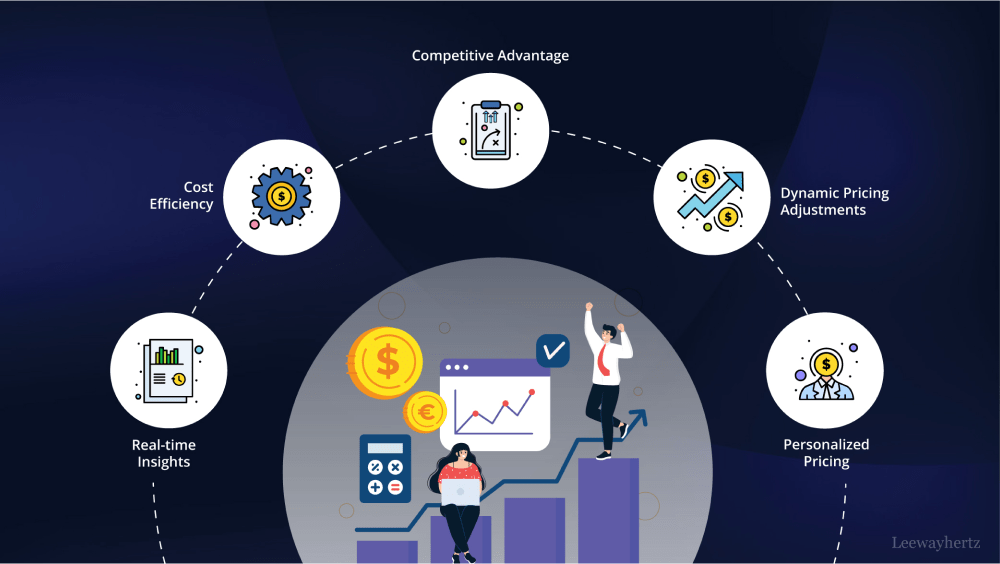
Dynamic pricing, a strategic approach embraced by businesses, continually adjusts product or service prices in response to factors such as demand, competition, and market conditions. This method enables businesses to set flexible prices that adapt to market fluctuations, thereby optimizing revenue and profit margins. In this exploration, we’ll delve into the core principles of dynamic pricing, its importance, various strategies, and the challenges posed by traditional pricing methods.

Dynamic pricing, also known as surge pricing, time-based pricing, or demand pricing, involves businesses adjusting prices in real-time based on changes in market conditions. Unlike fixed pricing, which maintains constant prices regardless of market shifts, dynamic pricing enables businesses to optimize revenue by setting prices that align with current market dynamics.

The significance of dynamic pricing lies in its capacity to maximize revenue and profit margins. By adapting prices to factors such as demand levels, seasonal variations, competitor pricing, and consumer behavior, businesses can enhance the perceived value of their products or services. Dynamic pricing empowers businesses to remain competitive, tailor offerings to consumer preferences, and capitalize on revenue opportunities.

There are several types of dynamic pricing strategies, each tailored to meet different business objectives and market conditions:

  • Time-based pricing: Prices fluctuate based on factors such as time of day, day of the week, or season. For instance, movie theaters may offer discounted tickets for matinee showings and higher prices for evening screenings.
  • Demand-based pricing: Prices adjust according to demand levels. During peak demand periods, prices rise to maximize revenue, while they may decrease during off-peak times to stimulate sales.
  • Competitive-based pricing: Prices respond to competitor pricing actions. Businesses monitor competitors’ pricing strategies and adjust their own prices to maintain competitiveness.
  • Segment-based pricing: Pricing is customized for various customer segments, taking into account factors such as purchasing habits, demographics, or geographic location. Airlines, for example, may offer different prices for economy, business, and first-class seats.

Challenges in traditional pricing approaches

Challenges in traditional pricing approaches include:

  • Manual analysis: Traditional pricing methods often rely on manual examination of market data, a time-consuming process prone to inaccuracies.
  • Lack of real-time insights: These methods may lack the capability to provide immediate insights into market trends, customer behavior, or competitor pricing strategies, hindering the prompt adjustment of pricing strategies.
  • Limited flexibility: Traditional pricing models may lack flexibility in adapting prices quickly to changes in demand, supply, or market conditions.
  • Inability to personalize: Traditional pricing methods may struggle to personalize pricing strategies according to individual customer preferences and behaviors, potentially resulting in missed revenue opportunities.
  • Difficulty in competitor analysis: Traditional approaches may encounter challenges in effectively analyzing competitor pricing strategies and market dynamics, hampering competitiveness.
  • Pricing inconsistencies: Traditional pricing approaches can lead to inconsistencies across different channels or regions, causing confusion or dissatisfaction among customers.
  • Reactive approach: Traditional pricing methods often adopt a reactive approach, where pricing decisions are made in response to immediate needs or pressures rather than proactive, data-driven strategies.

AI-based dynamic pricing in action: Use cases across diverse industries

Dynamic pricing has widespread applications across various industries, enabling businesses to optimize revenue and stay competitive. Here are some use cases and examples of dynamic pricing implementation:

E-commerce sector: E-commerce platforms utilize dynamic pricing to adjust product prices in real-time based on factors such as demand, competitor pricing, and customer behavior. For instance, online retailers may offer personalized discounts or adjust prices during flash sales to stimulate purchases and maximize revenue.

Travel and hospitality industry: Hotels, airlines, and travel agencies leverage dynamic pricing to adjust room rates, ticket prices, and vacation packages dynamically. This allows them to capitalize on fluctuations in demand, seasonal trends, and booking patterns, optimizing revenue while ensuring maximum occupancy and resource utilization.

Retail and consumer goods: Retailers and consumer goods companies implement dynamic pricing to optimize pricing strategies across various products and categories. For example, supermarkets may adjust prices based on inventory levels, expiration dates, and promotional campaigns, while fashion retailers may use dynamic pricing to clear excess inventory or capitalize on trends.

Industrial B2B markets: Business-to-business (B2B) and industrial sectors leverage dynamic pricing to negotiate contract terms, adjust pricing based on order volumes, and manage pricing agreements with suppliers and distributors. This allows them to optimize pricing structures, improve profit margins, and maintain competitive pricing in complex supply chains.

Transportation and logistics: Transportation and logistics companies utilize dynamic pricing to optimize freight rates, shipping fees, and transportation services based on factors such as fuel costs, demand-supply dynamics, and route efficiency. Dynamic pricing enables these companies to maximize resource utilization, minimize empty miles, and improve overall operational efficiency.

Entertainment and events: Entertainment venues, concert organizers, and event management companies leverage dynamic pricing to adjust ticket prices based on factors such as seat availability, demand for specific events, and proximity to the event date. Dynamic pricing helps optimize ticket sales, maximize revenue, and manage capacity constraints for popular events and performances.

Healthcare and pharmaceuticals: Healthcare providers and pharmaceutical companies implement dynamic pricing strategies to optimize pricing for medical services, prescription drugs, and healthcare products. Dynamic pricing enables healthcare organizations to adjust prices based on factors such as patient demographics, insurance coverage, and market demand, ensuring affordability and accessibility of healthcare services while maximizing revenue.

Endnote

Implementing an AI-driven dynamic pricing solution stands as a critical stride towards enhancing efficiency, competitiveness, and profitability in contemporary business frameworks. Through the utilization of AI and sophisticated machine learning algorithms, enterprises can unveil unparalleled potentials in optimizing pricing strategies. This discourse delves into the foundational principles of dynamic pricing, AI’s influence on reshaping pricing tactics, and the essential components pivotal in constructing an AI-fueled dynamic pricing framework.

From the inception of data collection and preprocessing to model training, evaluation, and deployment, each phase in the process holds pivotal significance in the triumph of dynamic pricing endeavors. AI integration empowers businesses to scrutinize extensive datasets, discern patterns, and execute real-time pricing decisions with precision and agility. Furthermore, AI-driven dynamic pricing systems proffer adaptability to fluctuating market dynamics, facilitate personalized pricing strategies, and maximize revenue streams.

Envisioning the horizon, the future of AI-driven dynamic pricing solutions brims with potential, characterized by advancements in AI algorithms, integration with nascent technologies, and the evolution of autonomous pricing mechanisms. Nonetheless, organizations must address ethical considerations, regulatory adherence, and foster customer trust to ensure the judicious and ethical utilization of AI in pricing methodologies. Constructing an AI-driven dynamic pricing solution transcends mere technology adoption; it entails embracing a transformative ethos that champions data-centric decision-making, innovation, and customer-centricity. By harnessing AI to fine-tune pricing strategies, enterprises can maintain a competitive edge, foster sustainable growth, and deliver enhanced value to customers amidst an intensifying marketplace rivalry.