AI agents for HR

AI agents in HR integrate cutting-edge technologies to streamline and enhance workforce management processes. These components are pivotal:

  1. Natural Language Processing (NLP): Enables AI agents to understand and respond to human queries, supporting seamless communication between HR personnel and employees.
  2. Machine Learning (ML): Powers predictive analytics, helping HR teams forecast hiring needs, employee attrition, and training requirements.
  3. Automation Capabilities: Automates repetitive tasks such as resume screening, interview scheduling, and payroll management.
  4. Integration Tools: Allows smooth interoperability with existing HR management systems, ensuring a cohesive digital ecosystem.
  5. Data Analytics: Provides actionable insights by analyzing workforce data to inform decision-making and strategy development.

These components together create a robust framework for efficient, data-driven HR operations.

Understanding AI Agents in HR and Their Key Capabilities

AI agents in HR are intelligent systems designed to assist in various facets of workforce management. Their key capabilities include:

  1. Employee Support: AI agents act as virtual HR assistants, answering employee questions about benefits, policies, and payroll in real-time.
  2. Talent Acquisition: By leveraging AI, HR teams can efficiently source, screen, and shortlist candidates, significantly reducing the hiring cycle.
  3. Performance Management: AI analyzes employee performance data, offering insights into productivity trends and areas for improvement.
  4. Learning and Development: Tailored training recommendations based on employee skills and career goals ensure a personalized growth journey.
  5. Compliance Management: AI ensures adherence to labor laws and organizational policies by automating compliance checks and reporting.

These capabilities enhance the HR function’s ability to foster employee satisfaction, productivity, and regulatory adherence.

Use Cases of AI Agents in HR

The potential applications of AI agents in HR are vast, encompassing various processes:

  1. Recruitment Automation: AI agents streamline candidate sourcing, screening, and interview scheduling, improving efficiency.
  2. Onboarding: AI-powered chatbots guide new hires through onboarding, answering questions and facilitating document submissions.
  3. Employee Engagement: By analyzing employee sentiment through surveys and feedback, AI agents provide actionable recommendations to boost engagement.
  4. Conflict Resolution: AI agents mediate workplace disputes by analyzing grievances and proposing unbiased resolutions.
  5. HR Analytics: AI identifies workforce trends, such as attrition risks or skill gaps, enabling proactive measures.

These use cases underscore the transformative impact of AI agents on HR operations.

Key Benefits of AI Agents in HR

Implementing AI agents offers significant advantages to HR teams, including:

  1. Enhanced Efficiency: Automating repetitive tasks frees HR professionals to focus on strategic initiatives.
  2. Improved Decision-Making: Data-driven insights enable HR teams to make informed decisions regarding hiring, performance, and employee development.
  3. Cost Savings: By reducing manual workloads, AI agents minimize operational costs and optimize resource allocation.
  4. Personalized Employee Experience: AI delivers tailored interactions and solutions, fostering greater employee satisfaction and retention.
  5. Scalability: AI agents adapt to growing organizational needs, ensuring consistent HR service delivery.

These benefits highlight the value AI agents bring in optimizing HR processes and outcomes.

Endnote

AI agents are reshaping the HR landscape, offering innovative solutions that elevate efficiency, employee engagement, and strategic impact. As organizations continue to embrace digital transformation, the integration of AI in HR promises a future where workforce management is smarter, faster, and more personalized.

By adopting AI-driven tools, HR teams can not only meet current challenges but also proactively shape a dynamic and adaptable workforce strategy for the years ahead.

Generative AI in due diligence

The complexity and rigor of due diligence processes have always presented significant challenges for businesses, particularly during high-stakes transactions like mergers and acquisitions. Traditionally, due diligence has relied on manual efforts to gather, analyze, and validate data—a time-consuming and labor-intensive process. However, the emergence of Generative AI (GenAI) is redefining how due diligence is conducted, offering unparalleled efficiency and accuracy.

Generative AI utilizes advanced algorithms to generate human-like text, interpret unstructured data, and streamline workflows. By automating repetitive tasks and uncovering insights from vast datasets, GenAI is empowering due diligence teams to work smarter, not harder. This innovation addresses some of the most pressing challenges, such as sifting through unstructured data, assessing risks, and ensuring compliance with regulatory requirements.

Generative AI Use Cases in Due Diligence

  1. Data Extraction and Summarization
    GenAI can extract key information from contracts, financial statements, and legal documents. It can summarize lengthy documents into actionable insights, reducing the time spent on manual reviews. For instance, ZBrain’s capabilities allow teams to process thousands of documents rapidly, ensuring no critical information is overlooked.
  2. Risk Assessment and Analysis
    Identifying potential risks in a target company is crucial during due diligence. GenAI can analyze historical data, assess financial stability, and flag anomalies or inconsistencies. By leveraging machine learning, it provides predictive insights that help decision-makers evaluate risks with confidence.
  3. Enhanced Compliance Checks
    Compliance with local and international regulations is non-negotiable. GenAI assists by scanning regulatory requirements and cross-referencing them with company data to ensure adherence. This automation not only speeds up compliance checks but also reduces the likelihood of errors.
  4. Stakeholder Communication
    Due diligence often involves collaboration across teams, including legal, financial, and operational departments. GenAI can generate concise reports, automate meeting summaries, and facilitate seamless communication by generating tailored content for diverse stakeholders.
  5. Market Analysis and Competitive Intelligence
    Generative AI can provide deep insights into market trends and competitors by analyzing external datasets. This helps businesses make informed decisions about potential partnerships or acquisitions.

Generative AI in Due Diligence: Future Outlook

The role of GenAI in due diligence is expected to grow exponentially as technology evolves. Future advancements could include real-time due diligence platforms, where AI tools integrate seamlessly with data sources to provide instant analysis and updates. This will enable businesses to adapt quickly to changing circumstances and make data-driven decisions.

Moreover, the adoption of AI ethics frameworks will ensure transparency and fairness in automated decision-making. As generative AI becomes more sophisticated, it will handle increasingly complex tasks, such as cultural assessments and environmental impact analyses, adding even more depth to the due diligence process.

Benefits of ZBrain for Due Diligence Teams

ZBrain, powered by LeewayHertz, is revolutionizing the due diligence landscape with its cutting-edge GenAI capabilities. Here’s why it stands out:

  • Customizable AI Models: Tailored to meet specific industry requirements, ZBrain adapts to various due diligence scenarios, offering flexibility and precision.
  • Real-Time Insights: With the ability to process vast amounts of data instantly, ZBrain ensures timely and accurate insights for decision-making.
  • Enhanced Collaboration: ZBrain facilitates better team collaboration by generating clear and concise reports, making complex data accessible to all stakeholders.
  • Scalability: Whether you’re evaluating a single company or conducting due diligence across multiple entities, ZBrain scales effortlessly to meet your needs.
  • Cost-Effectiveness: By automating labor-intensive tasks, ZBrain reduces operational costs and allows teams to focus on strategic aspects of due diligence.

Endnote

Generative AI is transforming due diligence into a faster, more reliable, and data-driven process. Tools like ZBrain are at the forefront of this revolution, equipping businesses with the means to navigate complex transactions confidently. As the technology continues to advance, the potential for GenAI to enhance due diligence processes is boundless.

By embracing these innovations, organizations can streamline operations, mitigate risks, and secure a competitive edge in today’s fast-paced business environment. GenAI isn’t just a tool for the future—it’s a necessity for the present.

Generative AI in Hospitality: Redefining Guest Experiences and Operational Excellence

The hospitality industry thrives on delivering personalized, memorable guest experiences while ensuring operational efficiency. As digital transformation reshapes industries, generative AI has emerged as a revolutionary tool in hospitality, enabling hotels, restaurants, and travel companies to innovate and optimize. By leveraging advanced capabilities in natural language processing, computer vision, and content generation, generative AI is transforming guest interactions, streamlining operations, and enhancing decision-making.

Personalized Guest Experiences

In a highly competitive market, personalization sets brands apart. Generative AI excels in analyzing guest preferences, behaviors, and past interactions to craft unique, tailored experiences. For instance:

  • Virtual Concierges: AI-driven chatbots can simulate human-like interactions, offering personalized recommendations for dining, activities, and local attractions. By processing natural language queries, these systems respond in real time, creating seamless communication channels.
  • Customized Marketing Campaigns: By analyzing data on guest demographics, travel histories, and preferences, generative AI generates highly targeted marketing materials. Dynamic email campaigns or social media posts tailored to specific audiences improve engagement and booking rates.
  • Room Customization: Hotels can use AI to anticipate guest needs. For example, a frequent traveler who prefers a specific room temperature or amenities can have their preferences automatically applied before arrival.

These capabilities enhance guest satisfaction, foster loyalty, and encourage repeat business.

Streamlining Operations

Generative AI isn’t just guest-facing; it’s revolutionizing back-end operations, ensuring smoother workflows and cost savings. Key applications include:

  • Optimizing Staff Schedules: AI can predict peak times and adjust staffing schedules to meet demand without overstaffing. This is particularly useful for managing front-desk operations and housekeeping.
  • Dynamic Pricing Models: Generative AI analyzes real-time market trends, demand fluctuations, and competitor pricing to recommend optimal rates. Hotels and airlines can maximize revenue by adjusting prices dynamically while maintaining competitiveness.
  • Inventory Management: For restaurants and hospitality venues, AI can monitor stock levels, predict usage patterns, and suggest reorders, minimizing waste and ensuring availability.

Such operational efficiencies contribute to the bottom line while maintaining service quality.

Transforming Content Creation

Generative AI excels at creating high-quality, engaging content that aligns with brand messaging. In the hospitality industry, this has several practical applications:

  • Visual Content for Promotions: AI tools can generate visually appealing images or videos for marketing campaigns, showcasing properties, culinary offerings, or event spaces.
  • Language Localization: AI-powered translation tools can adapt promotional materials, websites, and guest communications to various languages and cultural contexts.
  • Dynamic Itineraries: Travel companies can use generative AI to create customized itineraries for guests based on preferences, budgets, and travel dates.

By automating content creation, businesses save time while maintaining a consistent, high-quality digital presence.

Enhancing Customer Support

Customer support is a critical component of hospitality, and generative AI significantly enhances its capabilities. With 24/7 availability and advanced conversational abilities, AI systems deliver:

  • Instant Responses: AI chatbots handle routine queries such as check-in times, reservation modifications, or policy clarifications, reducing wait times and improving guest satisfaction.
  • Proactive Issue Resolution: By analyzing guest feedback and sentiment in real time, AI can flag potential issues before they escalate, allowing staff to take corrective actions.
  • Multilingual Support: For international travelers, AI-powered tools break language barriers, ensuring seamless communication and support.

These advancements free up human agents to focus on complex, high-touch interactions while ensuring guests always feel supported.

Leveraging Predictive Insights

Generative AI also empowers decision-makers with actionable insights. By analyzing data from multiple sources, AI systems provide predictions and recommendations that shape strategies:

  • Trend Analysis: AI identifies emerging trends in travel behaviors, helping businesses adapt their offerings. For instance, recognizing a growing preference for sustainable travel can inform eco-friendly initiatives.
  • Revenue Forecasting: Predictive models help forecast revenue streams based on historical data, seasonality, and market trends, enabling better financial planning.
  • Guest Behavior Predictions: AI anticipates guest preferences and potential challenges, helping businesses refine their strategies for better outcomes.

These insights drive smarter, data-driven decision-making, ensuring a competitive edge.

Driving Sustainability

Sustainability is a growing priority in hospitality, and generative AI plays a role in advancing eco-friendly practices:

  • Energy Optimization: AI can analyze energy consumption patterns and suggest optimizations, such as adjusting lighting and HVAC systems during low occupancy periods.
  • Reducing Food Waste: By analyzing historical consumption data, AI helps restaurants predict demand more accurately, reducing overproduction and waste.
  • Sustainable Travel Planning: Generative AI can craft travel plans that minimize carbon footprints, promoting sustainable tourism.

By aligning with sustainability goals, businesses attract environmentally conscious travelers while reducing operational costs.

Challenges and Considerations

While generative AI offers significant advantages, implementing it in the hospitality sector isn’t without challenges:

  • Data Privacy: The use of guest data for personalization and analysis raises concerns about privacy and compliance with regulations like GDPR. Businesses must prioritize transparency and secure data handling.
  • Integration Complexity: Incorporating AI solutions into existing systems requires technical expertise and resources, which may pose challenges for smaller businesses.
  • Dependence on AI: Over-reliance on AI for guest interactions may risk losing the human touch, which is a cornerstone of hospitality. A balanced approach is essential.

By addressing these challenges proactively, businesses can maximize the benefits of AI while minimizing risks.

The Future of Generative AI in Hospitality

As generative AI evolves, its potential applications in hospitality will only expand. From virtual reality-powered booking experiences to fully autonomous operations, the possibilities are vast. The key lies in leveraging AI as a tool to enhance—not replace—human expertise, delivering unparalleled guest experiences while driving operational excellence.

Generative AI is no longer a futuristic concept but a practical solution for modern hospitality businesses. By adopting this transformative technology, the industry can elevate its offerings, ensuring relevance and success in an increasingly digital landscape.

AI Use Cases & Applications Across Major industries

Role of AI in Business Operations

Artificial Intelligence (AI) has become a key driver in optimizing business operations by automating routine tasks, enhancing decision-making, improving customer service, and boosting efficiency across industries. AI technologies such as machine learning, natural language processing, and computer vision can process vast amounts of data, predict outcomes, and provide actionable insights. Whether it’s managing customer interactions with chatbots or streamlining logistics through automation, AI is helping businesses increase productivity, reduce costs, and make smarter decisions.

AI Use Cases in Major Industries

Healthcare

AI is transforming healthcare by improving diagnostics, personalizing treatment plans, and accelerating drug discovery. Tools like AI-powered imaging analysis help doctors detect diseases earlier, while predictive analytics optimize hospital management and patient outcomes. AI-based systems can also process vast medical records to assist in providing personalized care.

Retail and E-commerce

In retail, AI enables personalized shopping experiences, demand forecasting, and supply chain optimization. From AI-driven product recommendations to managing inventory with predictive analytics, retailers can better meet customer needs. Chatbots and virtual assistants provide 24/7 customer support, enhancing the shopping experience.

Banking and Financial Services

AI is revolutionizing banking by enhancing fraud detection, automating risk management, and personalizing financial services. With AI-powered chatbots, banks can assist customers in real-time, while machine learning algorithms analyze transaction patterns to identify fraudulent activities, ensuring security.

Supply Chain and Logistics

AI optimizes supply chain and logistics by predicting demand, reducing waste, and improving delivery times. Autonomous vehicles and drones powered by AI are also being used for last-mile delivery. AI-driven analytics improve decision-making in inventory management, ensuring smoother operations.

Travel

AI plays a pivotal role in travel through predictive analytics, customer service automation, and personalization. Airlines and travel agencies use AI to provide personalized recommendations, optimize pricing strategies, and enhance customer support through virtual agents.

How to Implement AI in Business Operations

Implementing AI in business operations requires a structured approach:

  1. Identify the Business Problem: Start by identifying the key challenges AI can address, such as customer service, data analysis, or process optimization.
  2. Data Collection and Preparation: AI relies on high-quality data, so businesses need to gather and structure their data effectively.
  3. Select AI Tools and Platforms: Choose AI technologies that suit your needs, such as machine learning platforms, natural language processing, or robotic process automation.
  4. Pilot and Scale: Start with a pilot project to validate the solution before scaling it across the organization.
  5. Monitor and Optimize: Continuously monitor AI performance and refine models for optimal results.

How LeewayHertz’s Enterprise AI Solutions Transform Business Operations

LeewayHertz’s AI solutions help businesses across various industries by delivering customized AI-powered applications. From AI-driven chatbots and virtual assistants to advanced machine learning models for analytics, LeewayHertz enables companies to harness the power of AI to streamline operations, enhance customer interactions, and improve decision-making. Their enterprise AI solutions are designed to be scalable, ensuring that companies of all sizes can benefit from AI innovation. LeewayHertz integrates AI into existing workflows, allowing businesses to quickly adopt AI with minimal disruption.

Endnote

AI’s applications spanAs AI evolves to the next level, it increasingly takes the lead as the most significant driving force for technology transformation. At present, industries that use AI are seeing significant improvements in productivity and decision-making, with sectors like finance, automotive, and telecommunications leading the charge. The applications of AI span across various industries, unleashing boundless possibilities. What we have witnessed and can envision merely scratches the surface of its extensive capabilities, emphasizing AI’s pivotal role in reshaping the landscape of technology-driven advancements.

No matter the industry, AI can be a game-changer for your business. To harness AI’s maximum potential, collaborate with our AI development experts, who offer smart digital solutions to optimize internal operations and enhance customer-facing systems.

Source Link: https://www.leewayhertz.com/ai-use-cases-and-applications/

Enterprise AI Development Company

Streamline your operations and accelerate your digital evolution with our enterprise AI development services. Leveraging cutting-edge AI techniques such as machine learning, predictive analytics, deep learning, and NLP, we craft robust AI-powered solutions to address your business challenges. Our scalable solutions empower enterprises to tackle a myriad of tasks ranging from predictive maintenance and fraud detection to inventory optimization and enhancing customer services.

Enterprise AI Development Services

Strategic AI Consulting

Navigate the intricacies of AI integration with our expert consultation. Beyond merely developing AI solutions, we strategize their alignment with your enterprise objectives, ensuring maximum impact and sustainable growth.

Data Analysis

Unlock the true potential of your data with our analysis services. Our expertise allows us to dive deep into your datasets, extracting actionable insights that fuel decision-making and drive growth, transforming raw data into strategic assets for your enterprise.

Enterprise-grade AI Solutions Development

Our seasoned team collaborates closely with your enterprise to develop tailored AI solutions, offering end-to-end development from concept to deployment. We prioritize scalability, performance, and security, ensuring your AI systems meet present requirements and adapt seamlessly to future challenges.

Seamless AI Integration

Enhance your organization’s capabilities with our customized AI integration services, facilitating the seamless incorporation of advanced AI features into your existing systems. Our adept team ensures a smooth deployment process, minimizing disruptions and maximizing efficiency.

Maintenance and Support

Tailored to your unique business needs, our AI maintenance and support services ensure optimal operation of your custom enterprise AI solutions, enhancing operational efficiency and delivering consistent results.

Enterprise AI Solutions We Develop

Conversational AI Solutions

Enhance customer interactions with our advanced conversational AI solutions, which understand user behavior, preferences, and inquiries, fostering brand loyalty and providing valuable insights into customer trends.

AI Image & Speech Recognition Solutions

From voice-activated virtual assistants to precise speech-to-text transcription tools, our speech recognition solutions, coupled with image recognition capabilities, offer comprehensive visual analysis and enhanced insights.

Predictive Analysis Solutions

Empower your business with advanced AI solutions leveraging data analytics and predictive modeling to anticipate maintenance needs, minimize downtimes, and optimize resource allocation.

Fraud Detection & Prevention Solutions

Safeguard your business with meticulously designed fraud detection and prevention solutions that swiftly identify irregularities and suspicious activities, ensuring protection against financial losses.

Customer Service Automation Solutions

Optimize response times and boost customer satisfaction with our AI-powered automation solutions, streamlining tasks such as email responses, appointment scheduling, and order tracking.

Recommendation Systems

Enhance user engagement and boost conversions with our recommendation systems that learn from user behaviors and preferences, delivering exceptional user experiences across various platforms.

Why Choose Us?

Extensive Experience

Benefit from our team’s extensive experience in diverse AI technologies, backed by a proven track record of successful collaborations across industries.

Full-Cycle Development

Leverage the expertise of our vetted AI developers and data scientists for end-to-end development tailored to drive your organization’s success.

Tech Expertise

Rely on our profound knowledge of the latest AI technologies, including neural networks, NLP, and computer vision, to build solutions that match your unique requirements.

Efficient Project Management

Experience precise project execution through our agile approach, ensuring timely and budget-conscious delivery for enhanced success and efficiency.

Quality Assurance

Our unwavering commitment to quality includes meticulous testing and validation to ensure the highest standards of performance and reliability in every project.

Secure and Ethical Solutions

Rest assured, your projects are safeguarded with the utmost standards of security, privacy, and ethical conduct, guaranteeing the protection of data and trustworthy project outcomes.

Conclusion

Our Enterprise AI development services offer a comprehensive solution to eliminate workflow pain points and propel your organization towards digital transformation. With a focus on strategic consulting, data analysis, seamless integration, and robust solution development, we are committed to delivering tailor-made AI solutions that drive sustainable growth and enhance operational efficiency.

At LeewayHertz, we pride ourselves on our extensive experience, technical expertise, efficient project management, and unwavering commitment to quality and security. By choosing us as your AI development partner, you can trust in our ability to navigate the complexities of AI integration, deliver innovative solutions, and safeguard your projects with the highest standards of reliability and ethical conduct.

Embark on your AI journey with confidence, knowing that our dedicated team is here to support you every step of the way. Contact us today to learn more about how we can accelerate your digital transformation with enterprise-grade AI solutions.

Automated invoice processing: Leveraging AI for Accounts Payable (AP) Automation

For numerous businesses, the task of processing invoices remains a laborious and time-consuming endeavor. Inbox congestion with heaps of paperwork, coupled with manual data entry, not only hampers productivity but also elevates the risk of errors. Studies indicate that a significant 3.6% of manually processed invoices contain errors, exposing organizations to potential financial discrepancies and compliance hurdles. However, envision a solution where this process is automated, liberating valuable resources and ensuring precision. Welcome to the realm of AI invoice processing, revolutionizing the operations of accounts payable (AP) departments.
Picture a system seamlessly capturing invoice data from both paper and digital formats with unparalleled accuracy. Recent statistics shed light on the vast difference between conventional methods and AI-driven solutions, showcasing an astounding 99% accuracy in capturing invoice header data through automation. AI algorithms, honed on extensive datasets, adeptly decode even the most intricate layouts and formats, extracting crucial information such as vendor names, amounts due, and purchase order numbers. We no longer grapple with manual inputs and human fallibility; AI undertakes the heavy lifting, safeguarding data integrity and streamlining the entire workflow.
Beyond mere data extraction, AI heralds even more profound benefits. It simplifies invoice processes by autonomously routing them for approval based on predefined rules, while also flagging discrepancies against purchase orders before they impact financial standings. Moreover, it automates mundane tasks, eradicates manual data entry errors, and can even schedule payments according to preset criteria. Invoices seamlessly enter the system, are categorized, and are validated, with data smoothly integrated into the accounting infrastructure. This newfound efficiency translates into expedited payments for vendors, enhanced cash flow, real-time financial insights, and significant time savings for your team.
Yet, AI invoice processing isn’t solely about speed; it also empowers with deeper insights into spending habits. By analyzing extracted data, organizations can discern trends, optimize procurement processes, and make data-driven decisions to bolster financial well-being.
Are you ready to bid farewell to cumbersome paper trails and embrace a more efficient, streamlined approach to invoice management? Delve into this article to explore the transformative potential of AI invoice processing and uncover how it can revolutionize your accounts payable operations, affording you more time to concentrate on core business growth.
This article delves into how AI revolutionizes invoice processing by juxtaposing traditional methods with AI-driven solutions. It delineates AI’s pivotal role in invoice processing workflows, offers implementation insights, and spotlights the myriad benefits of AI integration.

Significance of efficient invoice processing for businesses

Invoice processing is a fundamental aspect of business operations that often flies under the radar until issues arise. It encompasses the receipt, validation, and recording of invoices from vendors or suppliers for goods or services rendered. Despite its seemingly mundane nature, efficient invoice processing is indispensable for a business’s financial well-being and overall prosperity. Here’s why:

  • Cash flow management: Timely invoice processing ensures prompt and accurate payments, thus maintaining a healthy cash flow. Delays or errors in processing can lead to cash flow bottlenecks, late fees, and strained supplier relationships.
  • Expense management: Proper invoice processing enables businesses to track and manage expenses effectively, identify spending patterns, control costs, and make informed decisions regarding budget allocation and resource utilization.
  • Compliance and accountability: Invoices are legal documents outlining transaction terms and providing proof of purchase. Accurate processing ensures compliance with regulations and internal policies, minimizing the risk of financial errors, disputes, and legal issues.
  • Vendor relationships: Efficient invoice processing fosters positive relationships with vendors and suppliers through prompt payment and clear communication. This demonstrates reliability and trustworthiness and potentially leads to favorable terms, discounts, and collaboration opportunities.
  • Financial reporting: Well-processed invoices provide crucial data for financial reporting and analysis, enabling accurate financial statements, KPI tracking, and informed decision-making based on reliable information.
  • Fraud prevention: Robust invoice processing procedures help prevent fraud and unauthorized payments by implementing verification protocols like matching invoices with purchase orders and receipts, thus mitigating the risk of financial losses.
  • Audit preparedness: Efficient invoice processing ensures businesses are ready for audits and financial inspections with organized documentation and accurate record-keeping, facilitating compliance and simplifying the audit process.
  • Competitive advantage: Streamlined invoice processing contributes to a competitive edge in the marketplace by prioritizing efficiency, accuracy, and transparency in financial operations, positioning businesses for success in today’s fast-paced business environment.
  • Enhanced decision-making: Insights derived from thorough invoice processing aid informed decision-making by providing a clear understanding of expenditures and financial obligations. This enablesstrategic choices aligned with organizational goals and market conditions, thereby enhancing overall performance.

While often overlooked, invoice processing plays a critical role in business management, ensuring financial health and operational efficiency. By investing in efficient systems, adhering to best practices, and prioritizing accuracy and compliance, businesses lay the groundwork for streamlined operations, sustainable growth, and long-term success.

The Role of AI in Invoice Processing

In the dynamic landscape of modern business, manual invoice handling presents notable hurdles for organizations aiming to optimize efficiency and accuracy in their financial operations. Integrating AI into invoice processing has become a pivotal solution, revolutionizing traditional accounts payable procedures and reshaping the business environment. Below is an in-depth examination of AI’s crucial role in refining and elevating invoice processing:

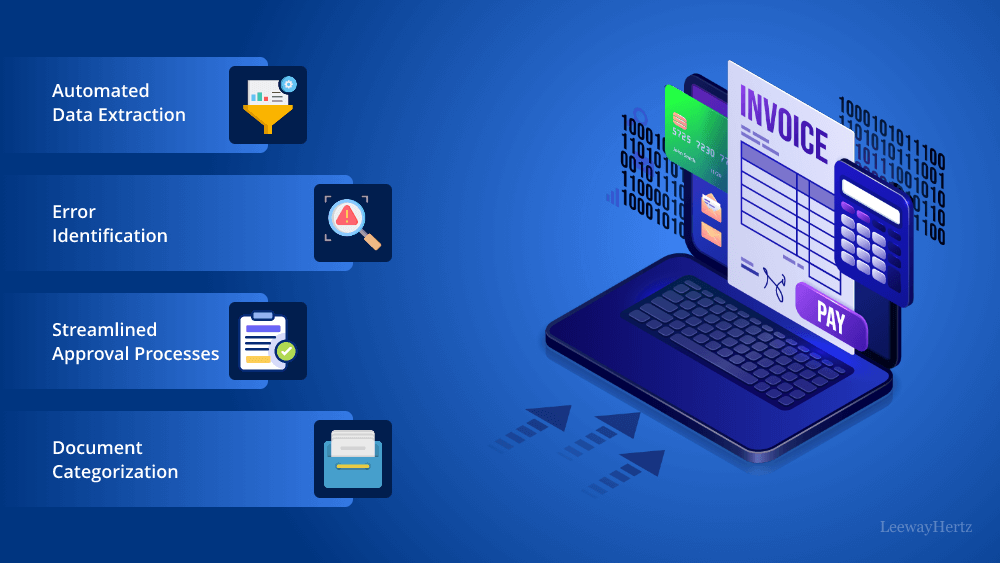
  • Automated Data Extraction: AI methodologies like machine learning, Natural Language Processing (NLP), and pattern recognition are instrumental in swiftly and precisely extracting pertinent information from invoices. These techniques empower systems to analyze and interpret diverse invoice formats, languages, and writing styles, thereby enhancing extraction efficiency. By scrutinizing the text, AI systems can pinpoint vital data points such as invoice numbers, dates, vendor details, and line items, diminishing the necessity for manual data entry and minimizing errors.
  • Non-PO Invoice Processing: Conventional methods such as OCR and rules-based programming may encounter difficulties with non-standard invoices, such as handwritten ones. AI, particularly machine learning models, excels in managing diverse invoice formats and variations, accurately capturing nuanced information. It becomes proficient at identifying and interpreting variations as it processes more invoices.
  • Enhanced Accuracy and Efficiency: AI algorithms continually learn and refine from labeled data, leading to heightened accuracy over time. By efficiently handling large volumes of invoices, AI streamlines the invoice processing workflow, reducing processing times and bolstering overall efficiency.
  • Streamlined Approval Processes: AI intelligently identifies approvers based on historical data and predefined rules, ensuring that invoices are promptly routed to the appropriate personnel for approval. This streamlines the approval process, minimizes delays, and enhances accountability within the organization.
  • Integration with ERP Systems: AI-driven invoice processing solutions seamlessly integrate with existing Enterprise Resource Planning (ERP) or accounting software, facilitating smooth data transfer and synchronization. This integration enables real-time visibility into financial data and augments the overall efficiency of accounting processes.

Benefits of AI-driven invoice processing

AI-driven automation revolutionizes financial operations in organizations, delivering a multitude of advantages. Here’s a glimpse:

  • Expedited invoice processing: Utilizing AI significantly reduces processing durations compared to manual methods. For example, while manual data extraction might consume over three and a half minutes per invoice, AI-driven extraction completes the task in less than 27 seconds. This swift processing accelerates workflows, ensuring timely vendor payments and bolstering operational efficiency.
  • Accurate data extraction: AI algorithms excel in extracting and validating data from invoices with remarkable precision, greatly minimizing errors common in manual data entry. Cognitive data capture, achieving up to 98% accuracy, empowers users to process invoices with heightened reliability, thus reducing discrepancies and maintaining the integrity of financial records.
  • Increased workforce efficiency: By automating repetitive tasks like data entry and validation, AI frees finance professionals from mundane duties, enabling them to concentrate on strategic endeavors. This surge in productivity, allowing simultaneous processing of six times more documents, optimizes resource allocation and boosts organizational efficiency.
  • Cost-effectiveness: Efficiency gains from AI automation lead to substantial cost reductions by cutting down labor expenses associated with manual invoice processing. Furthermore, fewer errors result in decreased financial discrepancies, fortifying the organization’s financial well-being and enhancing the bottom line. Data from Aberdeen Group indicates that AI adoption can reduce costs within accounts payable departments by a significant 30%.
  • Streamlined cash flow management: Swift invoice processing accelerates approval and payment cycles, improving cash flow management. Organizations leveraging AI-powered automation capture nearly 75% of early payment discounts, nurturing stronger ties with suppliers and vendors while maximizing financial benefits.
  • Fraud prevention and error detection: AI-driven systems can pinpoint anomalies and patterns suggestive of fraudulent invoices or errors, shielding organizations from financial losses and reputational harm.
  • Regulatory compliance assurance: AI-driven solutions ensure strict adherence to regulatory requirements and internal policies by systematically validating invoices against predefined rules and standards. This proactive approach mitigates the risk of non-compliance penalties and cultivates a culture of regulatory integrity.

Endnote

Integrating AI into invoice processing signifies more than just a technological leap; it marks a fundamental shift in approach. AI empowers businesses to refine their financial processes and enhance efficiency by automating mundane tasks, reducing errors, and extracting valuable insights. From expedited processing times and streamlined workflows to better cash flow management and heightened data precision, the undeniable advantages contribute significantly to the genuine financial transformation of your enterprise.
As AI technology advances, its capabilities in invoice processing will expand further. Anticipate even more sophisticated solutions adept at handling intricate invoices, adapting to various formats, seamlessly integrating with current systems, and leveraging historical data to identify anomalies and forecast future trends. This progression will pave the way for fully autonomous invoice processing, liberating human resources for more strategic endeavors and higher-level tasks.
While AI cannot entirely supplant human oversight, it is a potent tool to augment human capabilities. Embracing AI in invoice processing unlocks a future characterized by optimized financial operations, enhanced profitability, and a competitive edge in today’s dynamic market landscape. The future of invoice processing is intelligent, automated, and AI-driven - are you prepared to embrace it?