Optimizing Supply Chain Operations with Generative AI

In today’s fast-paced and complex supply chain landscape, businesses face numerous challenges, including demand fluctuations, supply disruptions, and inefficiencies in logistics. To stay competitive, companies need intelligent, data-driven solutions that can streamline operations, enhance decision-making, and drive cost savings. This is where Generative AI comes into play. By leveraging advanced AI models, organizations can automate critical supply chain processes, optimize resource allocation, and enhance overall efficiency.

The Role of Generative AI in Supply Chain Management

Generative AI is transforming supply chain operations by automating workflows, optimizing inventory processes, and reducing manual effort. By analyzing complex supply chain data, AI-powered solutions help businesses improve accuracy, reduce costs, and ensure seamless operations. Some key areas where Generative AI is making a significant impact include:

  • Demand Planning: AI-driven forecasting models analyze historical data, market trends, and external factors to predict demand fluctuations, helping businesses manage inventory more effectively.
  • Supplier Coordination: AI-powered automation streamlines supplier onboarding, contract management, and compliance tracking, ensuring better collaboration and efficiency.
  • Logistics Management: AI solutions optimize delivery routes based on real-time constraints like traffic, weather, and order priorities, reducing transportation costs and improving service levels.
  • Risk Mitigation: AI enhances risk assessment by analyzing supply chain disruptions, geopolitical factors, and economic conditions to provide proactive recommendations.

Generative AI Solutions for Supply Chain Optimization

To help businesses navigate the complexities of supply chain management, companies like The Hackett Group offer advanced Generative AI solutions tailored to specific operational needs. These solutions enhance efficiency, minimize errors, and accelerate supply chain processes.

1. Supply Chain Strategy Consulting

Generative AI supports supply chain consulting by analyzing vast datasets, identifying optimization opportunities, and providing strategic recommendations. AI-driven insights enable businesses to build more agile, resilient, and cost-effective supply chain strategies.

2. AI-Powered Procurement Automation

Manual procurement processes are prone to inefficiencies and errors. Generative AI automates purchase order generation, invoice processing, and cost analysis, reducing manual effort and improving procurement efficiency.

3. Intelligent Inventory Management

Maintaining optimal inventory levels is crucial for operational efficiency. AI-driven inventory management solutions analyze real-time data to prevent overstocking, reduce shortages, and optimize stock levels.

4. Logistics and Route Optimization

AI-powered logistics solutions enhance route planning by considering real-time factors such as traffic congestion, weather conditions, and delivery priorities. These solutions help businesses reduce transportation costs and improve delivery timelines.

5. Quality Control and Compliance Automation

AI-driven quality control solutions analyze inspection data to identify defects and generate compliance reports, ensuring product quality while minimizing waste and rework costs.

AI XPLR™: Enhancing Supply Chain Operations with AI Insights

Navigating AI adoption in supply chain management can be challenging. AI XPLR™, a powerful platform by The Hackett Group, simplifies this process by offering data-driven insights, industry best practices, and structured roadmaps for AI adoption. Key features include:

  • AI Opportunity Identification: Visualize AI’s impact across sourcing, logistics, inventory, and fulfillment using structured process maps and heatmaps.
  • AI Effectiveness Assessment: Measure AI-driven improvements in efficiency, cost savings, and supply chain agility.
  • Best Practices and Process Flows: Implement AI in high-impact areas using industry-validated frameworks.
  • AI Readiness Evaluation: Assess governance, data infrastructure, and workforce capabilities before implementation.

Why Partner with The Hackett Group?

The Hackett Group provides end-to-end AI-driven supply chain solutions designed to optimize efficiency and enhance business outcomes. By leveraging proprietary research, industry benchmarks, and cutting-edge AI models, The Hackett Group ensures seamless AI integration and long-term success.

Key Benefits of Partnering with The Hackett Group:

  • Proven Industry Expertise: Decades of experience in supply chain consulting and AI-driven transformation.
  • Data-Driven Insights: AI-powered solutions backed by extensive research and benchmarking data.
  • Customized AI Solutions: Tailored AI implementations that address specific business challenges.
  • Accelerated Implementation: Structured roadmaps and prebuilt workflows for seamless AI adoption.
  • Ongoing Support and Innovation: Continuous monitoring, optimization, and support to ensure long-term AI success.

Final Thoughts

Generative AI is revolutionizing supply chain management by enhancing automation, optimizing workflows, and improving decision-making. Businesses that embrace AI-driven supply chain strategies can achieve greater efficiency, resilience, and cost savings. By partnering with experts like The Hackett Group, organizations can navigate AI adoption seamlessly and unlock the full potential of Generative AI in supply chain operations.

For businesses looking to enhance their supply chain with AI-driven solutions, now is the time to explore Generative AI’s transformative potential and take a step toward a more intelligent and efficient supply chain ecosystem.
A Strategic Approach to Generative AI Implementation

Generative AI is transforming industries by automating workflows, enhancing content generation, and enabling smarter decision-making. However, businesses often face challenges in understanding how to integrate and scale AI solutions effectively. Generative AI consulting plays a crucial role in helping organizations navigate AI adoption from strategy to full-scale implementation.

In this blog, we explore how generative AI consulting services support businesses in their AI journey, the key services offered, and the benefits of partnering with an expert AI consultancy.

The Role of Generative AI Consulting

Generative AI consulting services provide expert guidance and strategic planning to help businesses leverage AI for automation, efficiency, and innovation. These services focus on defining AI strategies, selecting appropriate technologies, mitigating security risks, and ensuring smooth integration within enterprise workflows. By working with a generative AI consultancy, businesses can mitigate risks, accelerate deployment, and maximize their return on investment from AI initiatives.

Key Services Offered in Generative AI Consulting

AI Strategy and Roadmap Development

A successful AI transformation starts with a clear strategy and roadmap. Consultants analyze business objectives, conduct feasibility studies, and develop phased AI adoption plans. This ensures organizations implement AI in a structured, scalable manner.

Generative AI Audit and Readiness Assessment

Before deploying AI solutions, businesses need to evaluate their data infrastructure, governance policies, and current workflows. A generative AI audit assesses data quality, AI readiness, and potential roadblocks in AI adoption, helping organizations identify the best approach to AI implementation.

Proof of Concept Development

Before full-scale implementation, a proof of concept helps businesses validate the feasibility of generative AI solutions. It involves testing AI models on real-world data, measuring performance, and gathering stakeholder feedback. This minimizes risks and ensures AI investments are well-placed.

Technology Selection and Model Customization

With various AI models available such as GPT, PaLM, Llama, Gemini, Claude, and Mixtral, selecting the right one is crucial. Consulting services help businesses choose the most suitable AI model based on their use case, fine-tune models using proprietary business data, and optimize AI outputs for industry-specific applications.

Security and Compliance Risk Assessment

AI security is a growing concern. Consulting services help mitigate risks such as data privacy breaches, AI model biases, misuse of AI-generated content, and regulatory compliance challenges. A security-first approach ensures businesses can use AI responsibly and ethically.

Custom AI Solution Development

Beyond off-the-shelf models, businesses often require custom AI solutions tailored to their workflows. AI consultants assist in building AI-powered virtual assistants, automated report generation tools, and AI copilots for business intelligence and decision-making.

AI Integration and Enterprise Deployment

Seamless AI integration into existing IT ecosystems is essential for long-term success. Consultants work closely with IT teams to embed AI models into CRM, ERP, and data management systems, automate workflows without disrupting operations, and ensure scalability and long-term efficiency of AI applications.

Ongoing AI Optimization and Support

AI models require continuous monitoring, updating, and performance tuning. Consulting services offer post-deployment support, ensuring AI remains accurate, efficient, and aligned with evolving business needs.

Benefits of Generative AI Consulting

Partnering with a generative AI consulting firm enables businesses to:

  • Accelerate AI adoption by reducing the time needed for implementation
  • Minimize risks by avoiding common AI pitfalls related to data bias, security, and compliance
  • Enhance automation by optimizing repetitive workflows for improved efficiency
  • Improve decision-making through advanced analytics and AI-powered insights
  • Scale AI solutions to grow alongside business needs

How AI Consulting Tools Like AI XPLR and ZBrain Help

AI consulting platforms such as AI XPLR and ZBrain enhance the consulting process by identifying AI opportunities, automating workflows, ensuring AI governance, and enhancing decision-making. These platforms help businesses streamline AI implementation and maximize return on investment.

Conclusion

Generative AI consulting services bridge the gap between AI potential and real-world implementation. By leveraging expert guidance, businesses can strategically adopt AI, mitigate risks, and optimize performance.

For organizations looking to integrate AI-driven automation, predictive analytics, or content generation, working with an experienced generative AI consultancy can accelerate innovation and drive long-term growth.

Unlocking AI-Driven Transformation with AI XPLR™

In today’s fast-evolving digital landscape, businesses must harness the power of generative AI to stay ahead. AI XPLR™ by The Hackett Group provides a structured, data-driven approach to AI adoption, offering organizations the tools they need to assess readiness, strategize implementation, and unlock transformative value.

What is AI XPLR™?

AI XPLR™ combines industry-leading Digital World Class® performance data to quantify an organization’s AI potential. It delivers a detailed process-level readiness assessment and a customized roadmap, ensuring seamless AI adoption and business transformation. By leveraging AI XPLR™, businesses can make informed, data-backed decisions to accelerate AI deployment.

Key Features of AI XPLR™

1. Taxonomy Explorer

AI XPLR™ provides an in-depth view of business processes, helping organizations identify the areas best suited for AI implementation. This structured approach ensures a targeted and efficient AI adoption strategy.

2. Best Practices Process Flows

With AI XPLR™, businesses can pinpoint where AI can drive the most value. It maps out the most effective AI applications across functions and industries, ensuring organizations focus on high-impact areas.

3. Use Case Library

Jumpstart your AI journey with a comprehensive library of real-world AI use cases. This extensive database offers insights into successful AI implementations across industries, detailing the tools and skills required for execution.

4. Customizable Readiness Assessment

AI XPLR™ allows businesses to assess their readiness for AI implementation based on key organizational elements. This tailored evaluation ensures that companies can confidently progress with AI deployment.

5. Benefits Analysis

Organizations can capture and quantify expected benefits, aligning AI initiatives with business objectives. AI XPLR™ helps prioritize AI investments by measuring their impact on business value drivers.

6. Prebuilt Work Plans

To streamline AI adoption, AI XPLR™ provides pre-populated activity plans, critical milestones, and structured AI profiles. This feature accelerates AI implementation by offering a clear execution framework.

Transforming Business Functions with AI XPLR™

AI XPLR™ enables organizations to reimagine business operations by:

  • Creating a tailored AI heatmap – Identifying high-impact AI opportunities and quantifying their potential value.
  • Evaluating AI readiness – Assessing the business and technology infrastructure for AI adoption.
  • Strategic planning and execution – Developing pilot programs and implementation strategies.
  • Driving enterprise-wide transformation – Integrating AI seamlessly to accelerate digital evolution.

Accelerating AI Adoption with AI XPLR™

AI XPLR™ simplifies generative AI adoption by providing expert guidance, real-world insights, and hands-on learning. Organizations gain access to:

  • Benchmarking data and best practices – Helping businesses refine their AI strategy.
  • Practical AI use cases – Enabling quick identification of AI opportunities.
  • Step-by-step implementation guidance – Ensuring effective AI deployment.
  • Hands-on learning experiences – Building AI proficiency and confidence among teams.

Enhancing AI XPLR™ for Maximum Impact

To further strengthen AI XPLR™, additional enhancements can be incorporated, including:

  • FAQ Section: Providing answers to common AI adoption queries.
  • Technology Stack Overview: Showcasing the fundamental AI technologies used within AI XPLR™.
  • Success Metrics: Highlighting the number of businesses transformed and AI-driven impact.
  • Walkthrough Video: Offering an engaging demonstration of AI XPLR™ in action.

Conclusion

AI XPLR™ serves as a comprehensive AI adoption framework, empowering businesses with the data, insights, and strategies required to maximize AI-driven transformation. With a structured, practical approach to AI readiness and execution, AI XPLR™ ensures that organizations can confidently navigate the AI revolution and achieve sustainable success.


Generative AI Consulting Services: Transform Your Business with AI-Driven Innovation

Generative AI is reshaping industries by streamlining operations, enhancing decision-making, and driving breakthrough business outcomes. Our expert Generative AI consulting services empower organizations with AI-driven automation, intelligent data insights, and content creation—helping businesses stay ahead of the competition.

Why Leading Enterprises Trust Us

With a proven track record of delivering 200+ successful projects across industries, we enable businesses to unlock efficiency and innovation through GenAI consulting. (Specific company names and case studies can be included here.)

Our Generative AI Consulting Services

We specialize in helping organizations leverage Generative AI consulting services to achieve strategic goals. Our offerings include:

Strategic Generative AI Roadmap

We work with you to define clear objectives, identify high-impact GenAI consulting opportunities, and develop a tailored roadmap for successful implementation. This includes assessing your current infrastructure and data readiness for Generative AI models.

Custom Generative AI Solution Development

Our team builds customized GenAI solutions for your unique data and use cases—whether you need a brand-new Generative AI application or enhancements to an existing system.

Rapid Prototyping & Proof of Concept

We help you validate Generative AI consulting services through early-stage prototypes, allowing for iterative improvements before full-scale implementation.

Integration & Deployment

We ensure seamless integration of GenAI solutions into your existing systems and workflows, handling everything from API connections to cloud deployment based on your requirements.

Training & Enablement

We equip your team with the necessary skills to use and manage Generative AI tools effectively through customized training programs and ongoing support.

Our Approach to Delivering End-to-End GenAI Solutions

We turn strategy into action with a structured approach to Generative AI consulting, ensuring efficiency, scalability, and business impact:

  • Assessment & Strategy – Evaluating your business needs, data readiness, and GenAI potential to define a clear roadmap.
  • Solution Development – Designing and building tailored GenAI solutions aligned with your workflows.
  • Seamless Integration – Embedding Generative AI consulting into your systems with minimal disruption.
  • Optimization & Scaling – Refining and scaling solutions for long-term efficiency and adaptability.
  • Security & Compliance – Implementing strong governance, data privacy, and ethical AI safeguards.

Why Partner with Us?

  • Tailored AI Strategies – Solutions aligned with your business objectives for practical and impactful adoption.
  • Seamless Integration – Minimal disruption while maximizing efficiency.
  • Scalable & Future-Ready Solutions – Adapting to evolving business needs for long-term growth.
  • Secure & Compliant – Ensuring ethical AI adoption and regulatory compliance.
  • Measurable ROI – Optimizing workflows, reducing costs, and unlocking new revenue opportunities.

Industries We Empower

  • Finance & Banking – Automating document processing, strengthening fraud detection, and enhancing financial insights.
  • Healthcare – Streamlining medical documentation, improving patient care, and accelerating drug discovery.
  • Retail & E-commerce – Driving personalization, dynamic content generation, and intelligent recommendations.
  • Manufacturing & Supply Chain – Enhancing demand forecasting, quality control, and supply chain automation.
  • Marketing & Sales – Enabling hyper-personalized content, automated campaigns, and data-driven sales strategies.

Conclusion

Generative AI consulting is transforming industries, providing businesses with innovative tools to automate operations, improve decision-making, and drive efficiency. With the right GenAI consulting partner, organizations can unlock unprecedented value and stay competitive in a rapidly evolving market. Our Generative AI consulting services offer end-to-end solutions tailored to your unique business needs. Contact us today to explore how we can help you harness the full potential of Generative AI consulting for your enterprise.

Generative AI Consulting Services: Transform Your Business with AI-Driven Innovation

Harness the transformative potential of Generative AI to streamline operations, enhance decision-making, and drive breakthrough business outcomes. Our expert consulting services empower you with AI-driven automation, content creation, and intelligent data insights—helping you stay ahead of the competition.

Why Leading Enterprises Trust Us

We have successfully delivered 200+ projects across industries, helping businesses leverage Generative AI consulting services to unlock efficiency and innovation. (We can include specific company names and case studies here.)

Our Generative AI Consulting Services

We specialize in helping organizations leverage the power of Generative AI consulting to achieve strategic goals. Our services include:

Strategic Generative AI Roadmap

We work with you to define clear objectives, identify high-impact GenAI consulting opportunities, and develop a tailored roadmap for successful implementation. This includes assessing your current infrastructure and data readiness for generative AI models.

Custom Generative AI Solution Development

Our team builds customized GenAI solutions for your unique data and use cases—whether you need a brand-new generative AI application or enhancements to an existing system.

Rapid Prototyping & Proof of Concept

We help you validate Generative AI consulting services through early-stage prototypes, allowing for iterative improvements before full-scale implementation.

Integration & Deployment

We ensure seamless integration of GenAI solutions into your existing systems and workflows, handling everything from API connections to cloud deployment based on your requirements.

Training & Enablement

We equip your team with the necessary skills to use and manage Generative AI tools effectively through customized training programs and ongoing support.

Our Approach to Delivering End-to-End GenAI Solutions

We turn strategy into action with a structured approach to Generative AI consulting, ensuring efficiency, scalability, and business impact:

  • Assessment & Strategy – Evaluating your business needs, data readiness, and GenAI potential to define a clear roadmap.
  • Solution Development – Designing and building tailored GenAI solutions aligned with your workflows.
  • Seamless Integration – Embedding Generative AI consulting into your systems with minimal disruption.
  • Optimization & Scaling – Refining and scaling solutions for long-term efficiency and adaptability.
  • Security & Compliance – Implementing strong governance, data privacy, and ethical AI safeguards.

Why Partner with Us?

  • Tailored AI Strategies – Solutions aligned with your business objectives for practical and impactful adoption.
  • Seamless Integration – Minimal disruption while maximizing efficiency.
  • Scalable & Future-Ready Solutions – Adapting to evolving business needs for long-term growth.
  • Secure & Compliant – Ensuring ethical AI adoption and regulatory compliance.
  • Measurable ROI – Optimizing workflows, reducing costs, and unlocking new revenue opportunities.

Industries We Empower

  • Finance & Banking – Automating document processing, strengthening fraud detection, and enhancing financial insights.
  • Healthcare – Streamlining medical documentation, improving patient care, and accelerating drug discovery.
  • Retail & E-commerce – Driving personalization, dynamic content generation, and intelligent recommendations.
  • Manufacturing & Supply Chain – Enhancing demand forecasting, quality control, and supply chain automation.
  • Marketing & Sales – Enabling hyper-personalized content, automated campaigns, and data-driven sales strategies.

Conclusion

Generative AI is revolutionizing industries, and with the right GenAI consulting partner, businesses can unlock unprecedented value. Whether you’re looking to develop AI-driven automation, enhance decision-making, or streamline operations, our Generative AI consulting services provide end-to-end solutions tailored to your needs. Contact us today to explore how we can help you harness the full potential of Generative AI consulting for your business.

AI agents for HR

AI agents in HR integrate cutting-edge technologies to streamline and enhance workforce management processes. These components are pivotal:

  1. Natural Language Processing (NLP): Enables AI agents to understand and respond to human queries, supporting seamless communication between HR personnel and employees.
  2. Machine Learning (ML): Powers predictive analytics, helping HR teams forecast hiring needs, employee attrition, and training requirements.
  3. Automation Capabilities: Automates repetitive tasks such as resume screening, interview scheduling, and payroll management.
  4. Integration Tools: Allows smooth interoperability with existing HR management systems, ensuring a cohesive digital ecosystem.
  5. Data Analytics: Provides actionable insights by analyzing workforce data to inform decision-making and strategy development.

These components together create a robust framework for efficient, data-driven HR operations.

Understanding AI Agents in HR and Their Key Capabilities

AI agents in HR are intelligent systems designed to assist in various facets of workforce management. Their key capabilities include:

  1. Employee Support: AI agents act as virtual HR assistants, answering employee questions about benefits, policies, and payroll in real-time.
  2. Talent Acquisition: By leveraging AI, HR teams can efficiently source, screen, and shortlist candidates, significantly reducing the hiring cycle.
  3. Performance Management: AI analyzes employee performance data, offering insights into productivity trends and areas for improvement.
  4. Learning and Development: Tailored training recommendations based on employee skills and career goals ensure a personalized growth journey.
  5. Compliance Management: AI ensures adherence to labor laws and organizational policies by automating compliance checks and reporting.

These capabilities enhance the HR function’s ability to foster employee satisfaction, productivity, and regulatory adherence.

Use Cases of AI Agents in HR

The potential applications of AI agents in HR are vast, encompassing various processes:

  1. Recruitment Automation: AI agents streamline candidate sourcing, screening, and interview scheduling, improving efficiency.
  2. Onboarding: AI-powered chatbots guide new hires through onboarding, answering questions and facilitating document submissions.
  3. Employee Engagement: By analyzing employee sentiment through surveys and feedback, AI agents provide actionable recommendations to boost engagement.
  4. Conflict Resolution: AI agents mediate workplace disputes by analyzing grievances and proposing unbiased resolutions.
  5. HR Analytics: AI identifies workforce trends, such as attrition risks or skill gaps, enabling proactive measures.

These use cases underscore the transformative impact of AI agents on HR operations.

Key Benefits of AI Agents in HR

Implementing AI agents offers significant advantages to HR teams, including:

  1. Enhanced Efficiency: Automating repetitive tasks frees HR professionals to focus on strategic initiatives.
  2. Improved Decision-Making: Data-driven insights enable HR teams to make informed decisions regarding hiring, performance, and employee development.
  3. Cost Savings: By reducing manual workloads, AI agents minimize operational costs and optimize resource allocation.
  4. Personalized Employee Experience: AI delivers tailored interactions and solutions, fostering greater employee satisfaction and retention.
  5. Scalability: AI agents adapt to growing organizational needs, ensuring consistent HR service delivery.

These benefits highlight the value AI agents bring in optimizing HR processes and outcomes.

Endnote

AI agents are reshaping the HR landscape, offering innovative solutions that elevate efficiency, employee engagement, and strategic impact. As organizations continue to embrace digital transformation, the integration of AI in HR promises a future where workforce management is smarter, faster, and more personalized.

By adopting AI-driven tools, HR teams can not only meet current challenges but also proactively shape a dynamic and adaptable workforce strategy for the years ahead.

Generative AI for sales

Sales operations have evolved significantly over the past decade, integrating sophisticated tools and strategies to drive efficiency and results. Generative AI, a subset of artificial intelligence that creates content, insights, and predictions, is now emerging as a transformative force in this domain. By analyzing vast datasets and automating repetitive tasks, generative AI empowers sales teams to focus on building relationships and closing deals.

Generative AI goes beyond traditional automation by understanding and interpreting customer needs, crafting personalized solutions, and optimizing workflows. Its capabilities span from generating sales scripts to creating targeted marketing materials, offering an unprecedented level of support to sales operations. With businesses striving to stay competitive, generative AI is becoming indispensable for improving customer experiences, enhancing team productivity, and driving revenue growth.

Generative AI Use Cases in Sales Operations

The integration of generative AI into sales operations opens up a plethora of possibilities:

  1. Lead Qualification and Scoring
    Generative AI algorithms can analyze vast datasets to identify high-potential leads based on behavioral patterns, past interactions, and predictive analytics. This enables sales teams to prioritize prospects most likely to convert, significantly improving efficiency.
  2. Personalized Outreach
    Crafting tailored emails and messages for each prospect is time-intensive. Generative AI tools can automate this process, generating personalized and engaging communications that resonate with individual customer needs.
  3. Sales Forecasting
    By leveraging historical data and market trends, generative AI enhances the accuracy of sales forecasts. These insights enable teams to allocate resources effectively and set realistic targets, ensuring strategic alignment with business objectives.
  4. Content Creation
    From pitch decks to social media posts, generative AI can create high-quality sales and marketing collateral, saving time and ensuring consistency. This allows sales representatives to focus on high-value tasks like client engagement.
  5. Customer Support Automation
    Generative AI-powered chatbots provide instant responses to common queries, freeing up sales teams to handle more complex issues. These bots also gather valuable insights into customer preferences, enabling better decision-making.
  6. Training and Onboarding
    Generative AI can develop customized training materials and simulations for new hires, accelerating the onboarding process and ensuring they are equipped with the necessary skills and knowledge.

Measuring the ROI of Generative AI in Sales Operations

Understanding the return on investment (ROI) of generative AI initiatives is critical for demonstrating their value. Here’s how organizations can assess the impact:

  1. Increased Revenue
    By improving lead conversion rates and enhancing customer engagement, generative AI directly contributes to revenue growth. Tracking these metrics provides a clear picture of its financial impact.
  2. Time Savings
    Automating repetitive tasks like data entry and content creation allows sales teams to focus on strategic activities. Measuring the hours saved can quantify the productivity boost provided by generative AI.
  3. Customer Satisfaction Scores (CSAT)
    Enhanced personalization and faster response times often result in higher customer satisfaction. Monitoring CSAT and Net Promoter Scores (NPS) helps gauge the improvement in customer experiences.
  4. Cost Reduction
    Generative AI tools can streamline operations, reducing the need for manual intervention and cutting operational costs. Comparing pre- and post-implementation expenses highlights the efficiency gains.

Future Trends of Generative AI in Sales Operations

The potential of generative AI in sales operations continues to expand as technology advances. Key trends to watch include:

  1. Hyper-Personalization
    Future generative AI systems will offer even deeper personalization, creating real-time content tailored to individual customer profiles, preferences, and purchase histories.
  2. Integration with CRM Systems
    Seamless integration of generative AI with Customer Relationship Management (CRM) platforms will enable unified insights, empowering sales teams with a 360-degree view of customer interactions.
  3. Voice and Video Synthesis
    Generative AI will enable the creation of virtual sales assistants capable of conducting voice and video interactions with customers, offering a more human-like experience.
  4. Ethical AI Practices
    As AI adoption grows, ensuring transparency and ethical usage will become a top priority. Businesses will focus on building trust by adhering to regulations and maintaining data privacy.
  5. AI-Augmented Collaboration
    Generative AI will enhance team collaboration by automating meeting summaries, generating action items, and providing real-time insights during discussions.

Endnote

Generative AI is reshaping the sales operations landscape, providing teams with powerful tools to enhance efficiency, engagement, and outcomes. By automating routine tasks, enabling deep personalization, and delivering actionable insights, generative AI empowers sales professionals to focus on what matters most: building relationships and driving growth.

As organizations continue to explore the potential of this technology, understanding its ROI and staying ahead of emerging trends will be crucial. Embracing generative AI today sets the stage for a future of smarter, more agile, and more successful sales operations.

Generative AI in Healthcare: Transforming the Industry

What is Generative AI?

Generative AI represents a groundbreaking subset of artificial intelligence that focuses on creating new content by learning patterns from existing data. Unlike traditional AI systems designed to follow predefined rules, generative AI employs advanced machine learning models like Generative Adversarial Networks (GANs) and Transformer-based architectures (e.g., GPT). These models can generate diverse outputs, from realistic images and audio to written text and even synthetic medical data.

At its core, generative AI excels in understanding and replicating complex data patterns, making it invaluable in industries that deal with large, unstructured datasets. In healthcare, where data is vast and multifaceted—ranging from patient records to medical imaging—generative AI opens new frontiers in diagnostics, personalized treatments, and operational efficiency.

The Transformative Role of Generative AI in Healthcare

Generative AI is not just an innovation; it’s a transformation catalyst for healthcare. By harnessing the power of generative models, the industry can address long-standing challenges and unlock unprecedented opportunities.

Enhancing Diagnostics and Clinical Decision-Making

Generative AI enables healthcare professionals to analyze complex medical data with higher accuracy. For example, AI models trained on vast datasets of medical images can generate high-resolution, enhanced visuals to aid in diagnosing conditions like tumors or fractures. These AI-generated images often highlight anomalies that might be missed by the human eye, ensuring earlier detection and better outcomes.

Revolutionizing Drug Discovery

Drug discovery is a notoriously time-consuming and expensive process. Generative AI accelerates this journey by simulating molecular structures and predicting how different compounds interact with biological targets. This capability helps researchers identify viable drug candidates more quickly, reducing the time to market and overall costs.

Personalizing Patient Care

Healthcare is moving toward a patient-centric model, and generative AI is at the forefront of this shift. By analyzing patient data, generative models can craft tailored treatment plans that consider individual genetic profiles, medical histories, and lifestyle factors. This personalized approach improves treatment efficacy and patient satisfaction.

Optimizing Administrative Tasks

Healthcare systems often grapple with administrative burdens, from managing appointments to processing insurance claims. Generative AI can automate these tasks by generating accurate summaries of patient visits, automating claim forms, or drafting referral letters, allowing professionals to focus on patient care rather than paperwork.

Generative AI Use Cases in Healthcare

The application of generative AI in healthcare spans diverse use cases, each contributing to improved outcomes and operational efficiency.

1. Medical Imaging and Diagnostics

Generative AI excels in enhancing medical imaging techniques like MRI, CT scans, and X-rays. By generating ultra-clear images or reconstructing incomplete scans, AI improves diagnostic precision. For instance, AI-generated 3D models of organs can assist surgeons in planning complex procedures, minimizing risks during operations.

2. Drug Development and Repurposing

Generative AI is revolutionizing pharmaceutical research. AI models can predict the molecular properties of new drugs or suggest novel uses for existing medications. For example, during the COVID-19 pandemic, generative models were employed to identify potential treatments by analyzing existing drug databases.

3. Virtual Health Assistants

Generative AI powers virtual assistants that offer round-the-clock support to patients. These assistants can generate conversational responses to health-related inquiries, guide patients through symptoms, and recommend next steps, such as consulting a physician or visiting an emergency room.

4. Synthetic Data for Research

Accessing real-world medical data often comes with privacy concerns. Generative AI can produce synthetic datasets that mimic real patient data without compromising privacy. These synthetic datasets are invaluable for training machine learning models, conducting clinical trials, and performing epidemiological studies.

5. Personalized Therapeutics

Generative AI can design customized therapeutic solutions, such as prosthetics or implants, by analyzing patient-specific data. These AI-generated designs ensure better compatibility and functionality, enhancing patient outcomes.

6. Predictive Analytics for Disease Management

Generative AI can predict disease progression by analyzing longitudinal patient data. For instance, AI-generated models can forecast the likelihood of complications in chronic conditions like diabetes or cardiovascular diseases, enabling timely interventions.

7. Medical Content Generation

Healthcare professionals often need to produce patient education materials or medical documentation. Generative AI simplifies this by creating clear, personalized content, ensuring that patients understand their conditions and treatment plans.

8. Training and Simulation

Medical training benefits immensely from generative AI. By creating realistic simulations of surgeries or medical emergencies, AI provides students and professionals with hands-on experience in a risk-free environment.

Endnote

Generative AI is reshaping the healthcare landscape, driving advancements in diagnostics, drug discovery, personalized medicine, and more. Its ability to analyze, generate, and optimize vast amounts of data ensures improved patient outcomes, reduced operational costs, and enhanced overall efficiency.

However, with great potential comes responsibility. Ensuring ethical implementation, addressing privacy concerns, and maintaining transparency are critical as healthcare increasingly adopts generative AI. By striking a balance between innovation and responsibility, the healthcare industry can harness the transformative power of generative AI to deliver better care for all.

As this technology evolves, the possibilities for healthcare will only grow, paving the way for a future where medicine is more precise, accessible, and impactful than ever before.

Transforming Customer Support: The Impact of AI Agents

As businesses strive to meet the demands of modern consumers, AI agents for customer service are emerging as a key solution. Leveraging artificial intelligence, these agents are reshaping how companies interact with customers, enhancing efficiency and satisfaction. This article delves into the transformative role of AI agents in customer support, their applications, benefits, and what the future holds.

What Are AI Agents in Customer Service?

AI agents are intelligent software systems designed to assist with customer inquiries and support. Utilizing machine learning and natural language processing, these agents can analyze customer interactions, provide instant responses, and streamline service processes. By handling routine queries, AI agents enable human representatives to focus on more complex customer needs.

Key Applications of AI Agents in Customer Service

  1. Chatbots for Instant Communication

AI-driven chatbots facilitate immediate communication, answering customer queries in real time. This instant support improves the customer experience and builds trust in the brand.

  1. Data-Driven Insights

AI agents analyze customer interactions to derive insights that help businesses understand customer behavior and preferences, leading to more effective marketing strategies.

  1. Streamlined Service Operations

AI agents can manage a high volume of inquiries simultaneously, ensuring that customers receive timely support. This efficiency minimizes wait times and enhances service delivery.

  1. Automated Ticketing Systems

AI agents can automate ticket creation for unresolved issues, ensuring that customer concerns are logged and addressed promptly by human agents when necessary.

  1. Multilingual Support

AI agents can provide support in multiple languages, catering to a diverse customer base and ensuring that language barriers do not hinder customer service.

Benefits of AI Agents in Customer Service

  1. Increased Operational Efficiency

By automating repetitive tasks, AI agents enhance operational efficiency, allowing businesses to serve more customers with fewer resources.

  1. Enhanced Customer Experience

With personalized interactions and immediate responses, AI agents significantly improve the overall customer experience, leading to increased satisfaction and loyalty.

  1. Reduced Human Error

AI agents provide consistent and accurate responses, minimizing the risk of human error in customer service interactions.

  1. Cost-Effective Solutions

Implementing AI agents can reduce costs associated with hiring and training additional staff, ultimately benefiting the company’s bottom line.

Challenges in Implementing AI Agents in Customer Service

Despite their many advantages, the implementation of AI agents in customer service comes with challenges:

  1. Overcoming Customer Resistance

Some customers may be hesitant to interact with AI agents, preferring human agents for their inquiries. Education and gradual integration can help alleviate these concerns.

  1. Continuous Learning and Adaptation

AI agents require ongoing training to adapt to changing customer needs and preferences, ensuring that they remain effective in delivering support.

  1. Ensuring Data Security

Handling customer data necessitates robust security measures to prevent breaches and maintain customer trust.

The Future of AI Agents in Customer Service

The future of AI agents in customer service is filled with potential. As technology advances, these agents will become more capable and integral to customer service strategies.

  1. Integration of Advanced Analytics

AI agents will increasingly utilize advanced analytics to predict customer needs and provide tailored solutions proactively.

  1. Enhanced User Interfaces

Future AI agents will likely feature more intuitive interfaces, making interactions seamless and user-friendly for customers.

  1. Collaborative Service Models

The future will see AI agents collaborating closely with human representatives, leveraging the strengths of both to provide exceptional customer service.

Conclusion

AI agents for customer service are revolutionizing how businesses engage with customers. By automating routine tasks, offering instant support, and providing valuable insights, these agents enhance efficiency and customer satisfaction. As organizations continue to harness the power of AI, they will discover new pathways to success in the competitive landscape.

For more insights and detailed information on AI agents for customer service, explore AI Agents for Customer Service.

Unlocking Innovation: Exploring Generative AI Use Cases and Capabilities Across Industries

Generative AI is a branch of artificial intelligence that uses machine learning techniques, such as unsupervised learning algorithms, to create content like videos, images, audio, text, or code. In unsupervised learning, models are trained on datasets without labeled outputs, allowing them to identify patterns and structures without human intervention. The goal is to use these models to analyze data and generate new, original content.

Generative AI tools utilize advanced algorithms to extract unique insights, enhancing decision-making processes and operational efficiency. Businesses can leverage generative AI to stay competitive in dynamic markets by offering customized products and services.

By identifying patterns from input data, computers powered by generative AI can produce entirely new content.

How Generative AI Works: A Comprehensive Overview

Generative AI operates by creating content—text, images, music, and more—across various domains by learning from vast datasets. The process involves three main phases: training, tuning, and generation:

  1. Training: Building the Foundation
    • Data Collection: Developers gather massive amounts of unstructured, unlabeled data, like text or multimedia content.
    • Learning Process: The model learns through tasks like predicting words or identifying image patterns, adjusting internal parameters to minimize errors.
    • Computational Demand: Training requires significant computational power, often using thousands of GPUs for extended periods. Open-source foundation models can help save time and resources.
  2. Tuning: Customizing for Specific Tasks
    • Fine-Tuning: The model is tailored to specific tasks using labeled data. For example, a customer service chatbot would be trained on queries and responses for better accuracy.
    • Reinforcement Learning with Human Feedback (RLHF): Humans provide feedback to refine the model’s outputs, improving the relevance and accuracy of results.
  3. Generation, Evaluation, and Continuous Improvement
    • Content Generation: The model generates content based on input prompts, which is then evaluated for quality.
    • Evaluation and Retuning: Regular assessments ensure the model maintains performance, with feedback driving further improvements.
    • Retrieval-Augmented Generation (RAG): RAG enhances accuracy by incorporating external data sources.

Generative AI Use Cases and Capabilities

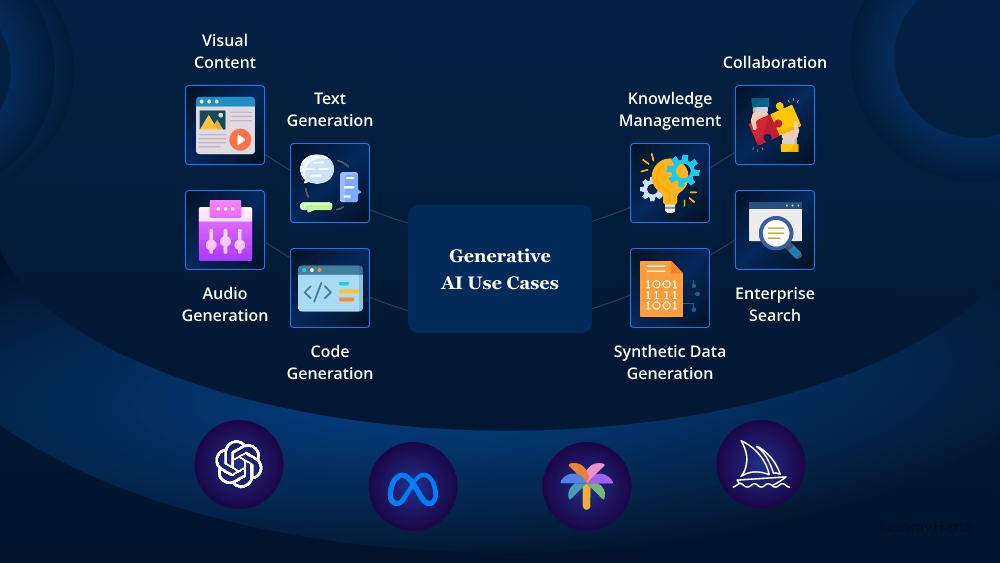
Generative AI has broad capabilities, including video and audio generation, synthetic data creation, text generation, and code generation. These functions are driving innovation across industries. Below are some key Generative AI use cases:

Generative AI Use Cases in Visual Content

  1. Image Generation and Enhancement: Generative AI tools, often text-to-image models, allow users to input descriptions and generate realistic images based on various parameters like style or location. These tools also offer image enhancement features, such as:
    • Image Completion: Filling in missing parts of an image.
    • Semantic Image-to-Photo Translation: Converting sketches into photorealistic images.
    • Image Super-Resolution: Enhancing low-resolution images without losing detail.
  2. Video Creation: AI tools automate video production tasks like composition, special effects, and resolution enhancement. Key features include:
    • Video Prediction: Predicting future frames based on spatial and temporal analysis.
    • Video Style Transfer: Applying the style of one video to another.
  3. 3D Shape Generation: AI can create 3D models using techniques like VAEs, GANs, and autoregressive models, aiding tasks such as 3D printing and virtual reality.

Generative AI Use Cases Across Industries

Entertainment:

  • Music Generation: AI tools can create or remix music by analyzing patterns.
  • Video Editing and Special Effects: AI assists in advanced editing and producing animations or movies.
  • Gaming: AI develops new characters, levels, and storylines, enriching player experiences.
  • Virtual Reality Development: AI generates immersive environments and realistic voices for avatars.

Finance & Banking:

  • Fraud Detection: AI identifies fraudulent activity by analyzing transaction data.
  • Personalized Banking Experiences: AI provides tailored financial advice and services.
  • Risk Management: AI predicts risks by analyzing historical trends and data.

Healthcare:

  • Medical Diagnostics: AI improves accuracy in diagnosing conditions through imaging analysis.
  • Personalized Medicine: AI helps develop customized treatment plans based on patient data.
  • Drug Discovery: AI accelerates drug research and repurposing.

Endnote

Generative AI is reshaping industries globally, from creative fields like art and music to precision-focused sectors like healthcare and finance. It drives innovation, enhancing creativity, productivity, and operational efficiency. As generative AI advances, it’s crucial to consider ethical challenges while exploring new possibilities.

Generative AI has only begun its transformative journey. Its influence will continue to shape our world, unlocking the potential for even greater human-AI collaboration.

Ready to automate your business operations with generative AI? Connect with LeewayHertz’s generative AI developers today!