In the fast-paced world of business, staying ahead of the competition requires a deep understanding of market trends, consumer behavior, and emerging opportunities. Thanks to advancements in technology, particularly Artificial Intelligence (AI), market research has undergone a transformative evolution. This article explores the dynamic landscape of AI in market research, delving into the nuances of how AI is shaping the industry and redefining the way businesses make informed decisions.
AI in Market Research
Gone are the days of manual data collection and analysis in market research. AI has ushered in a new era by automating and enhancing various aspects of the research process. The convergence of AI algorithms, machine learning, and big data analytics has enabled businesses to gain unprecedented insights into consumer preferences, market trends, and competitive landscapes.
The Role of AI in Market Research
Data Processing and AnalysisOne of the primary contributions of AI in market research is its ability to process vast amounts of data at an unprecedented speed. Traditional methods often struggle to handle the sheer volume of information available, leading to delays and incomplete analyses. AI-driven tools, on the other hand, excel in processing data from diverse sources, extracting relevant insights, and presenting them in a comprehensible format.AI algorithms can identify patterns, correlations, and trends that may elude human analysts, providing a more nuanced understanding of market dynamics. This not only accelerates the research process but also ensures a higher level of accuracy in decision-making.
Predictive AnalyticsAI-driven market research goes beyond historical data analysis. Predictive analytics, powered by AI algorithms, enables businesses to forecast future market trends and consumer behavior with a high degree of accuracy. By analyzing past data and identifying patterns, AI can predict potential shifts in demand, helping businesses proactively adapt their strategies.This predictive capability is particularly valuable in a rapidly changing business environment, allowing companies to stay ahead of market fluctuations and capitalize on emerging opportunities.
Consumer Insights and Sentiment AnalysisUnderstanding consumer behavior is critical for businesses to tailor their products and marketing strategies effectively. AI excels in sentiment analysis, processing vast amounts of social media, customer reviews, and online discussions to gauge consumer opinions and preferences.By analyzing the sentiment behind consumer interactions, businesses can not only identify areas for improvement but also gain insights into emerging trends and potential product innovations. This real-time feedback loop enables agile decision-making and helps companies stay attuned to the ever-evolving needs of their target audience.
Personalized Marketing StrategiesAI facilitates the creation of highly targeted and personalized marketing campaigns. By analyzing individual consumer preferences and behaviors, AI algorithms can recommend products, services, and content that are more likely to resonate with specific segments of the audience.This level of personalization enhances the overall customer experience, increases engagement, and contributes to higher conversion rates. AI-driven market research enables businesses to craft marketing strategies that are not only efficient but also more customer-centric.
Challenges and Ethical Considerations
While the integration of AI in market research brings about numerous benefits, it is not without its challenges. Privacy concerns, ethical considerations, and the potential for bias in algorithms are areas that require careful attention.
Privacy Concerns:The collection and analysis of vast amounts of personal data raise legitimate privacy concerns. It is essential for businesses to prioritize data security and adopt transparent practices in handling consumer information. Striking the right balance between data-driven insights and respecting individual privacy is crucial for the ethical use of AI in market research.
Ethical Considerations:The ethical implications of AI in market research extend beyond data privacy. Issues such as consent, the responsible use of AI, and the potential impact on employment should be addressed by businesses and regulatory bodies. Establishing ethical guidelines for the deployment of AI ensures that technology is harnessed for the greater good without compromising societal values.
Bias in Algorithms:AI algorithms are only as unbiased as the data they are trained on. If the training data contains biases, the algorithms can inadvertently perpetuate and amplify those biases. It is imperative for businesses to regularly audit and refine AI models to minimize bias and ensure fair and equitable outcomes.
The Future of AI-Driven Market Research
As technology continues to advance, the future of AI in market research looks promising. Here are some key trends and developments that are likely to shape the landscape:
Advanced Natural Language Processing (NLP):Improvements in Natural Language Processing will enhance the ability of AI systems to understand and interpret human language. This will enable more sophisticated sentiment analysis, allowing businesses to gain deeper insights into consumer opinions and emotions.
Integration of AI with IoT (Internet of Things):The proliferation of IoT devices will provide an even larger pool of data for AI to analyze. This integration will enable businesses to gather real-time information on consumer behavior, product usage, and market trends, further refining their decision-making processes.
AI-Powered Virtual Assistants for Research:Virtual assistants powered by AI will play an integral role in market research, automating routine tasks, answering queries, and providing instant access to relevant information. This will not only increase the efficiency of research processes but also empower researchers with on-demand insights.
Enhanced Predictive Modeling:AI’s predictive modeling capabilities will continue to evolve, allowing businesses to anticipate market trends and consumer behavior with even greater accuracy. This will be instrumental in strategic planning and risk management.
Conclusion
The integration of AI in market research marks a paradigm shift in the way businesses understand, analyze, and respond to market dynamics. From data processing and predictive analytics to personalized marketing strategies, AI-driven market research offers a plethora of opportunities for businesses to gain a competitive edge.
However, as the industry embraces these technological advancements, it is crucial to address ethical considerations and ensure responsible and transparent use of AI. By navigating these challenges, businesses can unlock the full potential of AI in market research and pave the way for a future where data-driven insights drive innovation and growth.
Welcome to the forefront of technology, where artificial intelligence seamlessly integrates with app development. In this in-depth guide, we’ll navigate the intricate process of building an app with ChatGPT, a transformative approach that elevates user interactions and experiences to unprecedented levels.
Unveiling the Power of ChatGPT
Before diving into the development intricacies, let’s dissect what makes ChatGPT a formidable force. Beyond its natural language processing capabilities, ChatGPT’s contextual understanding redefines user engagement, promising a more human-like interaction.
Preliminary Considerations
Define Your App’s Purpose: Articulate the objectives and functionalities clearly, exploring how ChatGPT can enhance user experiences.
User Engagement Strategies: Investigate how ChatGPT integration can bolster user engagement, creating a more immersive and satisfying app environment.
A Comprehensive Guide on Building an App with ChatGPT
3.1. Setting Up Your Development Environment Ensure a robust development environment, paving the way for seamless ChatGPT integration.
3.2. Choose the Right Framework Evaluate compatible frameworks and choose one aligned with your app’s requirements, influencing performance and scalability.
3.3. API Integration Integrate ChatGPT’s API to unleash its natural language understanding power, crafting dynamic conversational experiences.
Best Practices in Building with ChatGPT
Crafting Natural Conversations: Design authentic interactions for a fluid and engaging user experience.
Platform Optimization: Tailor your app for various platforms, optimizing UI and ChatGPT interactions seamlessly.
Trobleshooting and Optimization Techniques
Explore common challenges and discover strategies to optimize app performance, from handling user queries to refining conversation flows.
Real-world Applications and Case Studies
Dive into successful integrations, learning from experiences to ensure your app excels in the competitive landscape.
Conclusion
Embarking on the journey to build an app with ChatGPT requires a strategic blend of technical prowess and user-centric design. By understanding ChatGPT’s power, defining your app’s purpose, and implementing best practices, you are poised for success in creating a cutting-edge application. This guide serves as your compass in navigating the evolving landscape of AI-driven app development. Stay innovative, adapt to emerging trends, and witness your app thrive in the ever-evolving digital realm.
In the dynamic landscape of artificial intelligence, ChatGPT has emerged as a powerful tool, reshaping the way developers approach conversational applications. The demand for skilled ChatGPT developers is on the rise, and understanding the nuances of this technology is crucial. In this blog post, we’ll delve into the world of ChatGPT developers, exploring their expertise, the impact on conversational AI, and how businesses can benefit from their proficiency.
The Role of ChatGPT Developers
ChatGPT developers play a pivotal role in leveraging OpenAI’s language model for creating conversational applications. These professionals possess a unique skill set that combines programming expertise with a deep understanding of natural language processing (NLP). They are adept at fine-tuning models, ensuring optimal performance, and navigating the intricacies of generating human-like responses.
Key Skills of ChatGPT Developers
NLP Proficiency: ChatGPT developers excel in natural language processing, enabling them to comprehend and manipulate human language effectively. This skill is fundamental in crafting conversational agents that resonate with users.
Programming Expertise: A strong foundation in programming languages, such as Python, is essential for ChatGPT developers. This proficiency enables them to integrate the language model into diverse applications seamlessly.
Model Fine-Tuning: Successful ChatGPT developers are skilled in the fine-tuning process, adapting the base model to suit specific use cases. This customization ensures that the AI responds accurately and aligns with the desired conversational tone.
How ChatGPT Developers Enhance Conversational AI
Improved User Engagement: With the expertise of ChatGPT developers, conversational applications become more engaging and user-friendly. The ability to understand context and provide relevant responses enhances the overall user experience.
Efficient Problem-Solving: ChatGPT developers create AI models capable of effective problem-solving through natural language interactions. This is particularly valuable in customer support and other domains where quick, accurate responses are crucial.
Adaptability to Industries: The versatility of ChatGPT developers allows them to apply their skills across various industries. From healthcare to finance, these professionals tailor conversational AI solutions to meet the specific needs of diverse sectors.
Benefits of Collaborating with ChatGPT Developers
Innovative Solutions: Partnering with ChatGPT developers unlocks the potential for innovative solutions. These experts bring creativity to the development process, pushing the boundaries of what conversational AI can achieve.
Time and Cost Efficiency: Leveraging the expertise of ChatGPT developers streamlines the development cycle, saving both time and costs. Their proficiency ensures efficient implementation and reduces the need for extensive manual intervention.
Scalability: ChatGPT developers design applications with scalability in mind, allowing businesses to seamlessly expand their conversational AI capabilities as user demands grow.
Conclusion
In the realm of conversational AI, ChatGPT developers stand as architects of innovation. Their unique blend of natural language processing expertise and programming skills empowers businesses to create engaging, efficient, and scalable conversational applications. As the demand for such capabilities continues to grow, collaborating with ChatGPT developers becomes a strategic move for enterprises seeking to stay ahead in the evolving landscape of AI-driven interactions.
In the ever-evolving landscape of digital marketing, Artificial Intelligence (AI) has emerged as a game-changer for content creation. This transformative technology streamlines the creative process, enabling businesses to produce compelling and relevant content efficiently. In this blog post, we’ll explore the impact of AI on content creation and how businesses can leverage its capabilities to stay ahead in the competitive online space.
The Rise of AI in Content Creation
AI has transcended its initial role in automating repetitive tasks and has now become an integral part of content creation. From generating engaging blog posts to crafting persuasive product descriptions, AI algorithms are reshaping the way we approach content production.
The Benefits of Integrating AI into Content Creation
Efficiency and Productivity: Embracing AI in content creation significantly enhances efficiency. Automated tools can handle mundane tasks, allowing content creators to focus on more strategic aspects of their work. This leads to increased productivity and a faster turnaround for content delivery.Keywords: AI efficiency, automated content creation, increased productivity
Enhanced Personalization: AI algorithms analyze user behavior and preferences, enabling businesses to tailor content to individual needs. Personalized content fosters stronger connections with the audience, leading to higher engagement and conversion rates.Keywords: AI personalization, personalized content, audience engagement
Improved SEO Performance: AI-driven content creation tools are designed to align with SEO best practices. By incorporating relevant keywords and optimizing content structure, businesses can improve their search engine rankings and attract a larger, more targeted audience.Keywords: AI and SEO, SEO-friendly content, optimizing content for search engines
Guidelines for Implementing AI in Content Creation
Natural Language Processing (NLP): Utilize AI-powered tools that leverage NLP to understand and mimic human language. This ensures that the generated content reads naturally and resonates with the intended audience.Keywords: NLP in content creation, natural-sounding content, AI and human language
Strategic Keyword Placement: Identify and incorporate relevant keywords naturally throughout the content. Strategic keyword placement enhances search engine visibility without compromising the flow and readability of the material.Keywords: Strategic keyword placement, natural keyword integration, optimizing keyword usage
Continuous Monitoring and Adaptation: Stay abreast of AI advancements and update content creation strategies accordingly. Continuous monitoring allows businesses to adapt to changing trends and ensure that their content remains fresh and relevant.Keywords: Adapting to AI advancements, continuous content improvement, staying relevant with AI
Conclusion
As we navigate the digital era, harnessing the power of AI for content creation is no longer a choice but a necessity. By embracing AI-driven tools strategically, businesses can unlock new levels of efficiency, personalize their content, and optimize for improved SEO performance. The future of content creation is here, and those who leverage AI will undoubtedly lead the way in delivering valuable, engaging, and relevant content to their audiences.
In the rapidly evolving landscape of technology, Conversational AI has emerged as a transformative force, reshaping the way we interact with machines and enhancing the user experience across various applications. This innovative technology, driven by natural language processing and machine learning, has transcended traditional boundaries, paving the way for more intuitive and engaging human-computer interactions.
The Rise of Conversational AI
Conversational AI, at its core, involves the development of intelligent systems that can understand, interpret, and respond to human language. This paradigm shift has been fueled by advancements in machine learning algorithms, allowing computers to process and comprehend natural language patterns. As a result, we now find Conversational AI seamlessly integrated into a myriad of applications, ranging from customer support chatbots to virtual personal assistants.
Enhancing Customer Engagement
One of the primary arenas where Conversational AI has made a significant impact is in customer service. Businesses worldwide are adopting chatbots to streamline their customer support processes, providing instant responses and solutions to user queries. This not only enhances customer satisfaction but also reduces the workload on human agents, allowing them to focus on more complex and nuanced issues.
Conversational AI is adept at understanding customer intent, enabling it to guide users through troubleshooting processes, product inquiries, or even facilitate transactions. The ability to engage customers in real-time, 24/7, contributes to a more personalized and efficient service delivery, ultimately fostering brand loyalty.
Breaking Language Barriers
Conversational AI has proven instrumental in breaking down language barriers, promoting global communication. Multilingual chatbots, equipped with language processing capabilities, can interact with users in their preferred language, creating a more inclusive and accessible digital environment. This is particularly beneficial for businesses operating on a global scale, allowing them to cater to a diverse customer base with ease.
Moreover, Conversational AI has evolved beyond simple text-based interactions. Voice-activated virtual assistants, such as Siri, Alexa, and Google Assistant, have become ubiquitous in our daily lives. These assistants leverage sophisticated natural language understanding algorithms to comprehend spoken language, providing users with a hands-free and intuitive way to interact with technology.
Revolutionizing Learning and Development
In the realm of education, Conversational AI is revolutionizing the way we acquire knowledge. Intelligent tutoring systems leverage this technology to create personalized learning experiences. These systems can adapt to individual learning styles, providing targeted feedback and assistance. Students can engage in natural language conversations with virtual tutors, fostering a more interactive and dynamic learning environment.
Conversational AI also plays a crucial role in corporate training programs. Chatbots can deliver training modules, answer employee queries, and provide real-time feedback, enhancing the efficiency of training initiatives. This not only reduces the burden on human trainers but also ensures a consistent and standardized delivery of information.
The Ethical Considerations
While the benefits of Conversational AI are undeniable, ethical considerations surrounding user privacy and data security have come to the forefront. As these systems gather vast amounts of user data to improve their performance, it is imperative to establish robust safeguards to protect sensitive information. Striking a balance between innovation and ethical responsibility is crucial to ensuring the responsible development and deployment of Conversational AI technologies.
The Future of Conversational AI
Looking ahead, the future of Conversational AI appears promising. As technology continues to evolve, we can expect even more natural and human-like interactions with machines. Integrating emotional intelligence into Conversational AI systems, enabling them to understand and respond to human emotions, is a frontier that researchers are actively exploring. This could lead to more empathetic and emotionally intelligent virtual assistants, further blurring the lines between man and machine.
Conclusion
Conversational AI has emerged as a transformative force, reshaping the way we communicate with technology. From customer service to education, its applications are diverse and continually expanding. As we navigate the ever-evolving landscape of technology, it is essential to embrace the potential of Conversational AI while remaining vigilant about ethical considerations. The journey towards more intuitive and human-like interactions is underway, promising a future where technology seamlessly integrates into our lives, enhancing the way we connect and engage with the digital world.
In the ever-evolving landscape of artificial intelligence and natural language processing, ChatGPT developers play a pivotal role in shaping the future of chatbot applications. As the demand for intelligent conversational agents continues to surge, businesses are seeking the expertise of ChatGPT development companies to create innovative and personalized chatbot solutions. In this article, we will explore the world of ChatGPT developers, the role they play in chatbot application development, and the services they offer to drive businesses forward.
The Rise of ChatGPT Developers
The advent of GPT-3, developed by OpenAI, marked a significant breakthrough in the field of natural language processing. GPT-3, short for “Generative Pre-trained Transformer 3,” introduced a language model capable of generating human-like text based on the input it receives. This innovation paved the way for the emergence of ChatGPT developers, who leverage this technology to craft chatbot applications that offer dynamic and engaging conversations.
ChatGPT developers are a diverse group of professionals with expertise in machine learning, deep learning, and natural language processing. They possess the knowledge and skills required to harness the capabilities of GPT-3, ensuring that chatbots created are not only functional but also exhibit human-like conversational abilities. These developers are at the forefront of driving the chatbot industry, and their impact is being felt across various sectors, from customer support and e-commerce to healthcare and education.
ChatGPT Development Companies: A Hub of Innovation
ChatGPT development companies have emerged as hubs of innovation, bringing together a collective of developers with a shared passion for AI-driven chatbot development. These companies offer a wide range of services to businesses looking to harness the potential of chatbot applications. Let’s explore the various aspects of ChatGPT development companies and how they contribute to the growth of chatbot applications.
Expertise in ChatGPT Development
ChatGPT development companies employ teams of highly skilled developers who are well-versed in the intricacies of GPT-3 and its predecessors. Their expertise in machine learning and natural language processing enables them to create chatbots that not only understand and respond to user queries but also provide meaningful and contextually relevant interactions.
Tailored Chatbot Solutions
One of the key strengths of ChatGPT development companies is their ability to tailor chatbot solutions to meet specific business needs. They work closely with clients to understand their requirements, whether it’s for customer support, sales, or information dissemination. With this information in hand, ChatGPT developers craft chatbots that align with the client’s goals, ensuring a seamless user experience.
Integration Capabilities
ChatGPT developers understand the importance of integration in today’s interconnected digital landscape. They have the skills to integrate chatbots with various platforms, including websites, mobile apps, and messaging services. This versatility allows businesses to engage with their customers on the platforms they prefer, enhancing user accessibility and convenience.
Continuous Improvement
The dynamic nature of AI and natural language processing demands continuous improvement. ChatGPT development companies are committed to refining chatbot applications to keep them relevant and efficient. They analyze user interactions and feedback to make necessary adjustments, ensuring that chatbots evolve and adapt to changing customer needs.
Compliance and Security
Privacy and data security are paramount in chatbot development. ChatGPT developers are well-versed in data protection regulations and implement robust security measures to safeguard user information. This commitment to compliance and security instills trust in both businesses and end-users.
The Services of ChatGPT Development Companies
ChatGPT development companies offer a range of services designed to meet the diverse needs of businesses across industries. Let’s delve into some of the key services provided by these companies:
1. ChatGPT Application Development
ChatGPT development companies specialize in creating chatbot applications that are intelligent, interactive, and user-friendly. These applications can be deployed for a variety of purposes, such as virtual customer support agents, virtual assistants, or even as educational tools.
2. Natural Language Processing (NLP) Integration
NLP is the core technology that empowers chatbots to understand and generate human-like text. ChatGPT developers have a deep understanding of NLP and can seamlessly integrate it into chatbot applications. This integration ensures that chatbots can process and respond to user queries with a high degree of accuracy.
3. Customized Chatbot Training
ChatGPT development companies offer customized training for chatbots to improve their conversational abilities. This training involves fine-tuning the chatbot’s responses to align with a particular business’s tone, style, and industry-specific knowledge.
4. Multi-Platform Deployment
ChatGPT developers are proficient in deploying chatbots on multiple platforms, including websites, mobile apps, and messaging applications like WhatsApp and Facebook Messenger. This multi-platform capability ensures that chatbots can reach a wider audience.
5. Continuous Support and Maintenance
The journey of chatbot development doesn’t end with deployment. ChatGPT development companies provide ongoing support and maintenance to ensure that chatbots function smoothly, remain up-to-date, and adapt to evolving user needs.
The Impact of ChatGPT Developers in Various Industries
ChatGPT developers are making waves across various industries by revolutionizing the way businesses interact with their customers and stakeholders. Let’s explore some of the key sectors where ChatGPT applications development services have had a significant impact:
1. E-Commerce
In the world of e-commerce, chatbots have become invaluable tools for providing real-time customer support, answering product inquiries, and even assisting with the shopping process. ChatGPT developers have played a vital role in enhancing the user experience and driving sales in the e-commerce sector.
2. Healthcare
Chatbots have become indispensable in the healthcare industry by providing patient information, appointment scheduling, and even remote diagnostic assistance. ChatGPT development companies have contributed to improved patient engagement and the efficient management of healthcare services.
3. Education
The education sector has witnessed a transformation with the integration of chatbots in virtual classrooms and e-learning platforms. ChatGPT developers have enabled educational institutions to offer personalized assistance to students, answer queries, and provide a more interactive learning experience.
4. Customer Service
The customer service industry has been revolutionized by chatbots capable of handling a wide range of inquiries and issues. ChatGPT developers have elevated the quality of customer interactions, reducing response times and improving customer satisfaction.
5. Finance
In the finance sector, chatbots have proven their worth by offering financial advice, assisting with account management, and even helping users make investment decisions. ChatGPT developers have contributed to the creation of financial chatbots that offer valuable insights and assistance.
The Future of ChatGPT Development
The future of ChatGPT development is filled with exciting possibilities. As the technology continues to advance, we can expect even more sophisticated chatbots that understand context, emotions, and intent with higher precision. Here are some key trends to watch for in the field of ChatGPT development:
1. Multilingual Chatbots
ChatGPT developers are working on creating chatbots capable of conversing in multiple languages, expanding their global reach and accessibility.
2. Emotional Intelligence
Future chatbots will be better equipped to recognize and respond to human emotions, enhancing their ability to provide empathetic and personalized interactions.
3. Enhanced Personalization
ChatGPT developers will focus on improving chatbot personalization by learning from user interactions and offering highly tailored responses.
4. Integration with IoT
Chatbots will increasingly integrate with the Internet of Things (IoT) devices, providing users with a seamless and interconnected experience.
5. Improved Security
ChatGPT developers will continue to prioritize data security and privacy, incorporating advanced encryption and authentication measures.
Conclusion
ChatGPT developers are at the forefront of the chatbot revolution, driving innovation and delivering valuable solutions across various industries. As businesses increasingly recognize the importance of chatbot applications, the demand for expert ChatGPT development services continues to grow.
ChatGPT development companies offer a wide range of services, from customized chatbot development to NLP integration and continuous support. Their impact on e-commerce, healthcare, education, customer service, and finance is evident, as chatbots enhance user experiences and streamline operations in these sectors.
With a bright future ahead, the world of ChatGPT development promises even more advanced and intelligent chatbot applications. As technology evolves, we can expect multilingual, emotionally intelligent, and highly personalized chatbots that integrate seamlessly with IoT devices while maintaining the utmost focus on data security and compliance.
In the ever-evolving landscape of artificial intelligence, one subfield has been making remarkable strides, capturing the imagination of researchers, businesses, and innovators alike – Generative Artificial Intelligence, or Generative AI for short. This groundbreaking technology has the potential to reshape industries and create entirely new possibilities, with applications spanning from healthcare to manufacturing. In this article, we embark on a journey to explore the fundamentals of Generative AI, its underlying principles, and the promise it holds for diverse sectors of the economy.
Generative AI represents a significant leap forward in the realm of machine learning. At its core, Generative AI is designed to create, mimic, or generate data that is indistinguishable from data produced by humans or real-world processes. This generation can take various forms, including text, images, audio, and even video. Unlike traditional AI systems that operate on pre-defined rules and patterns, Generative AI leverages neural networks to learn patterns from existing data and generate new, original content.
The concept of Generative AI has its roots in deep learning, a subfield of machine learning that employs artificial neural networks inspired by the human brain’s structure and functioning. Deep learning algorithms, specifically Generative Adversarial Networks (GANs) and Variational Autoencoders (VAEs), play pivotal roles in enabling the generation of realistic and coherent content.
The Mechanics of Generative AI
Generative Adversarial Networks (GANs): GANs consist of two neural networks, the generator and the discriminator, engaged in a continuous game. The generator attempts to produce data that is indistinguishable from real data, while the discriminator aims to differentiate between genuine and generated data. Over time, this adversarial process leads to the refinement of the generator’s capabilities until it generates highly convincing content.
Variational Autoencoders (VAEs): VAEs work differently from GANs but share the goal of data generation. VAEs use a probabilistic approach to learn the underlying structure of the data, allowing them to generate new data samples by sampling from a learned distribution. This method is particularly useful for tasks involving continuous data, such as images or audio.
Generative AI Applications: A Glimpse into the Future
The potential applications of Generative AI are nothing short of awe-inspiring, and they span across numerous industries. Let’s take a brief look at how Generative AI is set to disrupt and innovate in several sectors:
Healthcare
In healthcare, Generative AI is poised to revolutionize medical imaging and diagnostics. Generative models can generate synthetic medical images for training and validation, helping to bridge the data gap in medical AI. Additionally, Generative AI can assist in drug discovery by predicting the molecular structures of potential drugs, greatly accelerating the process of bringing new medicines to market.
Telecom
The telecom industry is increasingly relying on Generative AI for network optimization. By generating synthetic network data, AI can simulate various network scenarios, helping telecom providers anticipate and proactively address potential issues. Moreover, Generative AI plays a crucial role in enhancing customer experience through the generation of personalized content and recommendations.
Finance
Generative AI is becoming a game-changer in the world of finance. Algorithmic trading algorithms powered by Generative AI can analyze market data and generate trading strategies in real-time. Furthermore, AI-driven chatbots and virtual assistants are providing personalized financial advice to customers, transforming the way individuals manage their finances.
Supply Chain
Supply chain management is embracing Generative AI to optimize operations. AI models can generate forecasts for demand, helping companies allocate resources efficiently. Additionally, AI-powered routing and logistics optimization can streamline the movement of goods, reducing costs and environmental impact.
Manufacturing
Generative AI is redefining manufacturing processes by optimizing product designs and quality control. AI-generated designs can lead to innovative products with enhanced performance. In manufacturing plants, Generative AI can predict maintenance needs, reducing downtime and increasing productivity.
The Challenges and Ethical Considerations
While the potential of Generative AI is immense, it comes with its share of challenges and ethical considerations. One significant concern is the generation of fake content, which can be used for malicious purposes, including disinformation and fraud. Additionally, the ethical use of AI-generated content raises questions about privacy, bias, and accountability.
Generative AI in Healthcare: Transforming Diagnosis and Treatment
In the previous article, we introduced generative AI and its potential applications across various industries. Now, let’s dive deeper into one of the most promising fields: healthcare. Generative AI is revolutionizing the way healthcare professionals diagnose illnesses, develop treatment plans, and improve patient care. In this article, we will explore the significant impact of generative AI in healthcare, focusing on medical image generation, drug discovery, and patient data analysis.
Medical imaging plays a crucial role in diagnosing diseases and planning treatments. Generative AI has shown remarkable capabilities in generating high-quality medical images, which can be beneficial in several ways:
A. Synthetic Data Generation
Generative AI can create synthetic medical images that closely resemble real patient data. These synthetic images can be used to augment limited datasets, allowing for more extensive training of machine learning models. This leads to improved accuracy in image analysis and diagnostic tools.
B. Training Radiologists
Generative AI can assist in training radiologists and other medical professionals. It can create a vast library of diverse medical cases, including rare conditions, for educational purposes. This enables better-prepared healthcare professionals and enhances their diagnostic skills.
C. Enhancing Imaging Techniques
Generative AI can enhance existing imaging techniques. For example, it can improve the resolution and quality of magnetic resonance imaging (MRI) or computed tomography (CT) scans, leading to more precise diagnoses.
2. Drug Discovery
Discovering new drugs and treatments is a time-consuming and costly process. Generative AI has the potential to accelerate drug discovery in the following ways:
A. Compound Generation
Generative AI algorithms can design novel chemical compounds with desired properties. This can significantly speed up the drug discovery process by providing researchers with a pool of potential candidates to investigate.
B. Predicting Drug-Drug Interactions
Generative AI models can predict potential drug-drug interactions and adverse effects, helping pharmaceutical companies identify potential issues earlier in the drug development process.
C. Target Identification
Generative AI can assist in identifying new drug targets by analyzing large-scale biological data. This can lead to the development of more targeted and effective therapies.
3. Patient Data Analysis
Managing and analyzing patient data is a fundamental aspect of healthcare. Generative AI brings innovation to this domain:
A. Personalized Treatment Plans
Generative AI can analyze individual patient data, including genetic information, medical history, and lifestyle factors, to generate personalized treatment plans. This can lead to more effective and tailored healthcare interventions.
B. Predictive Analytics
Generative AI can predict disease outbreaks and patient readmissions, allowing healthcare providers to allocate resources more efficiently and intervene earlier in critical cases.
C. Natural Language Processing
Generative AI-powered natural language processing tools can extract valuable insights from unstructured clinical notes and medical literature. This aids in clinical decision support and medical research.
Challenges and Ethical Considerations
While generative AI offers immense promise in healthcare, it also comes with challenges and ethical considerations:
Data Privacy: The use of patient data for training AI models raises concerns about data privacy and security. Stricter regulations and safeguards are needed to protect patient information.
Bias and Fairness: AI models can inherit biases present in training data. Ensuring fairness in healthcare AI is essential to prevent disparities in diagnosis and treatment.
Regulatory Compliance: Healthcare AI solutions must adhere to rigorous regulatory standards to ensure patient safety and data integrity.
Interpretability: AI-generated results must be interpretable by healthcare professionals to gain their trust and acceptance.
Generative AI in Telecom: Revolutionizing Network Optimization
Generative AI, a subfield of artificial intelligence, has been making waves across various industries with its potential to automate and optimize processes. In the telecommunications sector, the application of generative AI is no exception. This article explores how generative AI is revolutionizing network optimization in the telecom industry, enhancing performance, reducing downtime, and ultimately improving the customer experience.
Telecommunication networks have evolved significantly over the years, transitioning from traditional landline systems to complex, interconnected infrastructures. Modern telecom networks consist of a myriad of components, including cell towers, switches, routers, and data centers. Managing and optimizing these networks is no small feat.
Challenges in Telecom Network Optimization
Network optimization in the telecom industry presents several challenges:
Dynamic Traffic Patterns: Telecom networks experience dynamic and unpredictable traffic patterns, with usage surges during peak hours. Network optimization must accommodate these fluctuations.
Resource Allocation: Efficiently allocating network resources, such as bandwidth and spectrum, is critical to ensure a seamless user experience.
Maintenance and Fault Detection: Identifying and rectifying network faults promptly is essential to minimize downtime and service disruptions.
Security: Telecom networks must be safeguarded against cyberattacks and data breaches, necessitating continuous monitoring and threat detection.
Generative AI has emerged as a powerful tool to address these challenges.
Applications of Generative AI in Telecom
Predictive Maintenance: One of the key applications of generative AI in telecom is predictive maintenance. By analyzing historical data and network performance metrics, generative AI models can predict when network equipment is likely to fail. This enables telecom companies to schedule maintenance proactively, reducing downtime and service disruptions.
Dynamic Resource Allocation: Generative AI can optimize the allocation of network resources in real-time. By analyzing current traffic patterns and user demand, the AI system can dynamically allocate bandwidth and spectrum to ensure efficient network usage.
Anomaly Detection: Generative AI models can identify anomalies in network traffic that may indicate cyberattacks or network faults. Rapid detection of such anomalies is crucial for network security.
Network Design and Planning: Generative AI can assist in the design and planning of telecom networks. By generating network layouts and configurations, AI can help telecom companies build more efficient and cost-effective networks.
Case Studies
Let’s examine a few case studies that highlight the real-world impact of generative AI in telecom network optimization:
Verizon’s Predictive Maintenance: Verizon, one of the largest telecom providers in the United States, has implemented generative AI for predictive maintenance. By analyzing data from thousands of cell towers, Verizon can predict equipment failures with impressive accuracy, reducing maintenance costs and minimizing service disruptions.
AT&T’s Dynamic Resource Allocation: AT&T has deployed generative AI algorithms to optimize the allocation of network resources. This has led to a significant improvement in network efficiency, particularly during peak usage hours, resulting in a better user experience for customers.
Telefónica’s Anomaly Detection: Telefónica, a global telecom operator, uses generative AI for anomaly detection. By continuously monitoring network traffic, the company can quickly identify and mitigate cyber threats, ensuring the security of its network infrastructure.
Challenges and Considerations
While generative AI offers significant benefits in telecom network optimization, it is not without challenges and considerations:
Data Privacy: Telecom companies handle vast amounts of user data, raising concerns about data privacy and security. Proper data handling and encryption are essential.
Regulatory Compliance: The telecom industry is subject to various regulations, and AI implementations must comply with these rules, including those related to customer data and network security.
Integration Complexity: Integrating generative AI into existing telecom infrastructure can be complex and require substantial investment in terms of both time and resources.
Future Outlook
The integration of generative AI into telecom network optimization is poised to continue evolving. As AI algorithms become more sophisticated and data collection methods improve, telecom companies can expect even greater benefits in terms of network efficiency, cost savings, and enhanced customer experiences.
Generative AI in Finance: Revolutionizing Investment Strategies
In the world of finance, staying ahead of the curve is paramount. Investment decisions, trading strategies, and risk management are all critical components that demand constant innovation and adaptation. Enter Generative AI, a transformative technology that is reshaping the financial landscape. In this article, we will explore how Generative AI is revolutionizing investment strategies, paving the way for more informed, data-driven decisions in the finance industry.
Generative AI, a subset of artificial intelligence, is renowned for its ability to generate content that is remarkably human-like, from text and images to entire datasets. In finance, this capability is a game-changer. Financial institutions are increasingly turning to Generative AI to streamline operations, enhance customer experiences, and, most notably, optimize investment strategies.
Algorithmic Trading Enhanced
One of the most prominent applications of Generative AI in finance is within algorithmic trading. Algorithmic trading relies on complex algorithms to execute high-frequency trades at speeds beyond human capability. Generative AI takes this a step further by improving predictive models and optimizing trading strategies.
Generative AI algorithms can analyze vast datasets, identifying intricate patterns and anomalies that may elude human traders. They can adapt in real-time to market changes and news events, making it possible to execute trades with a high degree of accuracy. Moreover, Generative AI can automate the process of trading strategy development, enabling financial institutions to explore a broader range of strategies and adapt to changing market conditions swiftly.
Risk Assessment and Management
Effective risk assessment and management are fundamental in finance. Generative AI plays a pivotal role in this domain by providing more accurate risk models and predictive analytics. It can analyze historical data, market trends, and global events to assess and predict potential risks, enabling financial institutions to make better-informed decisions.
Generative AI can also simulate different market scenarios, stress testing portfolios under various conditions. This capability helps in identifying potential vulnerabilities in investment strategies and allows for the development of strategies that are more resilient to market fluctuations.
Personalized Financial Advice
For individual investors, Generative AI is ushering in a new era of personalized financial advice. Robo-advisors, powered by Generative AI, can analyze an individual’s financial situation, goals, and risk tolerance to offer tailored investment recommendations. These recommendations are continuously updated based on changing market conditions, ensuring that the advice remains relevant and aligned with the investor’s objectives.
The advantage of personalized financial advice is that it makes professional-grade investment guidance accessible to a broader audience. It also reduces the emotional bias that can affect human decision-making during market turbulence.
Fraud Detection and Prevention
Financial fraud is a persistent threat in the industry, costing billions of dollars each year. Generative AI algorithms excel at detecting fraudulent activities by analyzing vast datasets for anomalies and suspicious patterns. They can flag potentially fraudulent transactions in real-time, enabling financial institutions to take immediate action to prevent losses.
Generative AI’s ability to adapt and learn from new fraud patterns makes it a powerful tool in the ongoing battle against financial fraud. It not only detects known fraud schemes but also has the capacity to identify emerging threats that may not yet be documented.
Regulatory Compliance
The finance industry is heavily regulated, with strict compliance requirements that must be met. Generative AI can assist financial institutions in complying with regulations by automating compliance checks and ensuring accurate and timely reporting. This reduces the risk of non-compliance, which can result in severe legal and financial consequences.
Moreover, Generative AI can aid in the interpretation of complex regulatory changes by analyzing regulatory documents and providing insights into their potential impact on business operations and investment strategies.
Challenges and Ethical Considerations
While Generative AI holds immense promise in the finance industry, it also presents challenges and ethical considerations. One concern is the potential for bias in AI algorithms, which could lead to discriminatory outcomes, particularly in lending and credit decisions. Financial institutions must be vigilant in ensuring that their AI systems are fair and transparent.
Data security is another critical concern. Generative AI systems require access to sensitive financial data, making them potential targets for cyberattacks. Robust cybersecurity measures are essential to safeguard this data.
Generative AI in Supply Chain: Revolutionizing Logistics and Operations
In our ongoing series on Generative AI, we have explored how this cutting-edge technology is transforming various industries, from healthcare to finance. In this fifth installment, we turn our attention to the world of supply chain management. The supply chain is the backbone of nearly every industry, and its efficiency has a direct impact on cost savings and customer satisfaction. Generative AI is now making significant inroads into supply chain operations, promising to revolutionize logistics, demand forecasting, and overall supply chain efficiency. In this article, we will delve into the applications, benefits, and challenges of Generative AI in the supply chain.
Before we dive into specific use cases, let’s first understand the role of Generative AI in supply chain management:
Demand Forecasting: Generative AI can analyze historical data and market trends to generate highly accurate demand forecasts. These forecasts enable businesses to optimize inventory levels, reduce stockouts, and improve overall supply chain efficiency.
Inventory Optimization: By continuously analyzing demand patterns, Generative AI can suggest optimal inventory levels and reorder points, ensuring that businesses have the right amount of stock on hand while minimizing carrying costs.
Route Planning and Optimization: Generative AI algorithms can optimize transportation routes, taking into account factors like traffic conditions, delivery time windows, and fuel efficiency. This leads to cost savings and faster deliveries.
Predictive Maintenance: In manufacturing and logistics, predictive maintenance powered by Generative AI can anticipate equipment failures and schedule maintenance proactively, reducing downtime and maintenance costs.
Supplier Relationship Management: Generative AI can help identify potential issues with suppliers by analyzing data related to quality, lead times, and other key performance indicators, ultimately improving supplier relationships.
II. Use Cases in Supply Chain Management
Now, let’s explore specific use cases where Generative AI is making a significant impact in supply chain management:
Demand Forecasting with Generative AI: We will take a deep dive into how Generative AI algorithms analyze historical sales data, external factors, and market trends to provide businesses with highly accurate demand forecasts. We’ll discuss the benefits of reducing overstock and stockouts.
Inventory Optimization: This section will explore how Generative AI continuously monitors inventory levels, adjusting reorder points in real-time. We’ll discuss case studies demonstrating significant cost savings through optimized inventory management.
Route Planning and Optimization: We’ll examine how Generative AI is transforming the logistics industry by optimizing delivery routes. Real-world examples of companies reducing fuel consumption and improving delivery times will be discussed.
Predictive Maintenance in Supply Chain: This part will focus on how Generative AI predicts equipment failures and reduces downtime in manufacturing and distribution centers. Case studies will illustrate the substantial savings achieved through proactive maintenance.
Supplier Relationship Management: We’ll explore how Generative AI is used to assess and manage supplier performance. Real-world examples will highlight how this technology helps identify and mitigate supply chain risks.
III. Benefits and Challenges
In this section, we will discuss both the advantages and potential challenges of implementing Generative AI in supply chain management:
Benefits: We will highlight the potential benefits, such as cost reduction, improved customer service, and enhanced decision-making, which arise from the use of Generative AI in the supply chain.
Challenges: Addressing concerns related to data privacy, cybersecurity, and the need for skilled personnel to implement and maintain Generative AI solutions in the supply chain.
IV. Case Studies and Real-World Examples
To provide concrete evidence of the impact of Generative AI in supply chain management, we will present several case studies and real-world examples from leading companies in various industries.
V. Future Trends and Outlook
As Generative AI continues to evolve, we will discuss the future trends and developments in supply chain management. Topics may include increased automation, improved integration with IoT devices, and the potential for AI-driven supply chain ecosystems.
Generative AI in Manufacturing: Revolutionizing Production and Quality Control
In the rapidly evolving landscape of manufacturing, the integration of cutting-edge technologies has become imperative for companies striving to remain competitive. Generative Artificial Intelligence (Generative AI) is one such technology that is making significant inroads into the manufacturing sector. This article explores how Generative AI is revolutionizing production and quality control processes, enhancing efficiency, and enabling unprecedented levels of customization and optimization in manufacturing.
Generative AI, a subset of artificial intelligence that focuses on generating new content, has found numerous applications in manufacturing. Its ability to understand and replicate patterns, coupled with its capacity for creative problem-solving, makes it an ideal candidate for enhancing various aspects of the manufacturing industry.
1. Product Design Optimization
Generative AI can assist manufacturers in product design optimization. By analyzing vast datasets and design parameters, it can generate multiple design iterations, each meeting specific criteria such as cost-efficiency, durability, and manufacturability. This iterative approach accelerates the design process and helps engineers arrive at optimal solutions more quickly.
2. Quality Control and Defect Detection
Ensuring the highest product quality is a critical aspect of manufacturing. Generative AI can be employed to enhance quality control processes. Machine learning models trained on historical data can identify defects in real-time, reducing the need for manual inspection and minimizing defects in the final product.
3. Predictive Maintenance
Generative AI can predict when machinery is likely to fail, enabling proactive maintenance. By analyzing sensor data and historical maintenance records, it can generate maintenance schedules that minimize downtime and maximize equipment lifespan.
4. Supply Chain Optimization
Efficient supply chain management is essential for manufacturing success. Generative AI can optimize supply chain logistics by generating optimal routes for transporting goods, managing inventory levels, and predicting demand fluctuations.
5. Customization at Scale
Manufacturers can use Generative AI to offer customization options to customers without compromising production efficiency. By generating customized designs and production plans, manufacturers can meet the growing demand for personalized products.
6. Energy Efficiency
Reducing energy consumption is both environmentally responsible and cost-effective. Generative AI can help optimize energy usage by generating recommendations for energy-efficient manufacturing processes and equipment.
Case Studies in Generative AI Implementation
Let’s take a closer look at a few real-world examples of how manufacturers are implementing Generative AI to transform their operations.
Case Study 1: GE Aviation
GE Aviation has embraced Generative AI to improve the design of aircraft components. By using Generative Design software, the company was able to reduce the weight of a complex aircraft bracket by 84%, while maintaining structural integrity. This not only led to significant cost savings but also reduced fuel consumption, benefiting both the company and the environment.
Case Study 2: BMW
BMW utilizes Generative AI to enhance its production processes. In one instance, the company employed AI-powered robots that can adapt to variations in car models during assembly. This level of flexibility and adaptability has enabled BMW to increase its production efficiency and adapt to changing customer demands more effectively.
Challenges and Ethical Considerations
While Generative AI offers substantial benefits to the manufacturing industry, it also presents challenges and ethical considerations that must be addressed.
Data Privacy and Security
Manufacturers must handle vast amounts of sensitive data, including intellectual property and customer information. Ensuring the security and privacy of this data is paramount, especially as Generative AI systems become more integrated into manufacturing processes.
Job Displacement
The automation of tasks through Generative AI can potentially lead to concerns about job displacement. It’s crucial for manufacturers to consider the impact on the workforce and implement strategies for upskilling and reskilling employees.
Ethical AI Use
Manufacturers must use Generative AI responsibly, avoiding biased algorithms and ensuring that AI systems do not inadvertently contribute to discriminatory or harmful outcomes.
The Future of Generative AI in Manufacturing
Generative AI is poised to play an increasingly pivotal role in manufacturing. As technology continues to advance, we can expect even more innovative applications of Generative AI, further optimizing production processes and product quality.
Conclusion
Generative AI is a transformative force across diverse industries. From healthcare to manufacturing, it demonstrates remarkable potential. In healthcare, it aids diagnosis and drug discovery. In telecom, it optimizes networks and enhances customer experiences. In finance, it refines trading strategies and fraud detection. For supply chain, it streamlines logistics and forecasting. Finally, in manufacturing, it revolutionizes design, quality control, and customization. However, as with any technological advancement, ethical considerations and challenges must be addressed. The future promises further innovation, efficiency, and customization as Generative AI continues to reshape these sectors, improving our lives and businesses.
Introduction Artificial Intelligence (AI) is rapidly reshaping the way we live and work, from virtual assistants like Siri to self-driving cars and personalized recommendations on streaming platforms. It’s an ever-evolving field with vast potential, and understanding AI development is the first step towards harnessing its power. In this comprehensive guide, we’ll demystify AI development for beginners, shedding light on its core concepts and the role of AI consulting.
What is AI Development?
AI development is the process of creating intelligent systems that can simulate human-like decision-making. These systems, often referred to as AI models or algorithms, are designed to learn from data, recognize patterns, and make predictions or decisions. They are the heart and soul of AI applications, enabling everything from natural language processing to computer vision.
The Intersection of AI Development and AI Consulting
AI consulting is a specialized field that involves experts helping businesses and organizations leverage AI technologies effectively. It encompasses various aspects, including strategy, implementation, and optimization. AI consulting plays a vital role in AI development by providing guidance and expertise to ensure that AI projects meet their objectives.
The Building Blocks of AI Development
Before diving deeper into AI development, let’s explore some fundamental concepts:
Machine Learning (ML): At the core of AI development, ML is a subset of AI that focuses on creating algorithms capable of learning from data. These algorithms can be categorized into supervised, unsupervised, and reinforcement learning, each with its unique applications.
Deep Learning: A subset of ML, deep learning involves neural networks with multiple layers (hence “deep”) that can automatically learn hierarchical representations from data. It has revolutionized fields like image and speech recognition.
Data: Data is the lifeblood of AI development. It includes text, images, audio, and more. High-quality, labeled data is essential for training AI models effectively.
Algorithms: AI development relies on various algorithms and techniques, such as regression, decision trees, k-means clustering, and neural networks, each suited to different tasks.
The AI Development Process
AI development follows a systematic process, which can be summarized in the following steps:
Problem Definition: Begin by defining the problem you want the AI model to solve. Clarity at this stage is critical.
Data Collection: Gather relevant data needed to train and test the AI model. This step is where data quality plays a significant role.
Data Preprocessing: Prepare the data by cleaning it, handling missing values, and transforming it into a suitable format for modeling.
Model Building: Select an appropriate algorithm and build the AI model. This is where the AI development expertise comes into play.
Model Training: Train the model on the data, allowing it to learn patterns and relationships.
Model Evaluation: Assess the model’s performance using various metrics and fine-tune it if necessary.
Model Deployment: Deploy the trained model in a real-world environment, making it available for use.
Monitoring and Maintenance: Continuously monitor the model’s performance and update it as needed to ensure it remains accurate and relevant.
AI Development in Practice
AI development isn’t confined to research labs; it’s being applied across industries. Here are some real-world examples:
Healthcare: AI models help in diagnosing diseases from medical images and predicting patient outcomes.
Finance: Banks use AI for fraud detection and algorithmic trading.
E-commerce: Recommender systems like those used by Amazon are driven by AI.
Transportation: Self-driving cars rely on AI to navigate and make decisions on the road.
The Role of AI Consulting
AI consulting firms play a crucial role in helping businesses and organizations navigate the complexities of AI development. They offer the following services:
AI Strategy: AI consultants assist in formulating a clear AI strategy aligned with business goals.
Implementation: They help implement AI solutions, ensuring that data is prepared, models are trained, and systems are deployed effectively.
Optimization: AI consultants continuously fine-tune and optimize AI models to ensure they perform at their best.
Ethical Considerations: They guide organizations in addressing ethical concerns, such as bias and fairness in AI.
AI development is a fascinating and rapidly evolving field with the potential to transform industries and improve our daily lives. Whether you’re a newcomer or a business looking to harness AI’s power, understanding the basics of AI development and the role of AI consulting is a crucial first step. As we progress through this series of articles, we’ll delve deeper into the intricacies of AI development, from data collection to ethical considerations, empowering you to explore and leverage this exciting technology.
Fueling AI Development: The Power of Data
In the realm of AI development, data is the lifeblood that courses through the veins of intelligent systems. Without high-quality data, even the most sophisticated AI algorithms would falter. In this article, we embark on a journey into the pivotal role of data in AI development, exploring the nuances of data collection, preprocessing, and its indispensable significance in AI consulting and Generative AI development.
The Data Revolution
The data revolution, driven by advances in technology and increased connectivity, has given rise to the era of artificial intelligence. Data is everywhere, and it is being generated at an unprecedented rate. From social media interactions to sensor data in smart cities, the volume, variety, and velocity of data are staggering. AI development thrives on this data deluge, but it’s not just about quantity; data quality and relevance are equally essential.
Data collection is the first crucial step in the AI development journey. It involves gathering raw data from various sources. The choice of data sources depends on the specific problem AI aims to solve. Here are some common sources of data:
Structured Data: This is highly organized data typically found in databases and spreadsheets. It’s easy to work with, making it suitable for tasks like predictive analytics.
Unstructured Data: Unstructured data includes text, images, audio, and video. Extracting meaningful information from such data requires advanced techniques like natural language processing and computer vision.
Sensor Data: In IoT (Internet of Things) applications, data is collected from sensors embedded in devices and equipment. This data can be used for predictive maintenance and real-time monitoring.
Social Media and Web Data: Social media platforms and websites generate vast amounts of data, which can be valuable for sentiment analysis, trend detection, and more.
Data Preprocessing: Refining the Raw Material
Raw data is rarely ready for AI modeling right out of the box. It often requires extensive preprocessing to make it suitable for analysis. Data preprocessing involves several key steps:
Data Cleaning: This step deals with handling missing values, correcting errors, and removing outliers that can skew AI models.
Data Transformation: Data may need to be transformed into a different format, such as scaling numerical features or encoding categorical variables.
Feature Engineering: Feature engineering involves creating new features from existing data to enhance the performance of AI models.
Data Splitting: Data is typically divided into training and testing sets, with the former used for model training and the latter for evaluation.
Normalization and Standardization: These techniques ensure that different features have similar scales, preventing some features from dominating the learning process.
The Role of AI Consulting in Data Handling
AI consulting firms play a crucial role in data handling within AI development. They assist businesses in making sense of their data by:
Data Strategy: AI consultants help organizations formulate a data strategy that aligns with their AI objectives, ensuring that data collection is purposeful and targeted.
Data Quality Assurance: Ensuring data quality is a top priority. AI consultants implement quality assurance measures, including data validation and cleaning pipelines.
Data Governance: They establish data governance frameworks to manage data responsibly, addressing issues of privacy, security, and compliance.
Data Architecture: AI consulting firms design data architectures that enable efficient data storage and retrieval, crucial for large-scale AI development.
Data-Driven AI Applications
The significance of data in AI development becomes evident when we look at real-world applications:
Healthcare: Medical AI relies on vast datasets of patient records, medical images, and clinical data to assist in diagnosis and treatment recommendations.
Finance: In the financial sector, AI models analyze historical market data and transaction records to detect fraud and make investment predictions.
E-commerce: Recommender systems use customer behavior data to make product recommendations, enhancing the shopping experience.
Manufacturing: AI-driven predictive maintenance systems use sensor data to anticipate equipment failures and reduce downtime.
Challenges in Data Handling
While data is a valuable resource, it comes with its set of challenges in AI development:
Data Privacy: Ensuring data privacy and compliance with regulations like GDPR is a complex but essential aspect of data handling.
Data Bias: Biased data can lead to unfair or inaccurate AI models. AI development must address issues of bias and fairness.
Data Security: Protecting sensitive data from cyber threats and breaches is a constant concern.
Scalability: As data volumes grow, AI development must scale to handle the increased data load efficiently.
In the world of AI development, data is not just a resource; it’s the foundation upon which intelligent systems are built. From data collection to preprocessing and beyond, the journey of AI development begins and ends with data. Understanding the importance of data in AI consulting and Generative AI development is the key to unlocking the full potential of artificial intelligence. As we continue our exploration of AI development in this series, we’ll delve into the intricacies of AI algorithms and model building, showing how data shapes every aspect of this transformative field.
Constructing Intelligence: AI Models Unveiled
Welcome to the third installment of our AI development series, where we unravel the inner workings of artificial intelligence models. In this article, we’ll explore the fascinating world of AI algorithms, a fundamental component of AI development. Understanding these algorithms is essential for AI consulting and Generative AI development, as they form the building blocks of intelligent systems.
AI Algorithms: The Power Behind AI Models
At the heart of AI development lies the diverse and dynamic realm of AI algorithms. These algorithms are designed to process data, learn patterns, and make predictions or decisions. They provide the intelligence that drives AI applications. Here, we’ll delve into some key AI algorithms and their real-world applications.
Regression algorithms are the workhorses of predictive analytics in AI development. They are used when the target variable is continuous, such as predicting house prices based on features like square footage, number of bedrooms, and location. Linear regression is a simple yet powerful algorithm that finds the best-fit line to predict outcomes.
Real-world Application: In the healthcare industry, regression algorithms help predict patient readmission rates based on factors like medical history and treatment.
2. Decision Trees: Hierarchical Decision-Making
Decision trees are a versatile AI algorithm used for classification and regression tasks. They mimic the decision-making process by creating a tree-like structure where each node represents a decision or test on a feature. Decision trees are interpretable, making them valuable in AI consulting for explaining model decisions.
Real-world Application: In banking, decision trees are employed for credit scoring, determining whether a customer is creditworthy based on factors like income, credit history, and outstanding debts.
3. Clustering: Uncovering Patterns
Clustering algorithms aim to group similar data points together based on their characteristics. K-Means clustering, for example, divides data points into clusters, helping uncover hidden patterns and structures within data.
Real-world Application: In marketing, clustering is used to segment customers into distinct groups with similar buying behaviors for targeted advertising.
4. Neural Networks: The Power of Deep Learning
Neural networks, especially deep neural networks, are the driving force behind many AI breakthroughs in recent years. These complex AI algorithms mimic the human brain by processing information through layers of interconnected neurons. Convolutional Neural Networks (CNNs) are used for image recognition, while Recurrent Neural Networks (RNNs) are ideal for sequential data like natural language.
Real-world Application: In autonomous vehicles, CNNs analyze images from cameras to detect objects, pedestrians, and road signs, enabling safe navigation.
5. Support Vector Machines (SVM): Effective Classification
SVM is a powerful algorithm for classification tasks. It aims to find the optimal hyperplane that best separates data points of different classes. SVM is widely used in AI development when dealing with binary classification problems.
Real-world Application: In healthcare, SVM is employed to classify medical conditions based on patient data, aiding in disease diagnosis.
6. Random Forest: Ensemble Learning
Random Forest is an ensemble learning algorithm that combines multiple decision trees to improve accuracy and reduce overfitting. It’s robust and versatile, making it a popular choice in AI development.
Real-world Application: In fraud detection, Random Forest can effectively identify suspicious transactions by analyzing various features.
7. Reinforcement Learning: Learning Through Interaction
Reinforcement Learning is a unique AI algorithm that learns by interacting with an environment. It is used in scenarios where an agent takes actions to maximize a reward. Applications include game playing (e.g., AlphaGo) and robotics.
Real-world Application: In robotics, reinforcement learning enables robots to learn to perform tasks through trial and error, such as picking and placing objects.
AI Development in Practice: Algorithm Selection
In AI development, selecting the right algorithm for a specific task is crucial. The choice depends on the nature of the data and the problem at hand. AI consulting firms specialize in making informed algorithm choices to optimize AI solutions for businesses and organizations.
The Role of AI Consulting in Algorithm Selection
AI consulting experts help businesses make informed decisions about algorithm selection by considering various factors:
Data Type: They assess the type of data available, whether it’s structured, unstructured, or sequential, to determine the most suitable algorithm.
Problem Complexity: AI consultants evaluate the complexity of the problem to decide whether a simple algorithm like linear regression will suffice or if a more advanced approach is needed.
Interpretability: In some cases, interpretability is essential, and AI consultants recommend algorithms like decision trees for transparency.
Computational Resources: AI consulting experts consider the computational resources available and the algorithm’s scalability.
Model Evaluation: AI consultants perform rigorous model evaluation to ensure the chosen algorithm meets performance requirements.
AI algorithms are the engines that power AI models, making intelligent decisions, predictions, and classifications. In this article, we’ve explored several key algorithms and their applications across various domains. Understanding the strengths and weaknesses of these algorithms is crucial for AI development, whether you’re embarking on a Generative AI project or seeking AI consulting services to enhance your organization’s capabilities. As we continue our journey through AI development, we’ll delve deeper into the intricacies of model training, optimization, and deployment, providing you with a comprehensive understanding of this exciting field.
Fine-Tuning Brilliance: Enhancing AI Models
As we continue our exploration of AI development, we enter the realm of fine-tuning and optimization, the fourth chapter in our series. Building an AI model is just the beginning; training and fine-tuning are where the magic truly happens. In this article, we’ll delve into the process of training and tuning AI models, examining the strategies, techniques, and considerations that are essential for AI development.
The Art of AI Model Training
AI model training is the process of teaching an algorithm to recognize patterns and make predictions or decisions based on data. This phase is pivotal in AI development, as it equips the model with the knowledge it needs to perform its intended tasks. Let’s take a closer look at the steps involved in AI model training.
Before the training begins, data must be cleaned, transformed, and preprocessed. This ensures that the data fed into the model is of high quality and in a format that the model can understand. Data splitting, which divides the dataset into a training set and a testing set, is also crucial. The training set is used to teach the model, while the testing set is reserved for evaluating its performance.
2. Model Initialization
In AI development, the model starts as a blank slate, with parameters initialized randomly. The goal is for these parameters to be adjusted during training to minimize the difference between the model’s predictions and the actual target values.
3. Loss Function
The loss function, also known as the objective function or cost function, is a critical component in AI model training. It quantifies how well the model is performing by measuring the error between its predictions and the actual target values. The aim is to minimize this error during training.
4. Optimization Algorithm
To minimize the loss function and adjust the model’s parameters effectively, optimization algorithms like gradient descent are employed. These algorithms iteratively update the model’s parameters in the direction that reduces the loss.
5. Training Iterations (Epochs)
AI model training is an iterative process that occurs over multiple epochs. In each epoch, the entire training dataset is processed by the model, and the parameters are updated. This process repeats until the model’s performance converges or reaches a predefined stopping criterion.
6. Validation
During training, it’s essential to monitor the model’s performance on a validation dataset, which is separate from the training and testing sets. This helps detect issues like overfitting, where the model performs well on the training data but poorly on unseen data.
7. Hyperparameter Tuning
Hyperparameters are parameters that are not learned by the model during training but are set by the AI developer. Tuning these hyperparameters is a crucial part of AI development, as it significantly impacts the model’s performance. Common hyperparameters include learning rate, batch size, and the architecture of the model.
Fine-Tuning and Optimization Techniques
Fine-tuning and optimization techniques are indispensable in AI development to ensure that models achieve their full potential. Let’s explore some of the most widely used techniques:
1. Learning Rate Scheduling
Learning rate scheduling involves dynamically adjusting the learning rate during training. This technique helps prevent overshooting the optimal parameters and accelerates convergence.
2. Batch Normalization
Batch normalization is a technique that normalizes the input data for each mini-batch during training. It stabilizes and speeds up the training process, making it an essential tool in AI development.
3. Regularization
Regularization techniques, such as L1 and L2 regularization, help prevent overfitting by adding penalty terms to the loss function, encouraging the model to have smaller parameter values.
4. Early Stopping
Early stopping is a strategy where training is halted when the model’s performance on the validation set starts deteriorating. This prevents overfitting and saves computational resources.
5. Data Augmentation
Data augmentation involves creating new training examples by applying transformations (e.g., rotation, cropping) to existing data. It increases the diversity of the training data and helps improve model robustness.
6. Transfer Learning
Transfer learning is a technique where a pre-trained model (often on a large dataset) is fine-tuned for a specific task. It’s particularly useful in AI development when dealing with limited data resources.
The Role of AI Consulting in Model Training and Tuning
AI consulting firms are instrumental in guiding organizations through the complexities of AI model training and tuning. Here’s how they contribute to this crucial phase of AI development:
1. Customized Strategies
AI consultants formulate customized strategies for model training and tuning based on the specific goals and challenges of the project.
2. Hyperparameter Optimization
AI consultants leverage their expertise to fine-tune hyperparameters efficiently, ensuring optimal model performance.
3. Validation and Testing
They establish rigorous validation and testing procedures to evaluate model performance and address issues like overfitting.
4. Scalability
AI consulting experts ensure that AI models can scale effectively to handle large datasets and real-time applications.
5. Continuous Improvement
AI consultants implement strategies for continuous model improvement, monitoring model performance and updating it as needed.
Real-world Applications
AI model training and tuning have revolutionized various industries:
1. Healthcare: AI models are trained to analyze medical images, such as X-rays and MRIs, for diagnosis and treatment planning.
2. Natural Language Processing: Language models like GPT-3 are fine-tuned for specific tasks, such as chatbots and content generation.
3. Finance: Predictive models are trained to forecast stock prices and detect fraudulent transactions.
4. Autonomous Vehicles: Machine learning models are continuously trained to improve the driving capabilities of autonomous vehicles.
AI model training and tuning are the heartbeats of AI development, transforming raw data into intelligent decision-makers. In this article, we’ve explored the intricacies of the training process, optimization techniques, and the vital role of AI consulting. As we progress through our series on AI development, we’ll shift our focus to the deployment phase, where these finely tuned models are put into action, transforming industries and shaping the future of technology.
Beyond Development: AI Deployment and Ethical Considerations
In our journey through AI development, we’ve explored the fundamentals of artificial intelligence, data collection, preprocessing, algorithm selection, and model training. Now, as we approach the culmination of this series, we enter the critical phase of AI deployment. In this article, we’ll delve into the intricacies of deploying AI models in real-world scenarios, and equally importantly, we’ll discuss the ethical considerations that must accompany AI development to ensure responsible and equitable AI technologies.
AI Deployment: Taking Intelligence to the Real World
AI development is an exciting journey that culminates in the deployment of AI models. This phase involves putting the trained models into action, allowing them to make predictions, decisions, or recommendations in real-time. Here are the key aspects of AI deployment:
Before deployment, it’s crucial to select the most suitable AI model for the task at hand. The choice depends on factors such as the problem complexity, data type, and computational resources available. AI consultants often play a vital role in model selection, ensuring that the chosen model aligns with the project’s goals.
2. Deployment Platforms
Selecting the right platform for deploying AI models is essential. Options range from cloud-based platforms like AWS, Azure, and Google Cloud to on-premises deployments. The choice depends on factors such as scalability, cost, and data privacy requirements.
3. Scalability
AI models must be able to scale to meet the demands of the real world. Scalability ensures that the model can handle increased data loads and user interactions without a drop in performance. This is particularly important in AI development for applications with rapidly changing data volumes, such as social media platforms.
4. Monitoring and Maintenance
AI deployment doesn’t end with model deployment; it’s an ongoing process. Continuous monitoring of model performance is crucial to ensure that it remains accurate and relevant. AI development teams must be prepared to fine-tune models and update them as new data becomes available or as the environment changes.
5. User Interface
In many AI applications, a user interface is essential for user interaction. The design and usability of this interface can significantly impact the user experience. AI development should consider user interface design and user feedback to enhance user satisfaction.
Ethical Considerations in AI Deployment
As AI technologies become increasingly integrated into our lives, addressing ethical considerations is of paramount importance. AI development must adhere to ethical principles to ensure that AI is used responsibly and equitably. Here are some key ethical considerations in AI deployment:
1. Bias and Fairness
One of the most pressing concerns in AI development is bias. Bias can be introduced into AI models through biased training data or flawed algorithms. AI development should include rigorous data preprocessing to mitigate bias and ensure fairness in predictions and decisions. Additionally, AI consulting firms can help organizations assess and address bias in their AI systems.
2. Transparency
Transparency in AI development involves making the decision-making process of AI models understandable and interpretable. AI development teams should aim to provide clear explanations for the decisions made by AI systems, especially in critical applications like healthcare and finance.
3. Privacy
AI development must prioritize user privacy. Data collected for AI training should be handled with care, and organizations should comply with privacy regulations such as GDPR in Europe and HIPAA in the United States. AI consulting experts can help organizations navigate the complex landscape of data privacy and AI development.
4. Accountability
Clear accountability is essential in AI deployment. Organizations should establish roles and responsibilities for the development, deployment, and maintenance of AI systems. In AI development for autonomous vehicles, for example, accountability can be a matter of life and death.
5. Security
AI development should prioritize the security of AI systems. AI models can be vulnerable to attacks, including adversarial attacks designed to manipulate their outputs. Robust security measures are crucial to protect AI systems from unauthorized access and malicious manipulation.
Real-world Applications of AI Deployment
AI deployment has transformed numerous industries and applications:
1. Healthcare: AI-powered diagnostic tools are deployed to assist medical professionals in diagnosing diseases and recommending treatment options.
2. Finance: AI models are deployed for fraud detection, algorithmic trading, and personalized financial advice.
3. E-commerce: Recommender systems use AI to suggest products to customers, increasing sales and customer satisfaction.
4. Autonomous Vehicles: Self-driving cars are a prime example of AI deployment in transportation, with AI models making real-time decisions to navigate safely.
AI deployment is the bridge that connects AI development to the real world, where intelligent systems come to life. In this article, we’ve explored the critical aspects of AI deployment, from model selection to scalability and maintenance. Equally important, we’ve delved into the ethical considerations that must accompany AI development to ensure that AI technologies are used responsibly and equitably.
As AI continues to evolve and shape our world, responsible AI development and deployment will become increasingly crucial. Whether you’re embarking on a Generative AI project or seeking AI consulting services, understanding these principles and practices is essential for harnessing the full potential of AI in a responsible and ethical manner. As we conclude this series on AI development, we emphasize the importance of continued learning, adaptation, and ethical stewardship in the dynamic landscape of artificial intelligence.
In an era defined by rapid technological advancements, Artificial Intelligence (AI) has emerged as a transformative force, reshaping industries and unlocking new possibilities. AI has the potential to streamline operations, enhance decision-making, and drive innovation. Recognizing this potential, businesses are increasingly turning to AI development services to stay competitive in their respective domains. This article explores the role of AI Development Services Companies, their significance, and how they are contributing to the AI revolution.
The AI Development Services Landscape
The demand for AI development services has surged in recent years, giving rise to a competitive landscape. AI Development Services Companies, also referred to as AI app development companies, are at the forefront of this industry. These organizations are dedicated to harnessing the power of AI to provide tailored solutions to businesses across various sectors.
AI Development Services Companies offer a wide array of services to cater to diverse needs. These services encompass the entire AI development lifecycle, from ideation to deployment, and even post-implementation support. Whether it’s automating tasks, creating intelligent applications, or leveraging data for predictive analytics, these companies are poised to revolutionize industries.
The Significance of AI Development Services
Business Transformation: AI has proven to be a game-changer for businesses looking to automate processes, improve customer experiences, and gain a competitive edge. AI Development Services Companies play a pivotal role in helping organizations transform their operations and harness AI’s potential.
Innovation Catalyst: AI development services encourage innovation by enabling businesses to explore new frontiers. They assist in creating cutting-edge applications that have the potential to redefine industries, from healthcare to finance and beyond.
Cost Efficiency: AI can lead to significant cost savings by automating repetitive tasks and enhancing efficiency. AI Development Services Companies help organizations identify areas where AI can streamline processes, reducing operational costs.
Improved Decision-Making: AI-driven insights and data analytics empower businesses to make data-driven decisions. AI Development Services Companies equip organizations with the tools and systems needed to turn data into actionable insights.
Key Services Offered by AI Development Companies
AI App Development: AI app development is a core service offered by AI Development Services Companies. They create AI-powered applications that can perform tasks, offer recommendations, and interact with users, enhancing user experiences and business efficiency.
Machine Learning Solutions: Machine learning is a subset of AI that focuses on enabling systems to learn from data and improve over time. AI Development Services Companies are well-versed in developing machine learning models for various applications, such as image recognition, natural language processing, and more.
Custom AI Solutions: Every business has unique needs. AI Development Services Companies specialize in creating tailor-made AI solutions to address specific business challenges.
Data Analytics: Data is the lifeblood of AI. These companies help businesses collect, manage, and analyze data to extract valuable insights and drive informed decision-making.
AI Deployment and Integration: Developing an AI solution is just the beginning. AI Development Services Companies also help in deploying and integrating AI systems into existing infrastructure.
Case Studies: AI in Action
To illustrate the impact of AI Development Services Companies, let’s explore a few case studies from different industries:
Healthcare: AI is being used to predict disease outbreaks, assist in diagnostics, and personalize treatment plans. An AI Development Services Company developed a predictive model for a healthcare provider, significantly reducing hospital-acquired infections.
Retail: AI is enhancing the retail experience through personalized recommendations and efficient inventory management. A well-known retail brand collaborated with an AI app development company to develop a recommendation system, increasing sales by 20%.
Finance: AI is transforming the financial sector with fraud detection, algorithmic trading, and customer service chatbots. A leading bank partnered with an AI Development Services Company to create a chatbot that improved customer service response times by 40%.
Manufacturing: AI is optimizing manufacturing processes by predicting equipment failures and improving quality control. A manufacturing company integrated an AI system developed by an AI Development Services Company, reducing downtime and saving millions in maintenance costs.
Choosing the Right AI Development Services Company
When considering an AI Development Services Company, several factors must be taken into account to ensure a successful partnership:
Expertise: Look for a company with a strong track record in AI development services. Assess their experience, the complexity of projects they’ve undertaken, and the industries they’ve served.
Customization: Your business is unique, and your AI solution should reflect that. Ensure the company has a proven ability to create customized AI solutions tailored to your specific needs.
Data Security and Compliance: AI often involves handling sensitive data. It’s crucial to choose a company that prioritizes data security and complies with relevant regulations.
Scalability: Consider the company’s ability to scale the AI solution as your business grows. It should be adaptable to changing needs and expanding operations.
Client Testimonials: Check for client testimonials and case studies to gauge the company’s past performance and client satisfaction.
Pricing: While cost is a factor, it shouldn’t be the sole determinant. Consider the overall value offered by the AI Development Services Company in terms of innovation, efficiency, and ROI.
Future Trends in AI Development Services
The field of AI development services is continuously evolving, and several trends are shaping its future:
AI in Edge Computing: AI Development Services Companies are increasingly focusing on deploying AI models on edge devices. This allows for real-time processing and reduces latency, making AI more accessible and efficient.
AI in Healthcare: AI is poised to play a more significant role in healthcare, with applications in drug discovery, telemedicine, and patient care. AI Development Services Companies will continue to lead innovations in this sector.
Ethical AI: Ensuring ethical AI practices is gaining prominence. AI Development Services Companies are emphasizing responsible AI development and the avoidance of biased algorithms.
AI for Small Businesses: As AI becomes more accessible and affordable, small businesses are also turning to AI Development Services Companies to improve their operations and customer experiences.
Conclusion
AI Development Services Companies, the driving force behind AI innovation, are instrumental in helping businesses harness the power of artificial intelligence. These companies offer a wide range of services, from AI app development to machine learning solutions, enabling organizations to transform their operations, innovate, and make data-driven decisions.
As industries across the board recognize the significance of AI, the role of AI Development Services Companies is becoming increasingly pivotal. The choice of the right AI Development Services Company can make all the difference in realizing the full potential of AI for your business.
The future of AI development services is brimming with exciting possibilities. From AI in edge computing to the ethical development of AI, these companies will continue to shape the landscape, helping businesses of all sizes thrive in the AI-powered world.
In the ever-evolving landscape of banking and finance, staying ahead of the curve is not merely a competitive advantage; it’s a necessity. The sector’s complex challenges and fast-paced environment have driven financial institutions to explore innovative solutions, and one technology, in particular, has been making waves—Generative Artificial Intelligence (AI). This article explores how Generative AI is reshaping the banking and finance industry, from credit risk assessment to customer service, and showcases the real-world applications that are driving this revolution.
The Generative AI Revolution
Before we delve into the applications of Generative AI in banking and finance, let’s first grasp the essence of this transformative technology.
Generative AI refers to a subset of artificial intelligence that focuses on generating data, content, or responses that mimic human creativity and intelligence. Unlike traditional AI systems that rely on predefined rules, Generative AI leverages neural networks, enabling it to learn and generate content autonomously. This capacity for creativity and adaptation makes Generative AI a powerful tool in various sectors, including banking and finance.
Generative AI in Banking
1. Credit Risk Assessment
Credit risk assessment is a crucial function in the banking sector. It involves evaluating the creditworthiness of borrowers to determine the likelihood of loan default. Historically, this process relied on static data and rule-based systems, but Generative AI has revolutionized it.
Generative AI algorithms can analyze a vast array of dynamic data sources, including social media activity, transaction history, and economic indicators. By processing this data, these algorithms generate predictive models that offer a more accurate assessment of an individual’s or business’s creditworthiness. This not only reduces the risk of lending but also opens doors to providing loans to those who would have been overlooked by traditional models.
Example: XYZ Bank implemented Generative AI in their credit risk assessment process and saw a 15% reduction in default rates while increasing their loan portfolio by 10%.
2. Fraud Detection
Financial institutions are constantly battling fraud, and Generative AI has emerged as a powerful ally in this fight. Traditional fraud detection systems often rely on rule-based algorithms that struggle to adapt to new and evolving fraud patterns. Generative AI, on the other hand, excels in identifying anomalies and detecting fraudulent activities by analyzing large volumes of transactional data.
Generative AI models can recognize subtle patterns in transactions, such as unusual purchase behavior or inconsistent geographical information. These models can identify potential fraud in real-time, enabling banks to respond swiftly and protect their customers’ assets.
Example: ABC Bank integrated Generative AI into their fraud detection system and reduced false positives by 30%, resulting in substantial cost savings.
Generative AI in Finance
1. Algorithmic Trading
Algorithmic trading has become a cornerstone of modern financial markets. It involves the use of computer algorithms to execute large and complex trading strategies at speeds that humans cannot match. Generative AI has taken algorithmic trading to the next level by enabling systems to adapt and evolve in response to market changes.
Generative AI algorithms analyze historical market data, news sentiment, and global events to make real-time trading decisions. They can adapt to changing market conditions, learn from their successes and failures, and optimize trading strategies accordingly. This level of sophistication has led to improved trading performance and reduced human intervention in trading operations.
Example: Hedge fund XYZ saw a 20% increase in annual returns after implementing Generative AI in their algorithmic trading systems.
2. Financial Report Generation
Generating financial reports is a labor-intensive process for financial institutions, often requiring significant time and resources. Generative AI has stepped in to streamline this task by automating the creation of financial reports.
Generative AI models can analyze vast amounts of financial data, extract key insights, and generate comprehensive reports in seconds. This not only saves time but also reduces the risk of errors inherent in manual report generation. Financial professionals can then focus on interpreting the data and making informed decisions rather than spending hours on report preparation.
Example: Investment firm ABC reduced report generation time by 80% by utilizing Generative AI, allowing their analysts to focus on strategic analysis.
The Path Forward: Challenges and Opportunities
While Generative AI offers immense promise in banking and finance, it’s not without challenges. Privacy concerns, data security, and the need for transparent algorithms are critical issues that require attention. However, as these challenges are addressed, the opportunities for Generative AI in the sector continue to grow.
The revolution in banking and finance driven by Generative AI is far from over. As financial institutions continue to invest in this technology, we can expect to see even more innovative applications emerge, ultimately benefiting both institutions and their customers.
Retail Reinvented: Generative AI in Retail and E-commerce
In today’s highly competitive retail and e-commerce landscape, businesses are constantly seeking innovative ways to attract and retain customers. Enter Generative Artificial Intelligence (AI), a transformative technology that is reshaping the way retailers engage with consumers. This article explores how Generative AI is revolutionizing retail and e-commerce by creating personalized shopping experiences, enhancing product recommendations, and redefining the customer journey.
The Power of Personalization
Personalization has become a buzzword in the retail industry, and for a good reason. Consumers today expect tailored experiences that cater to their unique preferences and needs. Generative AI is the driving force behind this transformation, enabling retailers to offer highly personalized interactions across various touchpoints.
Generative AI in Retail
1. Personalized Shopping Experiences
One of the most noticeable ways Generative AI is changing the retail game is through personalized shopping experiences. AI-powered recommendation engines analyze vast amounts of customer data, including browsing history, purchase behavior, and demographics, to curate product recommendations that align with individual preferences.
Consider a scenario where a customer visits an online clothing store. Generative AI algorithms analyze their past purchases, style preferences, and even current fashion trends to present a selection of clothing and accessories tailored to their tastes. This not only enhances the shopping experience but also increases the likelihood of a purchase.
Example: Fashion retailer ABC saw a 25% increase in conversion rates after implementing Generative AI-driven personalization.
2. Virtual Try-On
Generative AI is taking personalization a step further by enabling virtual try-on experiences. Augmented reality (AR) and computer vision technologies, powered by Generative AI, allow customers to virtually try on clothing, accessories, or makeup without physically visiting a store.
By overlaying virtual items on a customer’s image or using AR mirrors in physical stores, retailers can offer a realistic and immersive try-on experience. This not only boosts customer confidence in their purchasing decisions but also reduces the rate of returns due to dissatisfaction with fit or appearance.
Example: Cosmetic brand XYZ introduced virtual makeup try-on through its app, leading to a 30% increase in app downloads and engagement.
Generative AI in E-commerce
1. Product Recommendations
E-commerce platforms thrive on product recommendations. Generative AI algorithms are adept at analyzing user behavior and product attributes to generate highly relevant and enticing recommendations. These recommendations often appear as “You may also like” or “Customers who bought this also bought” sections on product pages.
The key to effective product recommendations lies in the ability to understand not only what customers have purchased but also their preferences and browsing history. Generative AI excels at this, creating a dynamic shopping experience that keeps customers engaged and leads to increased sales.
Example: Online marketplace DEF witnessed a 20% rise in average order value after implementing Generative AI-powered product recommendations.
2. Inventory Optimization
Managing inventory efficiently is a critical challenge in e-commerce. Generative AI is coming to the rescue by offering data-driven insights into demand forecasting and inventory management. These algorithms analyze historical sales data, seasonality, market trends, and even external factors like weather to optimize inventory levels.
By ensuring the right products are in stock at the right time, e-commerce businesses can minimize stockouts, reduce overstocking, and improve overall supply chain efficiency. This not only saves costs but also enhances the customer experience.
Example: Online electronics retailer GHI improved inventory turnover by 15% and reduced excess inventory costs by 10% with Generative AI-driven inventory optimization.
Redefining the Customer Journey
Beyond personalization and product recommendations, Generative AI is redefining the entire customer journey in retail and e-commerce.
Chatbots and Virtual Assistants
Generative AI-powered chatbots and virtual assistants are becoming integral parts of online shopping experiences. These AI-driven agents can provide instant responses to customer queries, assist with product selection, and even process orders.
By offering 24/7 support and a seamless conversational experience, chatbots enhance customer satisfaction and streamline the buying process. They can also cross-sell and upsell products, further increasing revenue for e-commerce businesses.
Example: Retailer JKL reported a 30% reduction in customer service response times and a 10% increase in sales conversions after implementing a Generative AI chatbot.
AI-Generated Content
Content generation is another area where Generative AI shines. From product descriptions to blog posts, AI-generated content is becoming increasingly prevalent. These algorithms can produce high-quality, coherent, and engaging content at scale, freeing up human resources for more strategic tasks.
For e-commerce businesses, this means faster product listing updates, enhanced SEO optimization, and a continuous stream of fresh content to engage customers.
Example: Fashion e-tailer MNO reduced content production costs by 40% while maintaining SEO performance through AI-generated product descriptions.
The Future of Retail and E-commerce
As Generative AI continues to evolve, so too will its impact on retail and e-commerce. The ability to create highly personalized shopping experiences, offer precise product recommendations, and redefine the customer journey is poised to drive these industries forward.
Supply Chain Evolution: Generative AI in the Supply Chain
In the world of logistics, supply chain management, and manufacturing, efficiency and precision are the cornerstones of success. The integration of Generative Artificial Intelligence (AI) has ushered in a new era of optimization, automation, and innovation. This article explores the profound impact of Generative AI in revolutionizing the supply chain, optimizing logistics, and reshaping manufacturing processes.
The Challenges of Modern Supply Chains
Modern supply chains are intricate and multifaceted networks that span the globe. They involve numerous stakeholders, from suppliers and manufacturers to distributors and retailers. As supply chains have grown in complexity, so too have the challenges associated with managing them effectively.
These challenges include:
Demand Variability: Fluctuations in customer demand can lead to overstocking or stockouts, impacting profitability.
Inventory Management: Balancing inventory levels to meet demand without excess stock requires precision.
Logistics Efficiency: Finding the most cost-effective and timely transportation routes is crucial.
Quality Control: Ensuring product quality and safety throughout the manufacturing process is vital.
Environmental Sustainability: Meeting sustainability goals while minimizing waste and emissions is a growing concern.
Generative AI is uniquely positioned to address these challenges by leveraging data, automation, and predictive analytics to optimize supply chain operations.
Generative AI in Logistics
1. Route Optimization
One of the immediate benefits of Generative AI in logistics is route optimization. Traditionally, planners would rely on predefined routes and schedules, leading to suboptimal use of resources and increased costs.
Generative AI algorithms analyze real-time data, including traffic conditions, weather, and delivery priorities, to dynamically optimize delivery routes. This not only reduces transportation costs but also enhances delivery speed and customer satisfaction.
Example: Shipping company PQR decreased delivery times by 15% and fuel consumption by 10% by implementing Generative AI-based route optimization.
2. Demand Forecasting
Predicting future demand is a critical aspect of supply chain management. Generative AI excels at demand forecasting by analyzing historical sales data, market trends, and external factors.
These algorithms can identify patterns and fluctuations in demand, allowing companies to adjust inventory levels accordingly. This not only minimizes stockouts and overstocking but also reduces working capital requirements.
Example: Retailer LMN improved demand forecasting accuracy by 20% and reduced inventory carrying costs by 15% with Generative AI.
Generative AI in Manufacturing
1. Production Scheduling
Manufacturers face the challenge of optimizing production schedules to meet demand while minimizing downtime and production costs. Generative AI is transforming production scheduling by creating adaptive and data-driven models.
These models consider factors like machine availability, workforce scheduling, and demand fluctuations to create optimized production plans. The result is increased efficiency, reduced waste, and improved on-time delivery performance.
Example: Manufacturer UVW achieved a 25% reduction in production downtime and a 15% increase in on-time deliveries with Generative AI-based production scheduling.
2. Quality Control
Maintaining product quality and safety is paramount in manufacturing. Generative AI, combined with computer vision, offers a robust solution for quality control.
Generative AI algorithms can inspect products with precision, identifying defects or deviations from quality standards. This reduces the need for manual inspections, lowers the risk of defective products reaching customers, and enhances overall product quality.
Example: Automotive manufacturer XYZ reduced the number of defective units by 30% and improved overall product quality by implementing Generative AI-powered quality control.
Environmental Sustainability
As sustainability becomes a focal point in supply chain management, Generative AI plays a vital role in reducing environmental impact. By optimizing transportation routes, minimizing waste, and enhancing energy efficiency, Generative AI helps companies meet their sustainability goals.
Example: Beverage company ABC decreased carbon emissions by 20% and reduced packaging waste by 15% through the implementation of Generative AI-driven sustainability initiatives.
The Path Forward: Challenges and Opportunities
While Generative AI offers immense potential in the supply chain and manufacturing sectors, there are challenges to overcome. These include data integration, algorithm transparency, and the need for organizational change to adapt to AI-driven processes.
However, as businesses address these challenges, the opportunities for further innovation and efficiency gains are boundless. The integration of Generative AI is poised to transform supply chains and manufacturing processes, making them more agile, responsive, and sustainable.
Empowering Enterprises: Generative AI for Enterprises
Enterprises across various industries are increasingly turning to Generative Artificial Intelligence (AI) to gain a competitive edge. This transformative technology is reshaping how businesses operate, from marketing and customer engagement to human resources and automation. This article explores how Generative AI is empowering enterprises and driving innovation across different functions.
The Drive for Digital Transformation
In an era defined by rapid technological advancements, enterprises face the imperative to undergo digital transformation. This process involves leveraging technology to streamline operations, enhance customer experiences, and remain competitive in the market. Generative AI is at the forefront of this transformation, offering solutions that are both innovative and efficient.
Generative AI in Marketing
1. Personalized Marketing Campaigns
One of the key challenges in marketing is delivering content that resonates with individual customers. Generative AI is revolutionizing marketing by creating personalized campaigns at scale.
By analyzing customer data, AI algorithms can generate tailored marketing content, such as emails, advertisements, and product recommendations. This level of personalization leads to higher engagement rates and increased conversion rates.
Example: E-commerce retailer ABC saw a 30% increase in email click-through rates and a 20% boost in sales after implementing Generative AI for personalized marketing.
2. Content Generation
Content is king in the digital age, and Generative AI is taking content creation to the next level. From blog posts and social media updates to product descriptions, AI-powered content generation is becoming increasingly prevalent.
Generative AI can produce high-quality, relevant, and coherent content, saving businesses time and resources. Content creators can focus on strategic tasks, while AI handles the repetitive aspects of content production.
Example: Media company XYZ reduced content production costs by 40% while maintaining content quality through AI-generated articles.
Generative AI in Customer Engagement
1. Chatbots and Virtual Assistants
Customer service is a critical aspect of customer engagement, and Generative AI is enhancing it through chatbots and virtual assistants.
These AI-driven agents provide instant responses to customer queries, assist with problem-solving, and offer a seamless conversational experience. They are available 24/7, improving response times and customer satisfaction.
Example: Telecom company DEF reduced customer service response times by 40% and increased customer satisfaction scores by 15% with Generative AI chatbots.
2. Sentiment Analysis
Understanding customer sentiment is crucial for businesses looking to improve their products and services. Generative AI can analyze customer feedback, reviews, and social media mentions to gauge sentiment and identify trends.
This data-driven approach allows enterprises to make informed decisions, address issues promptly, and tailor their offerings to meet customer expectations.
Example: Hospitality chain GHI improved guest satisfaction by 20% by leveraging Generative AI for sentiment analysis.
Generative AI in Human Resources and Recruitment
1. Candidate Sourcing and Screening
The recruitment process can be time-consuming and resource-intensive. Generative AI streamlines this process by automating candidate sourcing and screening.
AI algorithms can analyze resumes, job descriptions, and candidate profiles to identify suitable matches. This not only reduces manual effort but also ensures a more objective and efficient hiring process.
Example: Technology firm JKL reduced time-to-hire by 30% and improved the quality of hires by implementing Generative AI for candidate screening.
2. Employee Training and Development
Enterprises are increasingly investing in employee training and development to enhance skills and productivity. Generative AI plays a role here as well, creating customized training materials and simulations.
These AI-generated resources adapt to the individual learning styles and needs of employees, resulting in more effective training programs.
Example: Retailer MNO increased employee retention rates by 15% and improved sales performance by using Generative AI-powered training modules.
Automation and Process Enhancement
Automation is a cornerstone of enterprise efficiency, and Generative AI contributes to this by automating various tasks and processes.
Generative AI-powered automation can handle data entry, report generation, and repetitive administrative tasks. This not only reduces human error but also frees up employees to focus on strategic, value-added activities.
Example: Financial institution PQR improved operational efficiency by 25% and reduced errors in data processing by implementing Generative AI automation.
The Future of Enterprise Empowerment
As Generative AI continues to evolve, so too will its impact on enterprises. The ability to create personalized marketing campaigns, enhance customer engagement, streamline human resources processes, and automate tasks positions Generative AI as a transformative force in business.
The path to success lies in embracing these innovations, adapting to change, and leveraging Generative AI to enhance enterprise operations. Enterprises that harness the power of Generative AI will be well-positioned to thrive in an increasingly competitive and digitally-driven landscape.
AI as a Service: The Future of Generative AI
The transformative potential of Generative Artificial Intelligence (AI) is evident across various industries, from banking and retail to supply chain and enterprise operations. However, to fully harness the power of Generative AI, many businesses are turning to a new paradigm—AI as a Service (AIaaS). In this article, we explore how AIaaS is democratizing access to Generative AI, reducing barriers to entry, and revolutionizing the way organizations leverage this technology.
The Rise of AI as a Service
As AI technologies become more advanced and capable, the demand for their integration into business processes has grown exponentially. However, implementing AI can be a complex and resource-intensive endeavor, requiring significant investments in infrastructure, talent, and ongoing maintenance.
AI as a Service (AIaaS) addresses these challenges by offering AI capabilities through cloud-based platforms. This model allows businesses to access AI tools and services on a subscription basis, eliminating the need for extensive in-house AI infrastructure and expertise.
The Advantages of AI as a Service
1. Accessibility
AIaaS democratizes access to AI by making it accessible to organizations of all sizes. Small and medium-sized businesses, startups, and enterprises alike can benefit from AI capabilities without the need for substantial upfront investments.
2. Scalability
AIaaS platforms are designed to scale with the needs of the organization. Whether a company requires basic AI services or complex Generative AI solutions, they can easily adjust their subscription to match their requirements.
3. Reduced Time-to-Value
Traditionally, implementing AI projects could take months or even years. AIaaS accelerates the deployment of AI solutions, allowing organizations to realize value quickly.
4. Cost Efficiency
AIaaS reduces the total cost of ownership associated with AI implementation. Businesses pay for the services they use, eliminating the need for significant capital expenditures on hardware and software.
Generative AI as a Service
Generative AI is a natural fit for the AIaaS model due to its versatility and ability to cater to a wide range of industries and applications. Here are some key areas where Generative AI as a Service is making an impact:
1. Content Generation
AI-powered content generation is in high demand across sectors like media, marketing, and e-commerce. Generative AI as a Service offers businesses the ability to create high-quality written and visual content on demand.
2. Personalization
Generative AI plays a pivotal role in creating personalized experiences for customers. AIaaS enables businesses to implement recommendation engines, virtual try-on experiences, and personalized marketing campaigns without the need for extensive AI expertise.
3. Automation
Many routine tasks and processes can be automated using Generative AI. AIaaS platforms provide pre-built automation solutions that can be customized to meet an organization’s specific needs.
Real-World Examples of Generative AI as a Service
1. E-commerce Platform Integration
An e-commerce platform looking to enhance its product recommendations can integrate Generative AI as a Service. The platform can access AI-powered recommendation algorithms, which consider user behavior, purchase history, and product attributes to generate highly relevant recommendations. This results in increased sales and improved customer satisfaction.
2. Media Content Production
A media company seeking to expand its content output can leverage Generative AI as a Service for content generation. The platform provides access to AI algorithms capable of producing news articles, blog posts, and social media updates, reducing the time and cost associated with content creation.
3. Manufacturing Optimization
A manufacturing facility looking to optimize production scheduling can turn to Generative AI as a Service. The platform offers AI-powered production scheduling models that consider machine availability, workforce scheduling, and demand fluctuations, resulting in increased efficiency and reduced production downtime.
The Future of Generative AI as a Service
The AIaaS model is still in its nascent stages, but its potential is vast. As Generative AI continues to advance, we can expect AIaaS platforms to offer even more sophisticated and specialized services tailored to specific industries and use cases.
Additionally, the integration of Generative AI as a Service will likely expand into new areas, such as healthcare, education, and research, where AI can provide valuable insights and solutions.
Conclusion
Generative Artificial Intelligence has proven itself as a game-changer across industries, revolutionizing the way businesses operate and interact with customers. The introduction of AI as a Service (AIaaS) takes this transformation a step further by making Generative AI accessible, scalable, and cost-effective for organizations of all sizes.
As AIaaS platforms continue to evolve, the democratization of Generative AI will pave the way for unprecedented innovation and growth in both traditional and emerging industries. Organizations that embrace AIaaS will be well-positioned to thrive in an increasingly AI-driven world.
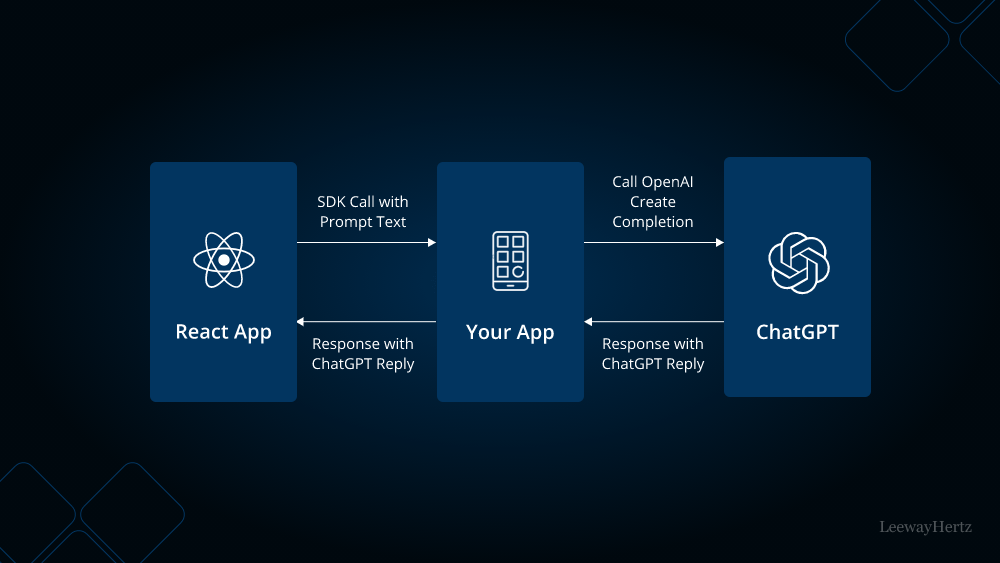







 Development Consulting