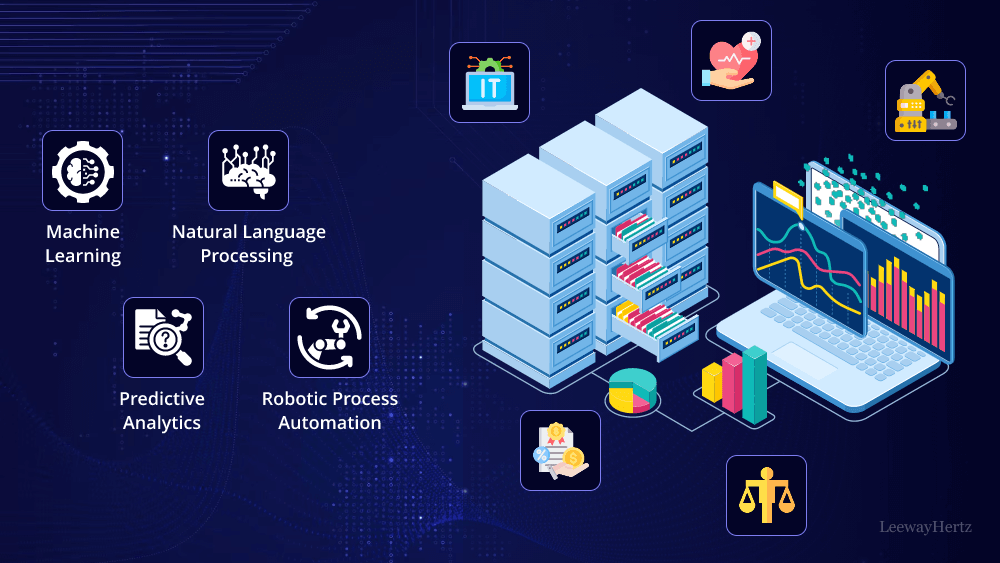
In the rapidly evolving landscape of technology, Artificial Intelligence (AI) has emerged as a transformative force, reshaping various industries and business processes. One such area where AI is making a significant impact is in knowledge management. As organizations grapple with the vast amounts of data at their disposal, implementing AI for knowledge management becomes imperative for efficient decision-making, innovation, and overall business success.
The Current State of Knowledge Management
Traditional knowledge management systems have long relied on human input, manual categorization, and search algorithms to organize and retrieve information. However, as data continues to grow exponentially, these conventional approaches are proving to be insufficient. This is where AI steps in, offering a dynamic and adaptive solution to the challenges of knowledge management.
AI in Knowledge Management
AI is revolutionizing knowledge management by introducing automation, intelligent search capabilities, and data analytics. Leverage AI for knowledge management, and organizations can enhance productivity, streamline workflows, and extract valuable insights from their data repositories. Here are key ways in which AI is transforming knowledge management:
- Automated Content Curation: AI algorithms excel at understanding patterns and relationships within data. By implementing AI-driven content curation, organizations can automatically categorize and tag information, making it easier for employees to access relevant data swiftly. This automation reduces the burden on human resources and ensures that knowledge repositories remain organized and up-to-date.
- Intelligent Search and Retrieval: Traditional search engines often return results based on keyword matching, which may lead to irrelevant or incomplete information. AI-powered search engines, on the other hand, employ natural language processing and machine learning algorithms to understand context and user intent. This results in more accurate and contextually relevant search results, saving time and improving the overall user experience.
- Predictive Analytics for Decision-Making: AI’s predictive analytics capabilities enable organizations to make informed decisions based on historical data and trends. By analyzing patterns in user behavior, content consumption, and other relevant metrics, AI can anticipate future needs, helping businesses stay ahead of the curve and make strategic decisions that drive success.
- Knowledge Discovery and Insights: AI can sift through vast amounts of unstructured data to uncover hidden insights and trends. This knowledge discovery process goes beyond what human-driven analysis can achieve, providing organizations with a deeper understanding of their data and revealing opportunities for innovation and improvement.
- Personalized Learning and Development: AI can tailor learning and development programs to individual employees based on their roles, skills, and performance. This personalized approach ensures that employees receive relevant and targeted training, fostering continuous improvement and skill development across the organization.
Conclusion
As organizations continue to grapple with the challenges of managing vast amounts of data, the role of AI in knowledge management becomes increasingly crucial. The implementation of AI-driven solutions, as exemplified by companies like LeewayHertz, showcases the transformative power of AI in streamlining processes, enhancing decision-making, and driving overall business success.
AI is not merely a technological advancement; it is a strategic enabler that empowers organizations to harness the full potential of their data. By embracing AI for knowledge management, businesses can stay competitive in today’s fast-paced digital landscape, unlocking new opportunities for innovation and growth. As we look toward the future, the integration of AI in knowledge management will undoubtedly continue to evolve, shaping the way organizations capture, organize, and leverage knowledge for years to come.

 Development Consulting